Project ManagementAlternatives
ClickUp Alternatives on Lifetime Deal: 5 AppSumo Options
Five AppSumo lifetime deals named as ClickUp alternatives, grouped by need, with the seat caps, credit limits and gaps the listings show.
Five AppSumo lifetime deals named as Monday.com alternatives, from $49 to $109, with the limits and gaps that matter and who each one suits.
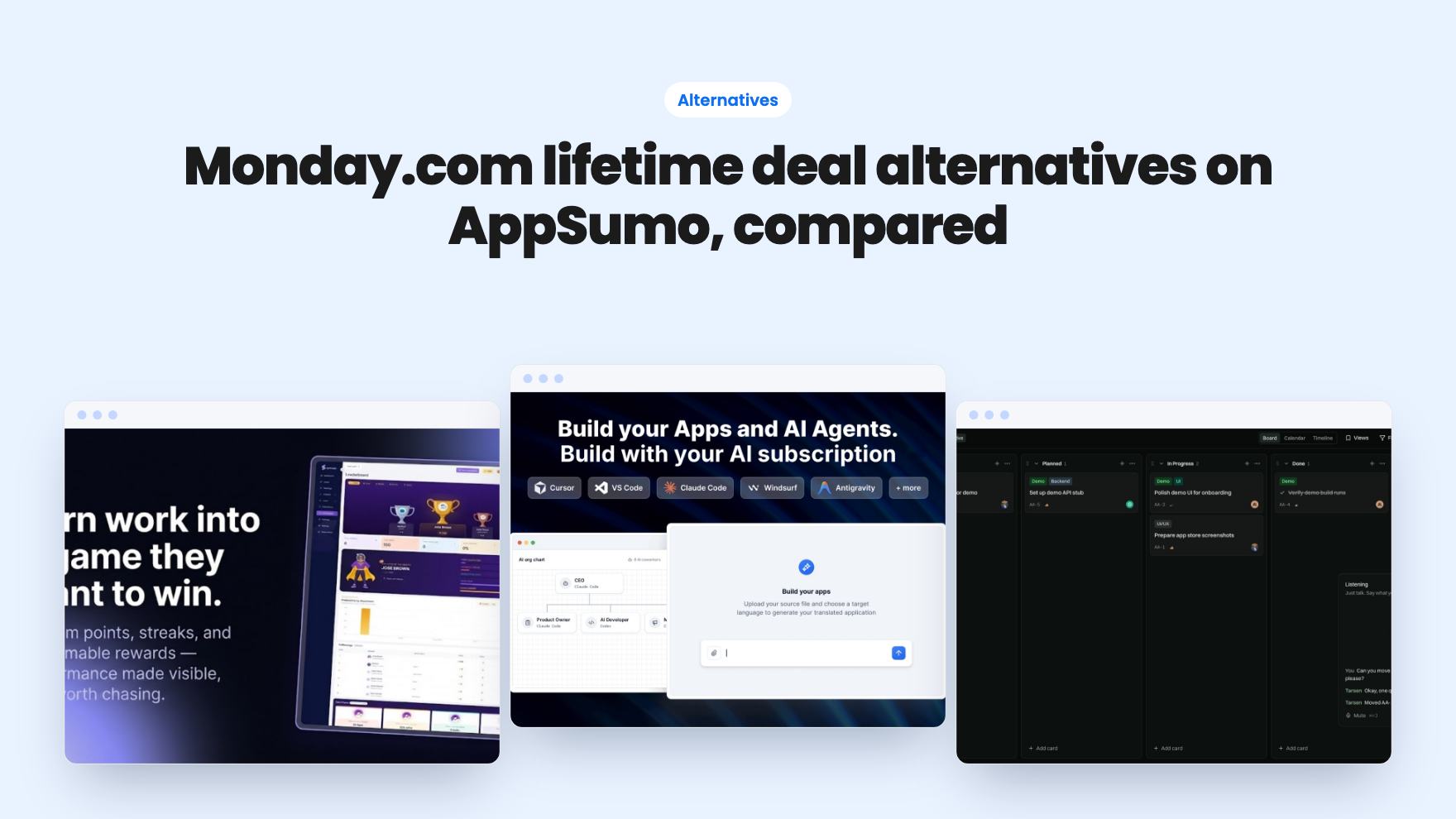
If you’re paying for Monday.com mainly to keep a few boards in order, a one-off payment starts to look attractive. Five tools on AppSumo are named as alternatives, and they solve quite different problems. Pick by the job you need done, not by the price tag.
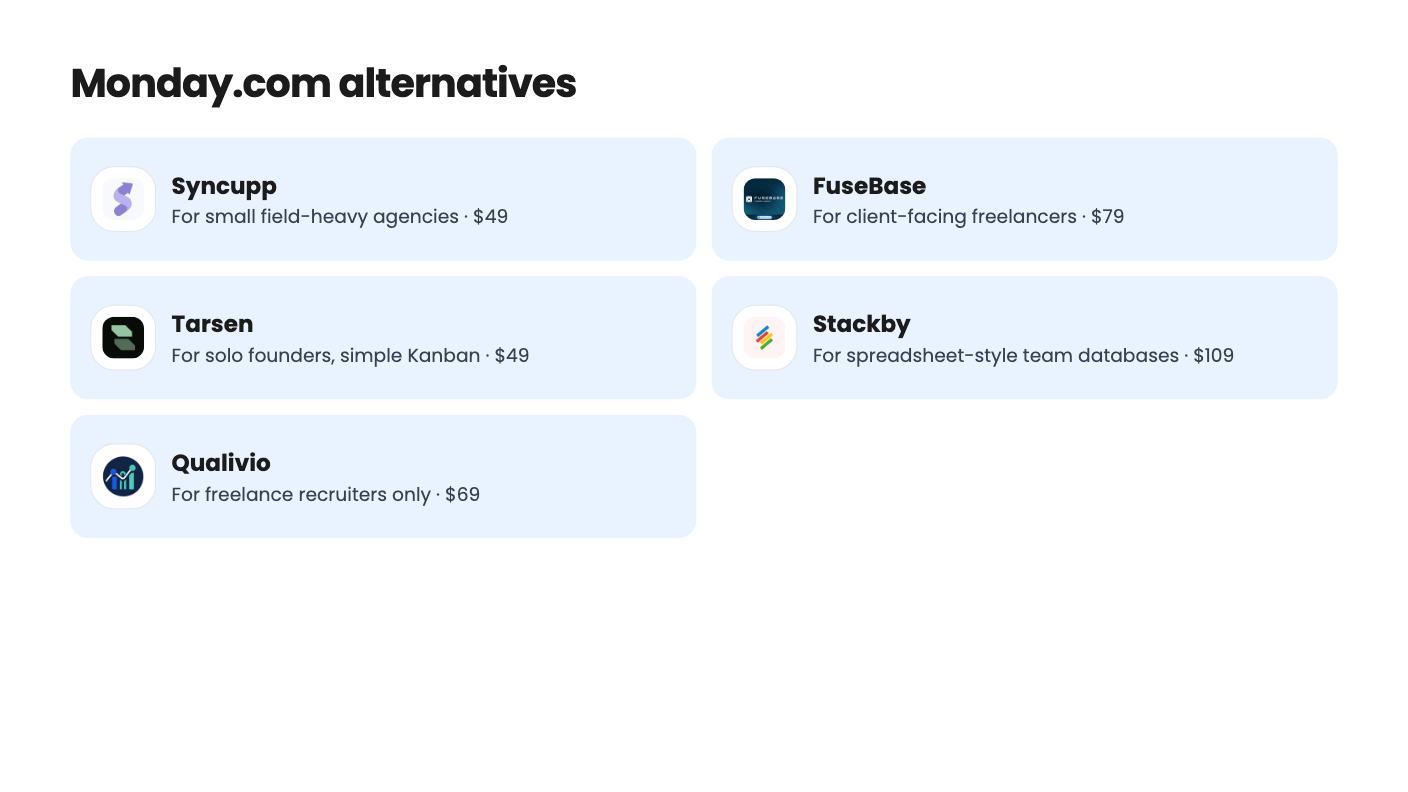
One note before we start. We haven’t used any of these hands-on, so everything below comes from the AppSumo listings and from what those listings leave unsaid.
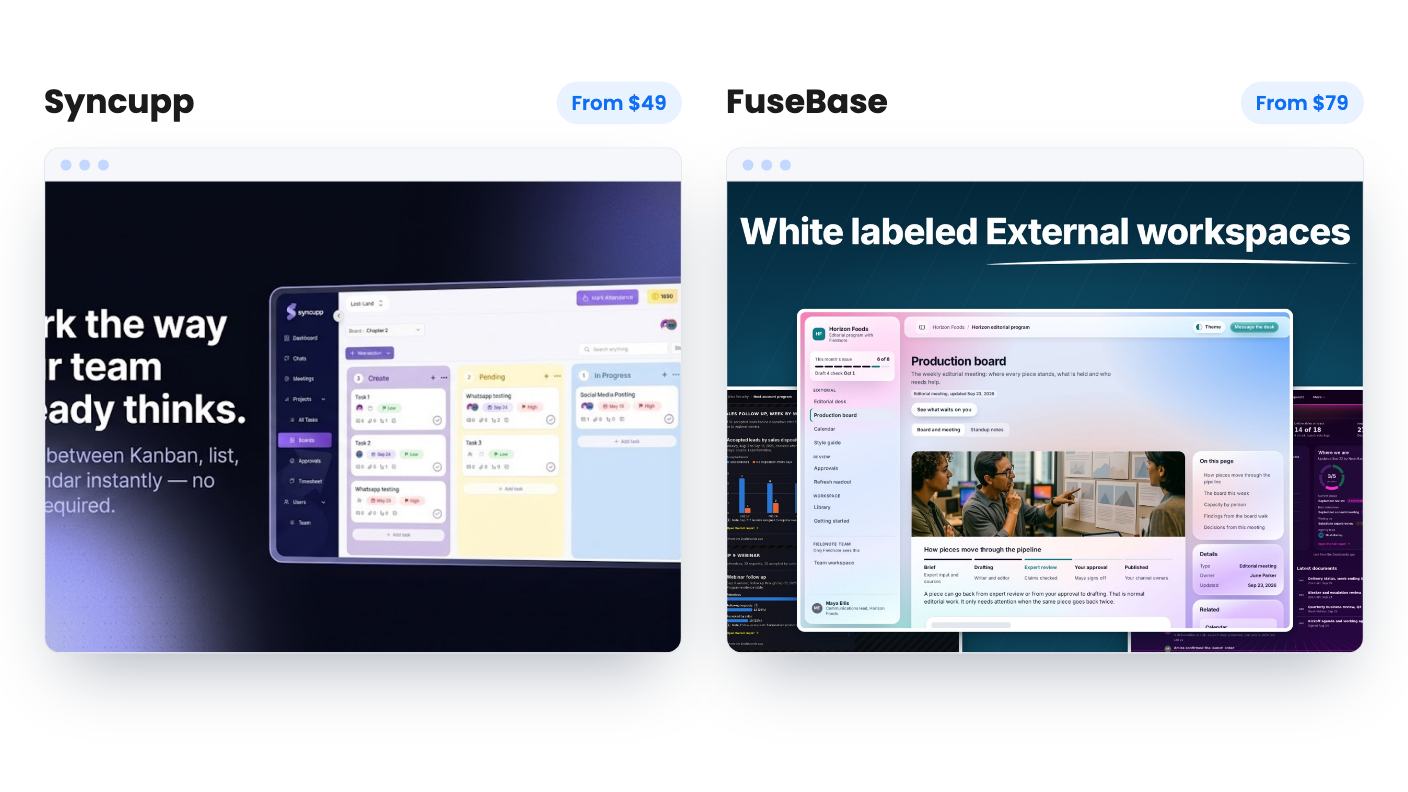
Syncupp is the closest thing here to a general work tool. It costs $49 (list $360), and every tier includes WhatsApp, gamification, GPS attendance and time tracking. You can handle task alerts and approvals by replying on WhatsApp, which suits a team that lives on its phones. It also imports CSV or Excel files from ClickUp, Asana and Trello, so moving over won’t mean retyping everything.
The entry tier is tight. You get 2 users, 1 workspace and 300 AI credits a month, which is a founder and one colleague. Once you pass 12 people you’re looking at the $379 tier. It’s also a young product, with only 4 AppSumo reviews averaging 3.75 out of 5. Clients invited as Viewers don’t use a seat, which is a genuinely useful detail for an agency. As for the XP, coins and leaderboards, the listing offers no proof they improve output. Treat them as a matter of taste.
Tarsen is plainer. It’s a Kanban board with voice commands that run 24 actions on the real board, a Mission Mode day planner that works without any AI key, and a built-in MCP server with scoped keys for agents like Claude and Cursor. The deal starts at $49 (list $399).
The limits are small: 15 voice minutes and 2GB of storage a month on the entry tier. The listing admits mobile use is imperfect, and it shows no Gantt charts or reporting. There’s a free plan that lets you try nearly everything, so start there before you pay anything. This is a tool for a solo founder or a very small team.
FuseBase is built around the client relationship. At $79 (list $468) you get branded client portals with magic-link access, so clients never wrestle with a password. Docs, tasks, AI agents and e-signatures live in the same workspace. That’s a sensible bundle for a consultant who currently stitches together a shared folder, a proposal tool and a task list.
The weak spot is the listing itself. The plan table is jumbled, so per-tier limits are unclear, and the video is dated and garbled. Buyer reviews mention lag and a learning curve as features pile up. There’s also no real task-management detail, so don’t expect it to replace a deep project engine.
Codes stack, and extra members, guests, storage and portals appear past code 10. That’s attractive if you grow into it. It also means you should work out your own numbers before buying.
The 60-day money-back guarantee is the best protection in this group. Use it. Put one real client into a portal in the first month and see if they actually log in.
Stackby is an Airtable-style database, and the $109 tier (list $160) is cheap for what it offers. You get 25,000 rows per stack and 20 stacks, with imports from Google Sheets, Excel and Airtable. It also offers Grid, Kanban, Calendar, Gallery, List, Timeline and Form views.
Here’s the catch. The entry tier has 0 internal automations and no scheduled API refresh, with 3 users and 100 AI credits. Automation only appears from the $436 tier up. Powerups, the Apps Marketplace and the CRM package each cost $399 extra.
So the cheap price holds only if you’re happy with a tidy shared database and nothing more. The plan table is odd too, since users and row limits don’t rise with price. Ask AppSumo support to explain that before you pay.
Qualivio scores CVs and LinkedIn profiles against your job criteria and gives you a ranked shortlist with strengths and concerns flagged. It imports CVs, LinkedIn URLs and CSV files, and exports to XLSX or CSV. Candidate data is hosted in the EU and deleted automatically after 24 months.
Three tiers run from $69 to $249, with monthly caps on AI analyses, sourcing runs and emails, even at the top. LinkedIn extraction credits are a separate add-on, and the listing gives no price for them. The tier order is also confusing and the tiers aren’t clearly labelled.
It isn’t an applicant tracker and has no careers pages. If you’re a freelance recruiter drowning in CVs, it’s worth a look. Anyone else can skip it.
Four of these five listings have plan tables that are confusing, jumbled or oddly ordered. That’s a warning in itself. Write down the three things you open Monday.com for every day, then check each tier’s limits against that list, not against the headline price.
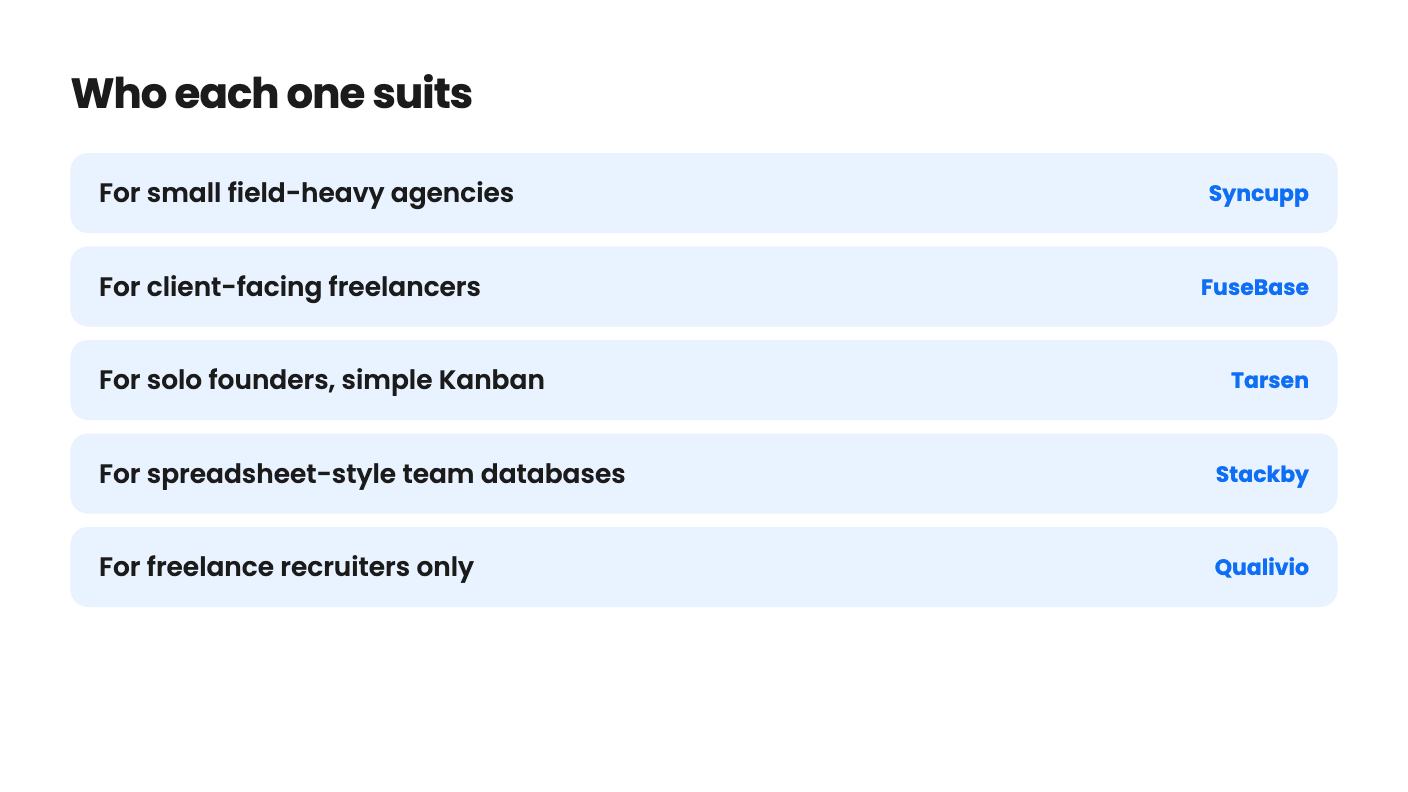
If a listing can’t tell you plainly what the $49 or $79 tier includes, ask before you buy, and keep any refund window in mind. A lifetime deal only saves money if you still use the tool in a year.
Not one-for-one. Syncupp and Tarsen cover task boards, FuseBase covers client portals and docs, Stackby is a database, and Qualivio is a recruiting screener. Match the tool to the part of Monday.com you actually use.
Syncupp and Tarsen both start at $49. Qualivio starts at $69, FuseBase at $79 and Stackby at $109. Entry tiers carry tight limits, so the real cost can rise if you need more.
The FuseBase listing mentions a 60-day money-back guarantee. The listings we reviewed for the other four don't state refund terms in the details we have, so check the AppSumo page before buying.
How this article was made: researched from each tool's official listing and our reviews of it, and written with help from AI. We have not tested these tools hands-on. Prices and deal terms change, so check AppSumo before you buy. See our affiliate disclosure.
Five AppSumo lifetime deals named as ClickUp alternatives, grouped by need, with the seat caps, credit limits and gaps the listings show.
Five AppSumo lifetime-deal alternatives to Asana, grouped by need, with seat caps, credit limits and gaps spelled out so you can see who each one suits.
Ten AppSumo lifetime deals named as Notion alternatives, grouped by the job they replace, with the tier limits and gaps each listing shows.