HR & PayrollReview
ResumeUp.AI Review: A $49 Lifetime Deal Built for Job Seekers
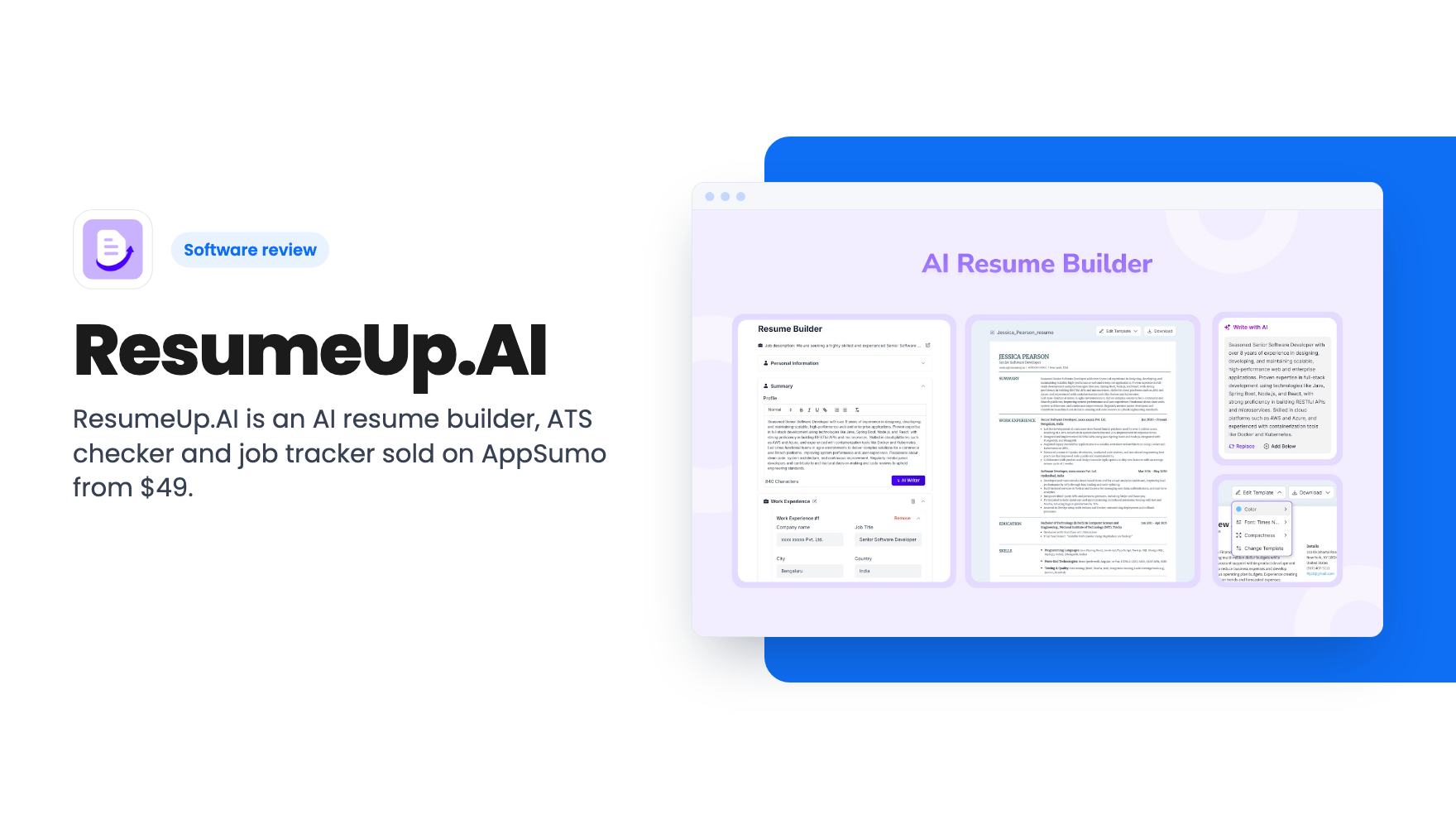
ResumeUp.AI is an AI resume builder, ATS checker and job tracker sold on AppSumo from $49. Here's what the listing says, what it leaves out, and who should buy.
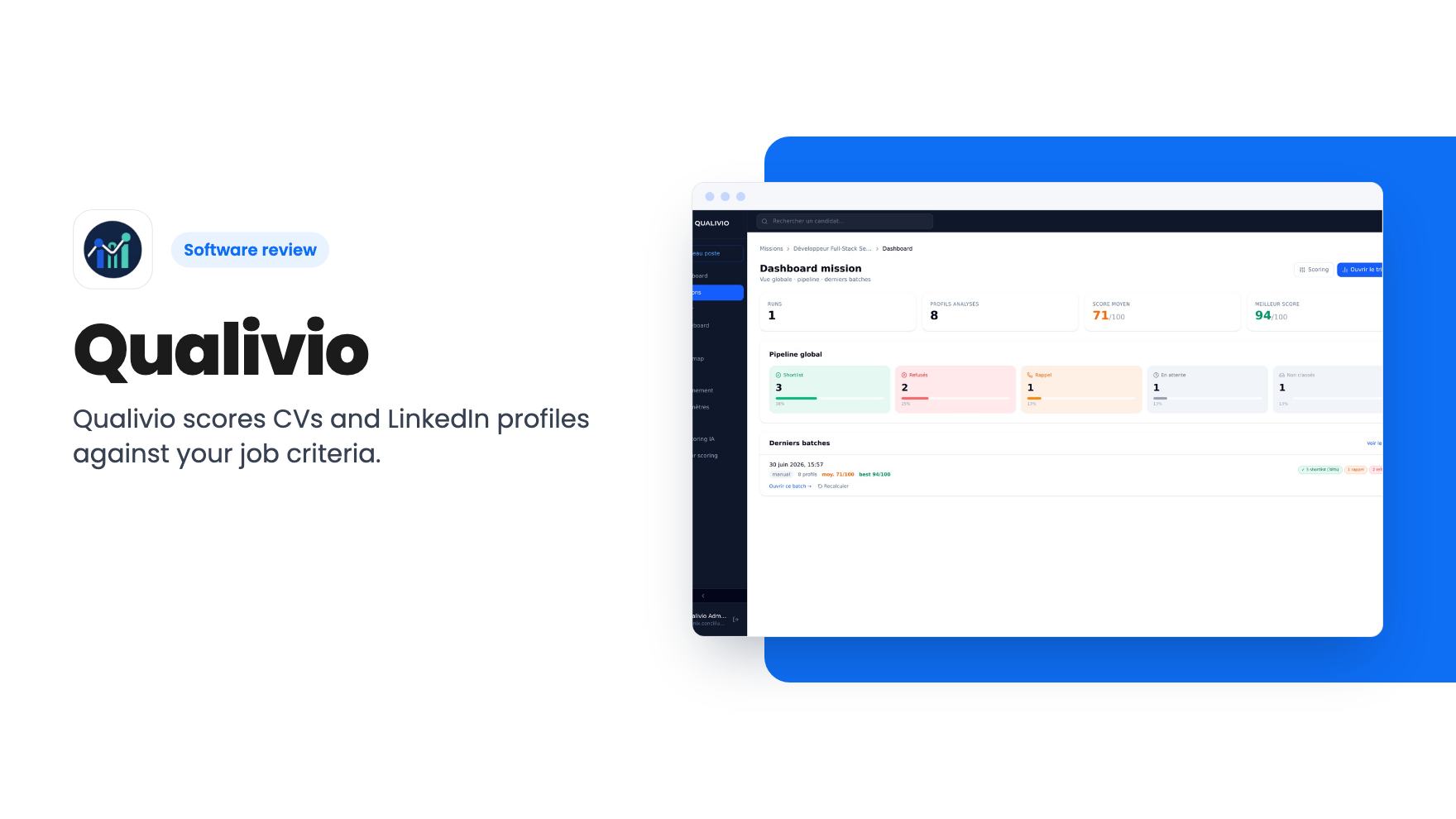
Qualivio scores CVs and LinkedIn profiles against your job criteria. Three AppSumo tiers run $69 to $249, with monthly caps on AI analyses, sourcing and emails.
Lifetime deal price
$690
Lifetime Deal
Our take: Qualivio suits freelance recruiters and small agencies who screen a lot of CVs and want a ranked shortlist with reasons attached. Skip it if you need a full applicant tracker, careers pages or deep integrations, and don't buy until you've checked how the tiers map to seats and limits.
Picture a Monday morning with 140 CVs in your inbox for one role, a client who wants a shortlist by Wednesday, and no appetite for reading every PDF top to bottom. That’s the situation Qualivio is built for. It reads the profiles, scores them against the criteria you set, and hands you a ranked list.
It’s on AppSumo as a lifetime deal at three price points, and the details matter more than the pitch. We haven’t used it ourselves, so everything below comes from the listing. There’s no demo video to lean on either, which is worth knowing before you buy.
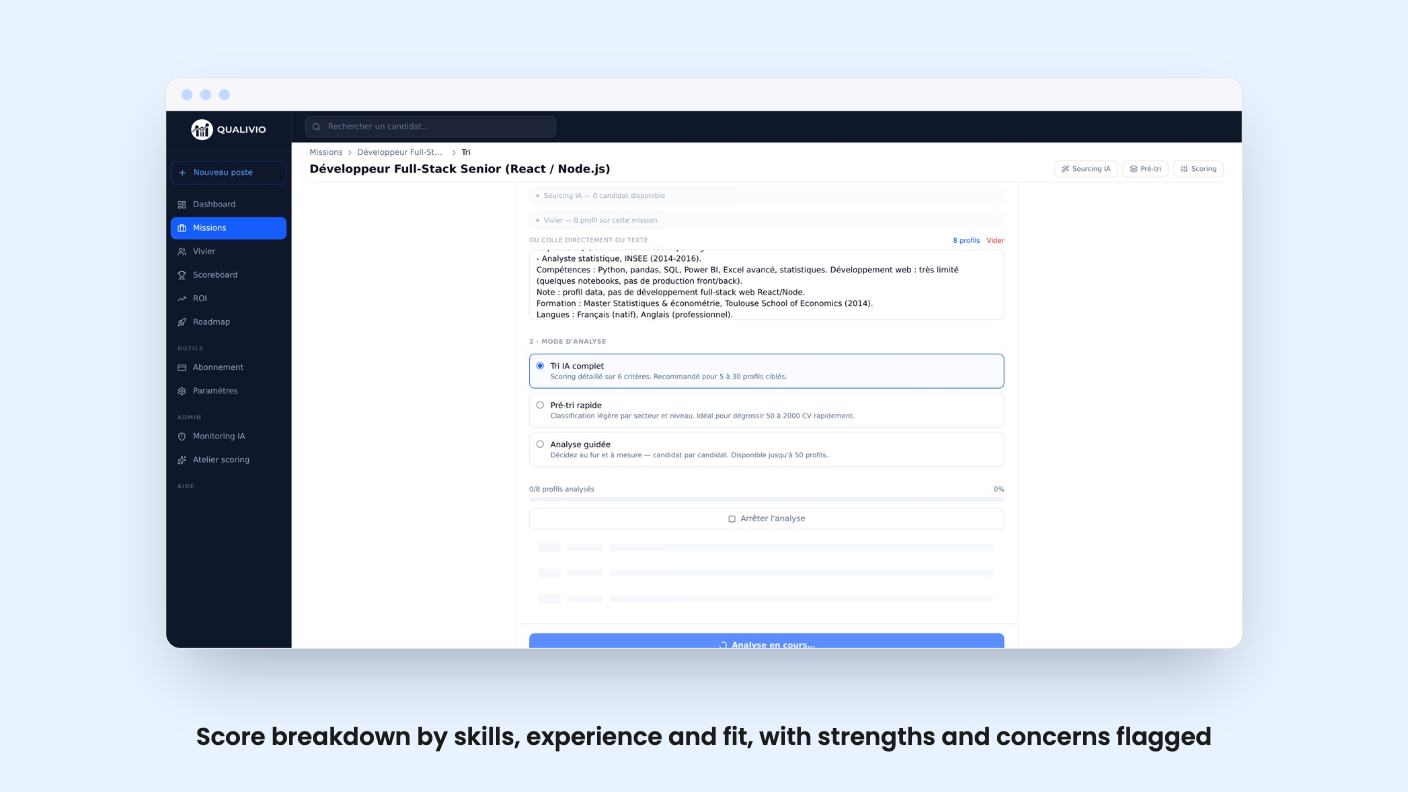
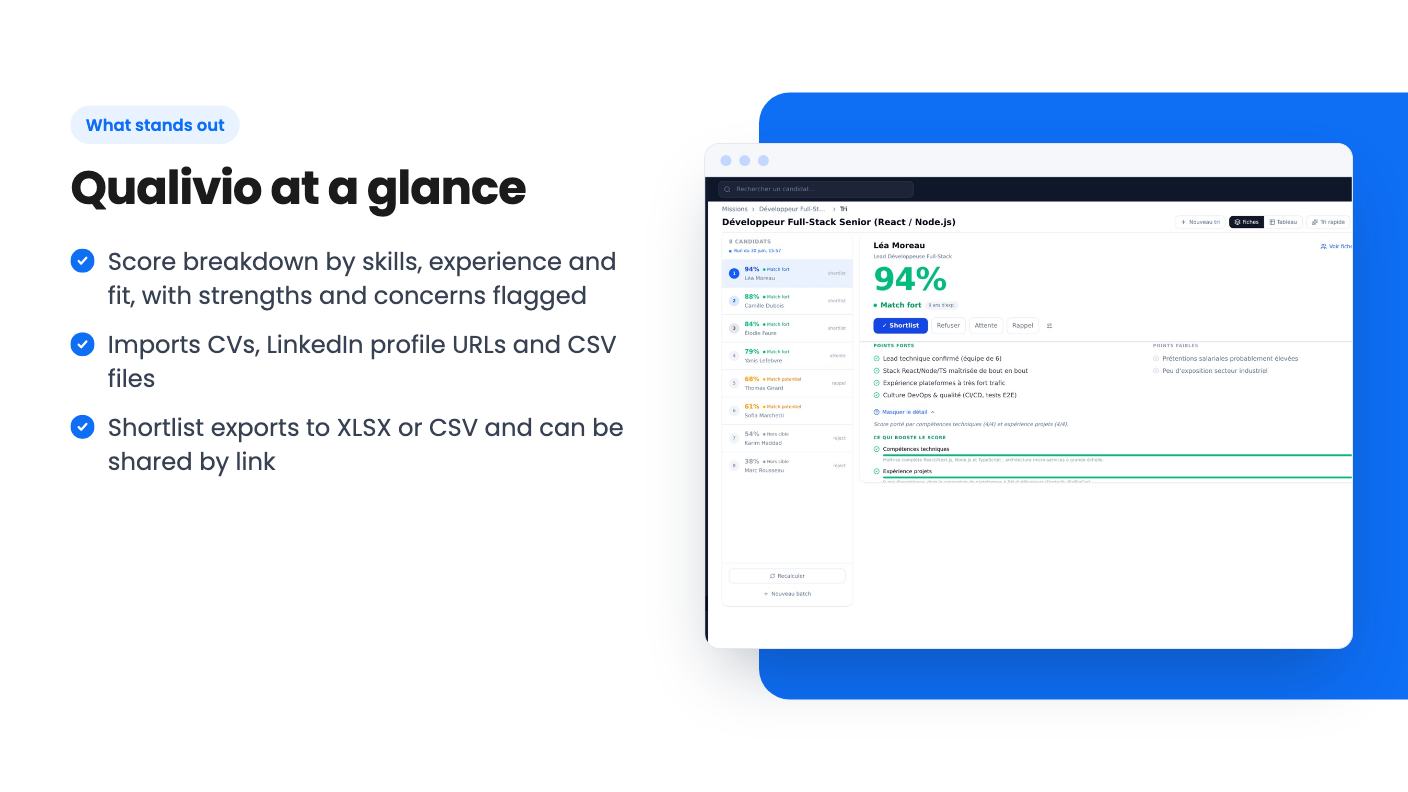
The core job is screening. You define your job criteria once, import candidates, and the AI scores each one against those criteria. Imports can be CVs, LinkedIn profiles via URL, or a CSV file.
The listing is firm that this isn’t a traditional applicant tracker. Its own words: most ATS tools store CVs, while Qualivio analyzes them. That’s a fair description of the pitch, and it also tells you what’s missing. Nothing in the listing mentions a public careers page, application forms, interview scheduling or offer letters.
So think of it as a filter that sits in front of the rest of your hiring process. If you already have an ATS, this might slot in before it. If you don’t, you’ll still need somewhere else to run the later stages.
AI scoring tools live or die on trust. A bare number like 94% is useless if you can’t see where it came from, and the listing seems to know that. Each score is split into skills, experience and fit, with written justifications, and strengths and concerns are flagged on every profile.
That’s the right design. It means you can skim the reasoning, disagree with it, and still save time. It also means the quality of your input counts for a lot. If your criteria are vague, expect vague scoring.
The listing doesn’t say which model does the scoring, how it handles CVs in different languages or formats, or how it treats gaps in a career. It doesn’t say whether you can adjust the weighting between skills and experience either. Those are the questions I’d want answered before trusting a ranked list for a real client.
One more caution. Automated scoring of people carries bias risks, and the listing says nothing about how Qualivio deals with them. Treat the ranking as a first pass and keep a human making the decision.
The workflow is simple on paper. You import, sort, and move candidates between “to decide,” “shortlist” and “rejected” with one click. Pipeline states also include recall and pending, which is a nice touch for people you’d like to revisit later.
The work is organised around missions rather than generic tickets. That’s recruiter language, and it suggests the product was shaped by someone who has done the job. The .fr domain and the plan name “Cabinet” hint at a French-market origin, though the listing doesn’t actually say so.
When you’re done, you can export the shortlist as XLSX or CSV, or share it with your team through a link. For freelancers sending candidates to a client, that’s probably the feature you’ll use most. A spreadsheet is still how many clients want to see a shortlist.
Integrations listed are Google Drive, LinkedIn, Slack and Zapier. The listing gives no detail on what each one does, so don’t assume, say, a two-way LinkedIn sync. The FAQ only describes importing profiles by URL or CSV.
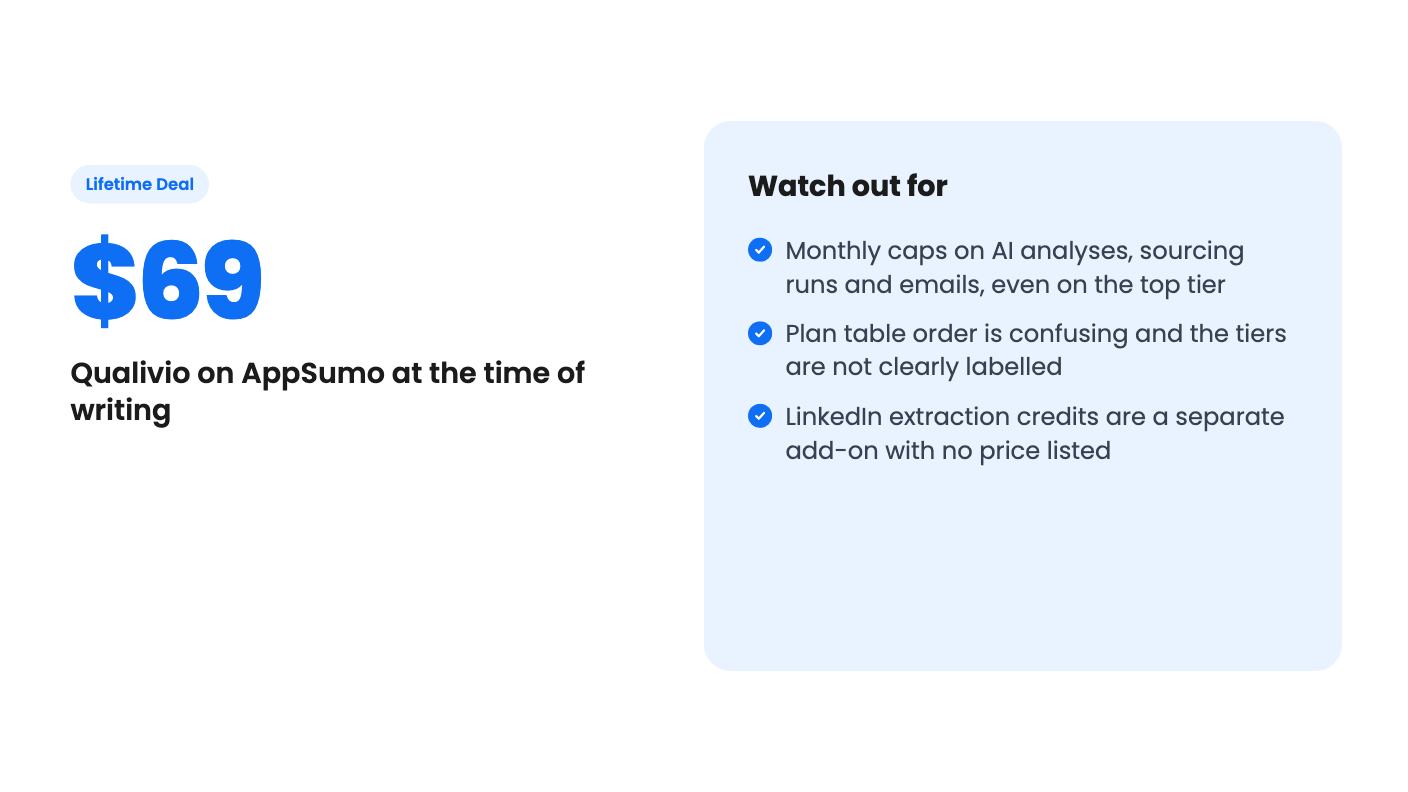
There are three lifetime tiers: $69, $139 and $249. All include lifetime access and future plan updates, and you have to activate your license within 60 days of purchase. You can move between the three tiers later. No codes, no stacking.
Here are the limits as the listing presents them, in the order given:
The table runs largest to smallest, while the prices run smallest to largest. The FAQ mentions Solo, Cabinet and Team plans, which would fit the 1, 3 and 6 seat columns. So $69 is most likely the 1 seat Solo plan and $249 the 6 seat Team plan. That’s my reading, and the listing doesn’t confirm it, so check the checkout page before paying.
Now the practical meaning. At 200 AI analyses a month, the entry tier covers roughly 200 candidates, or about one busy role and a bit more. A single agency posting that gets 140 applicants would use most of a month’s allowance. The top tier’s 1,000 is far more comfortable, and it’s the only one that makes sense for a small team.
The email caps are tight too. Thirty a month on the smallest plan won’t go far if you contact candidates through Qualivio.
Several things are missing or vague. LinkedIn data extraction credits are sold as a separate add-on for higher volume, and there’s no price or credit size in the listing. If LinkedIn sourcing is why you’re interested, that’s a hidden cost to ask about.
It’s also unclear what “AI sourcing runs” actually are. The name suggests finding candidates rather than scoring ones you’ve supplied, but the listing doesn’t explain how or from where. With caps of 3, 10 or 20 per month, they’re clearly a scarce resource.
The $0 list price shown on AppSumo means we can’t tell you what the regular subscription costs, so we can’t judge the lifetime saving. The comparison tools it names, Monday.com, Recurly and Zoho CRM, are a strange set for a recruiting product, and I wouldn’t read much into them.
On the plus side, the data handling story is specific. The listing cites Row-Level Security on every database table, rate limiting on API routes, encrypted storage for sensitive data, EU hosting, and deletion 24 months after a mission closes. That’s more detail than most deals offer, though it’s still the vendor’s own claim.
It’s a young product, and the listing gives no company history or customer numbers. Lifetime deals depend on the vendor sticking around.
Skip it if you hire a handful of people a year. Reading ten CVs doesn’t need software, and the caps and the 60 day activation window add pressure you don’t need.
Skip it if you want an all-in-one hiring system with careers pages and onboarding. Skip it too if you can’t tolerate AI ranking people at all.
It makes the most sense for freelance recruiters and small agencies who run several searches at once and mostly lose time on first-pass screening. If that’s you, the $69 tier is a cheap way to find out whether the scores match your own judgment. Just confirm which column of limits you’re getting first, and keep the upgrade option in mind if you hit the caps.
Not really. The listing describes it as a screening and scoring engine, with a board for shortlisting. It doesn't mention careers pages, interview scheduling or offer management, so most teams would use it before or beside an ATS.
The listing gives limits for seats (6, 3 or 1), active jobs (25, 10 or 3), AI analyses per month (1,000, 500 or 200), stored candidates (5,000, 3,000 or 1,000), AI sourcing runs per month (20, 10 or 3) and emails per month (200, 100 or 30). The prices are $69, $139 and $249, but the table doesn't label which column belongs to which price.
According to the listing, candidate profiles are kept for 24 months after a mission closes and then deleted automatically, in line with GDPR data minimization. Data is hosted on EU infrastructure.
How this review was made: researched from Qualivio's official listing, and written with help from AI. We have not tested Qualivio hands-on yet. Prices and deal terms change, so check AppSumo before you buy. See our affiliate disclosure.
ResumeUp.AI is an AI resume builder, ATS checker and job tracker sold on AppSumo from $49. Here's what the listing says, what it leaves out, and who should buy.
Six HR and hiring lifetime deals from $49 to $99, grouped by need. The listings don't mention payroll, and most are young products with caps to check.
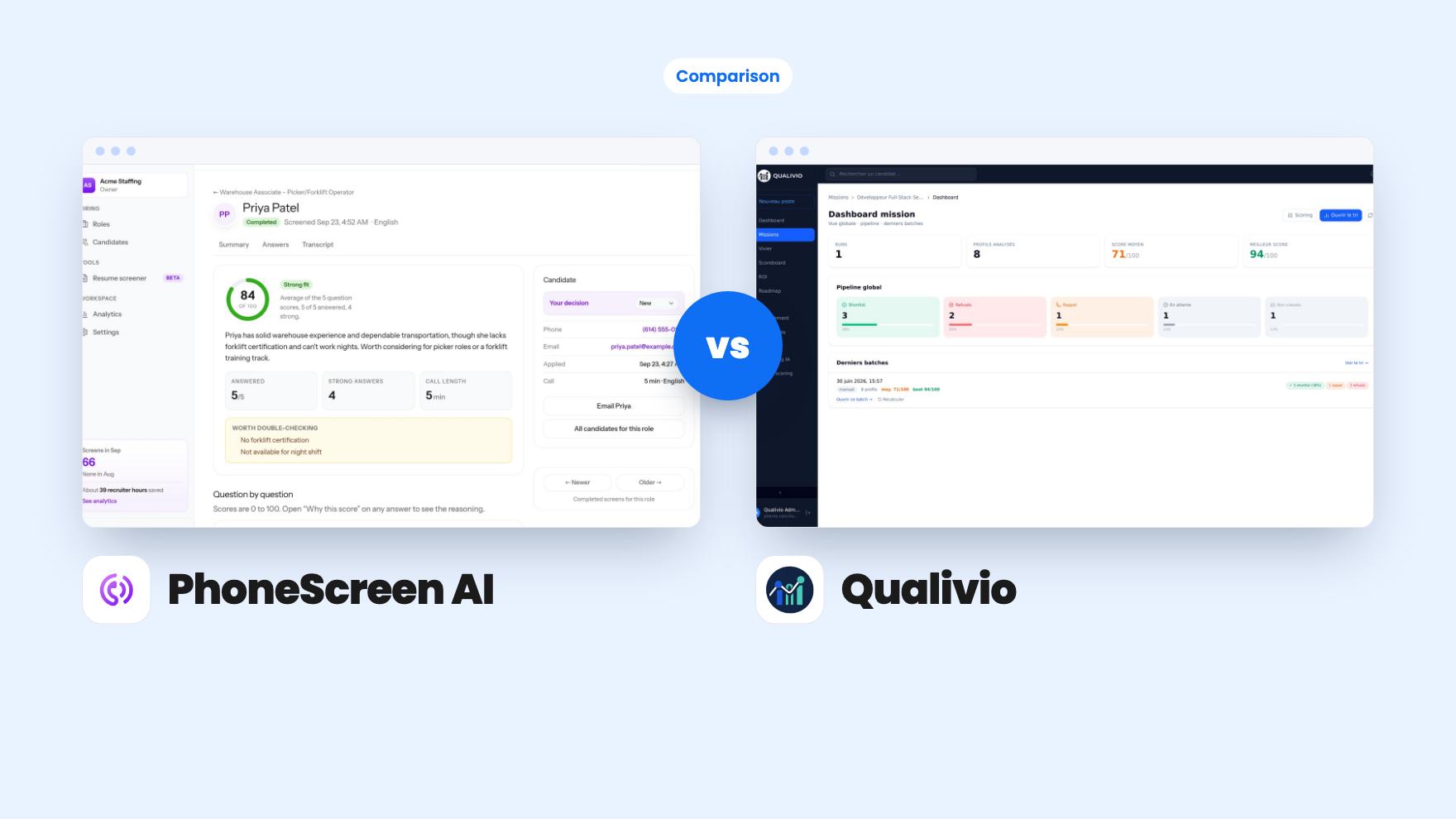
PhoneScreen AI phones candidates for $99 with 20 screens included. Qualivio ranks CVs from $69 with monthly caps. Here's which first round fits you.