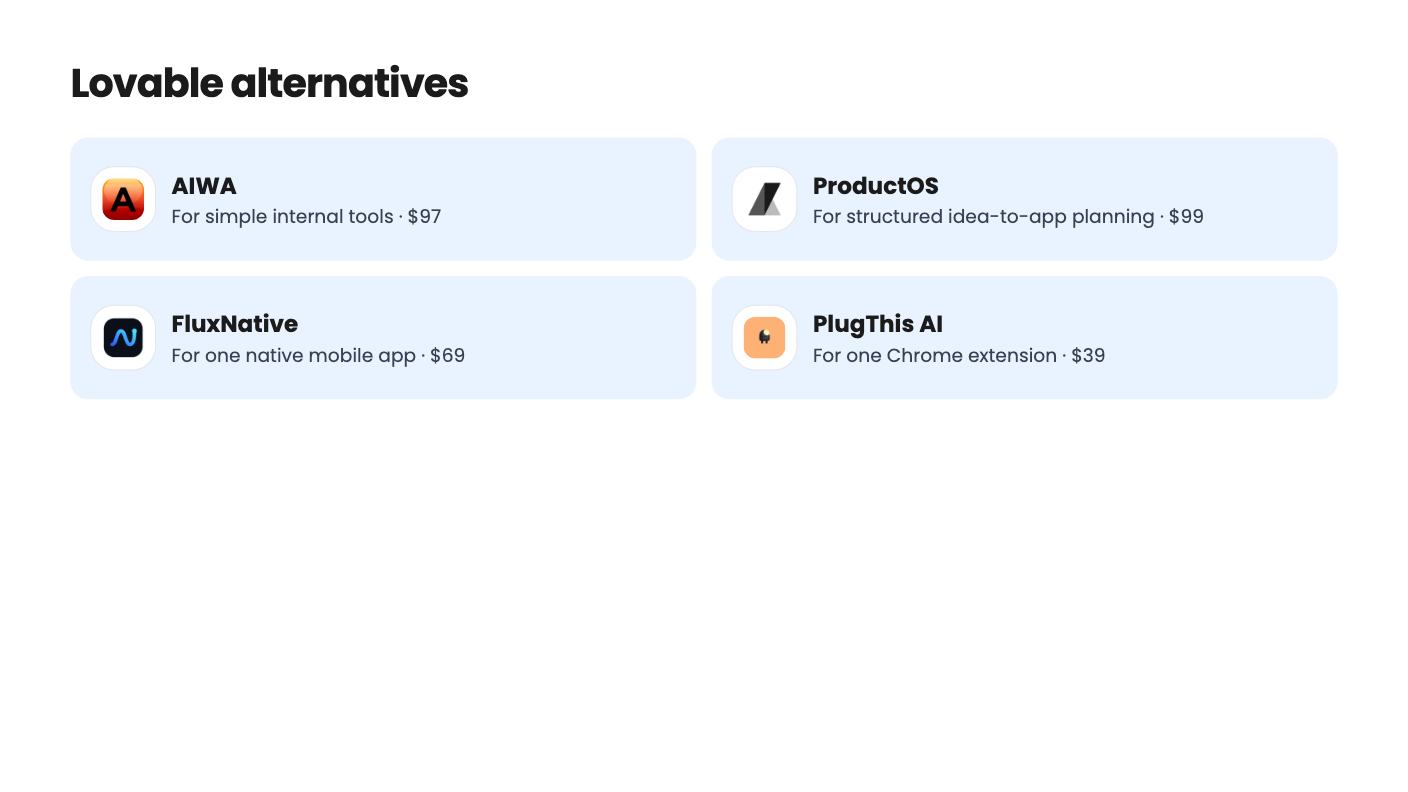
You like the idea of describing an app in plain English and getting something working back, which is what Lovable does. You’d also like to pay once instead of carrying another subscription for a tool you open a few times a quarter. AppSumo lists four lifetime deals as alternatives, and they’re far less interchangeable than that suggests. The right one depends on what you actually need to build.
If you need a web app you can keep
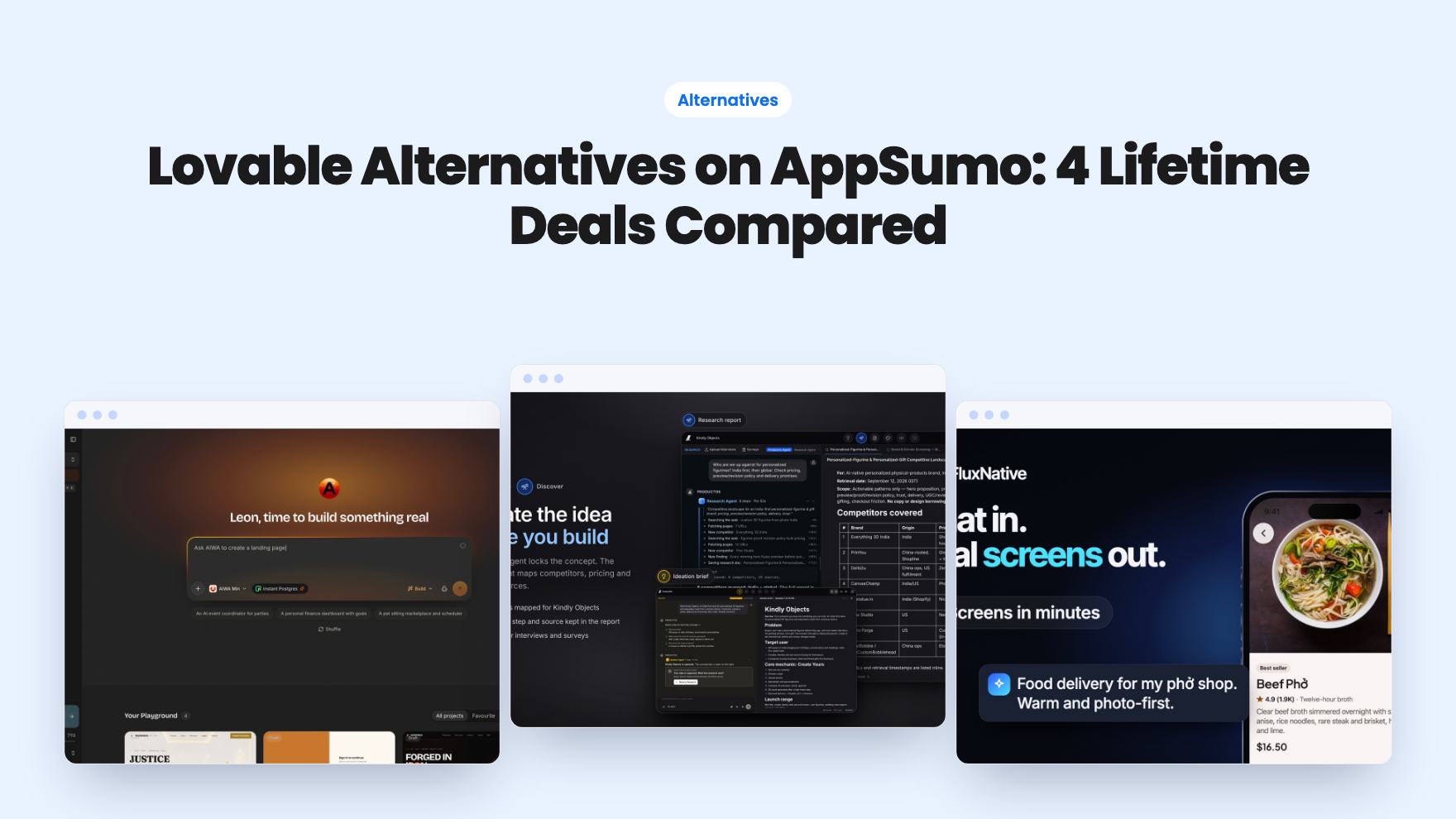
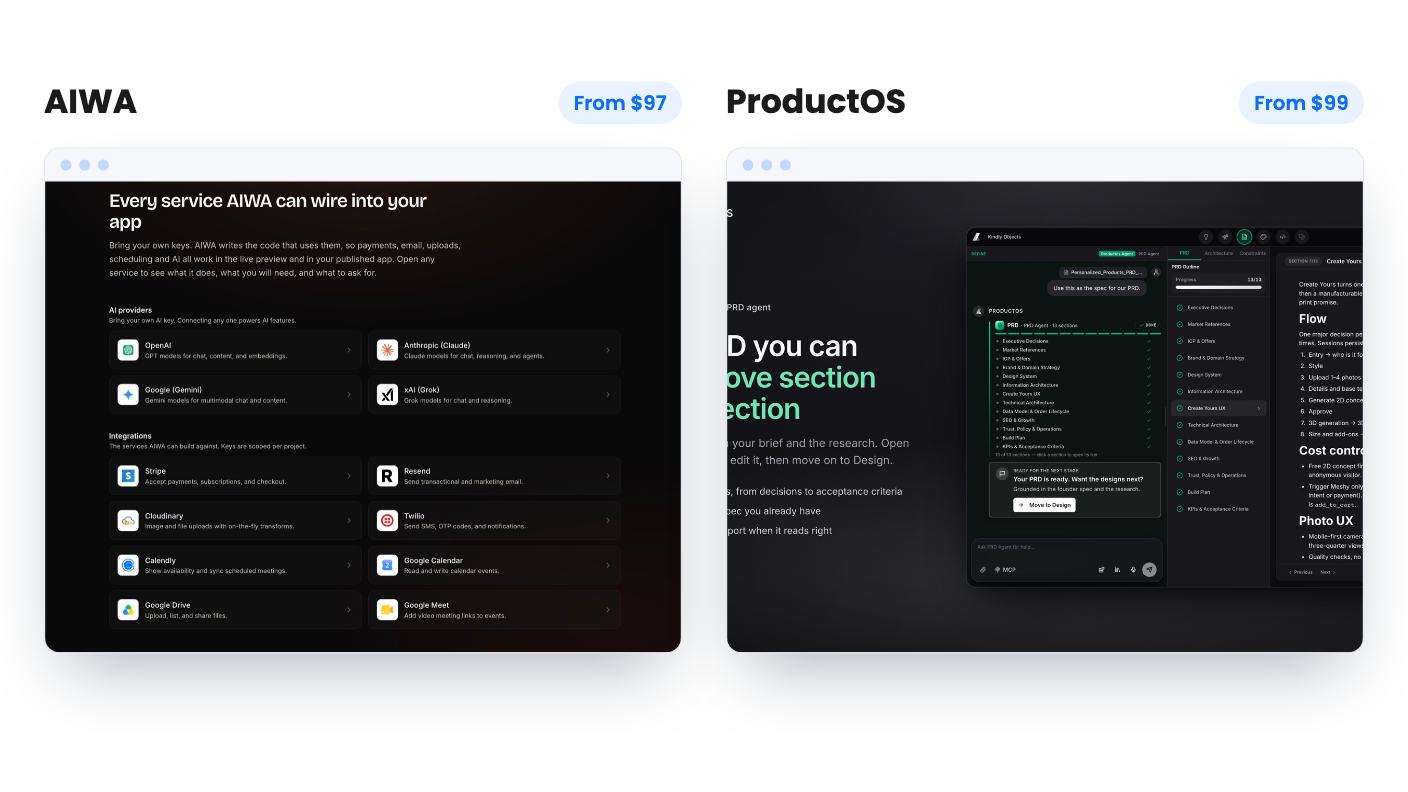
AIWA is the closest match to the prompt-to-app idea. It builds the frontend, backend, login and database from one prompt, and you can export the code by ZIP or GitHub. Credits never expire and hosting is free. That’s a good set of terms for a $97 purchase.
The catch is the cap. The $97 tier gives you 250 credits and two apps a month, which is fine for a few internal tools or a client prototype and thin for anything regular. The listing also leaves out top-up prices, the tech stack and refund terms. It has only four AppSumo reviews and no demo video, so treat its claims as unproven. The $297 tier adds client handoff, 15 seats and unlimited projects, and that only makes sense for an agency willing to bet on a young product.
ProductOS starts earlier in the process. Instead of a bare prompt, it takes an idea through research, a PRD, design and then code. If you tend to start building before you’ve decided what the thing should do, that structure could save you some rework.
You own the code, with a GitHub repo per project, and every tier includes unlimited private drafts. At $99 it costs a little more than AIWA, and the credit model is murkier. Credits pay for AI work, previews and hosting, the included ones are granted once and never refill, and the listing never says what a typical build costs. With one AppSumo review so far, we’d call it a cheap trial and nothing more.
If the app has to live on a phone
FluxNative is the only one here aimed at native iOS and Android. At $69 for Tier 1, you get signed cloud builds without owning a Mac, plus real React Native source you can download. Failed or canceled builds cost no credits, which is a fair touch.
The credit allowance is the weak spot. You get 2,500 one-time credits that expire after 90 days, with no monthly top-up, and higher tiers add apps and seats rather than more credits. There’s one useful workaround: if you connect your own coding agent over MCP, that work doesn’t use FluxNative credits. Also expect some manual setup, because the first Google Play upload and the store app records aren’t automated.
It suits a founder or developer shipping one app. It doesn’t suit someone who wants to chat with the AI all month on starter credits.
If you only need a Chrome extension
Some jobs are small. Maybe you want a button that cleans up a page your team uses daily, and hiring a developer for it feels silly. PlugThis AI does that one thing.
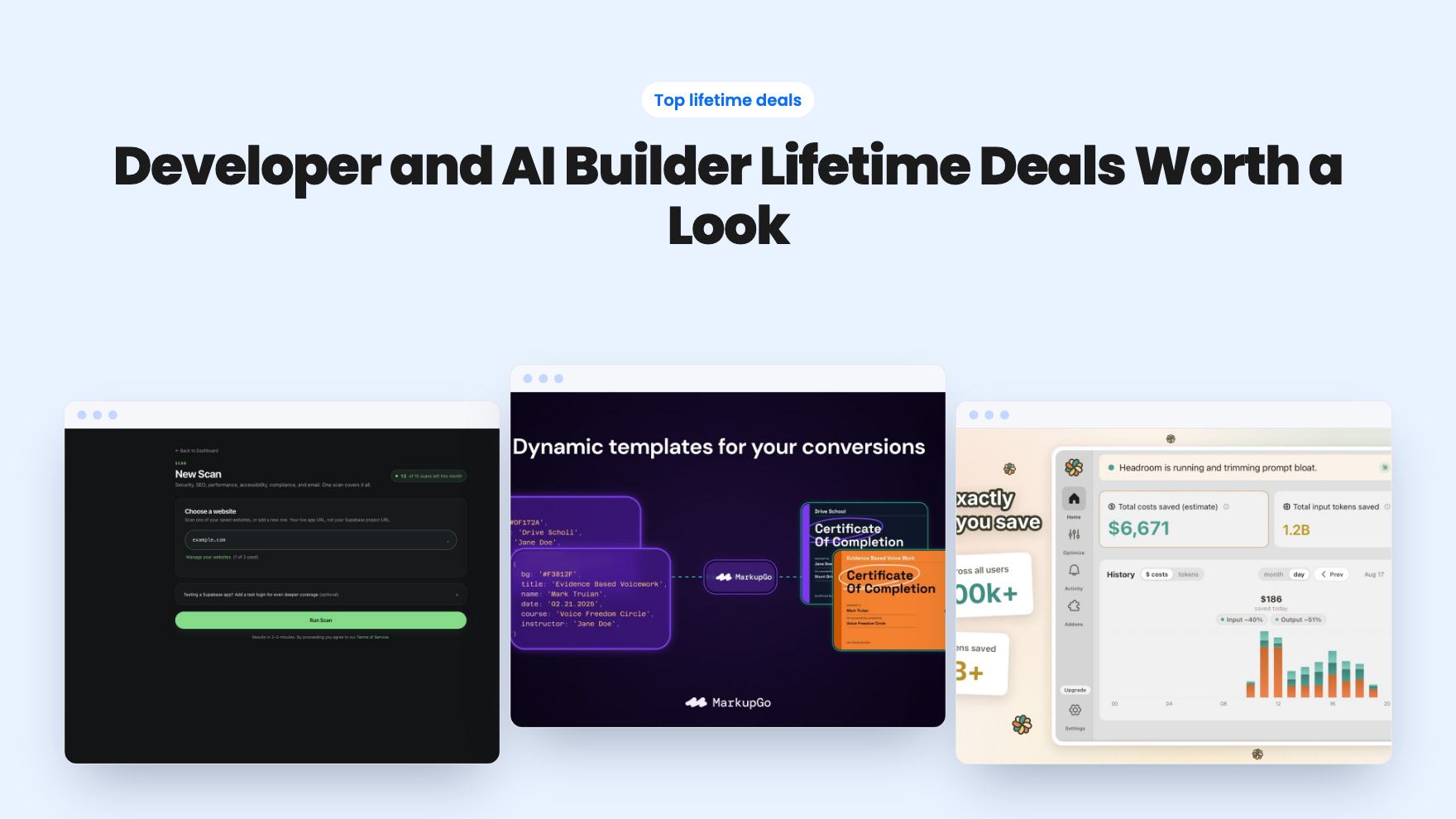
It turns prompts into Manifest V3 extensions and gives you a downloadable bundle. You can load it unpacked or submit it to the Chrome Web Store. There’s a built-in code editor, GitHub sync, version restore with diffs, a store-readiness check, and generated privacy policy and terms. For $39, Tier 1 allows unlimited extensions and 500 generations a month.
Here’s the odd part. The higher tiers cost more but cap extensions, generations and seats, which looks backwards. Stay on Tier 1. It’s also a young product, and AppSumo’s own summary mentions bugs after updates and multiple iterations on complex builds. If you want web apps or landing pages from it, you’re in the wrong place.
Before you buy any of them
None of these listings gives you much real-world feedback. AIWA has four reviews and ProductOS has one. For the others, the track record is thin, and we haven’t used any of them ourselves. What we’re describing is what the listings show.
Credits are the other thing to watch. Three of the four meter your usage in some way, and two of them (ProductOS and FluxNative) hand out credits that don’t refill. A lifetime deal only pays off if the product is still around and still useful in a year or two.
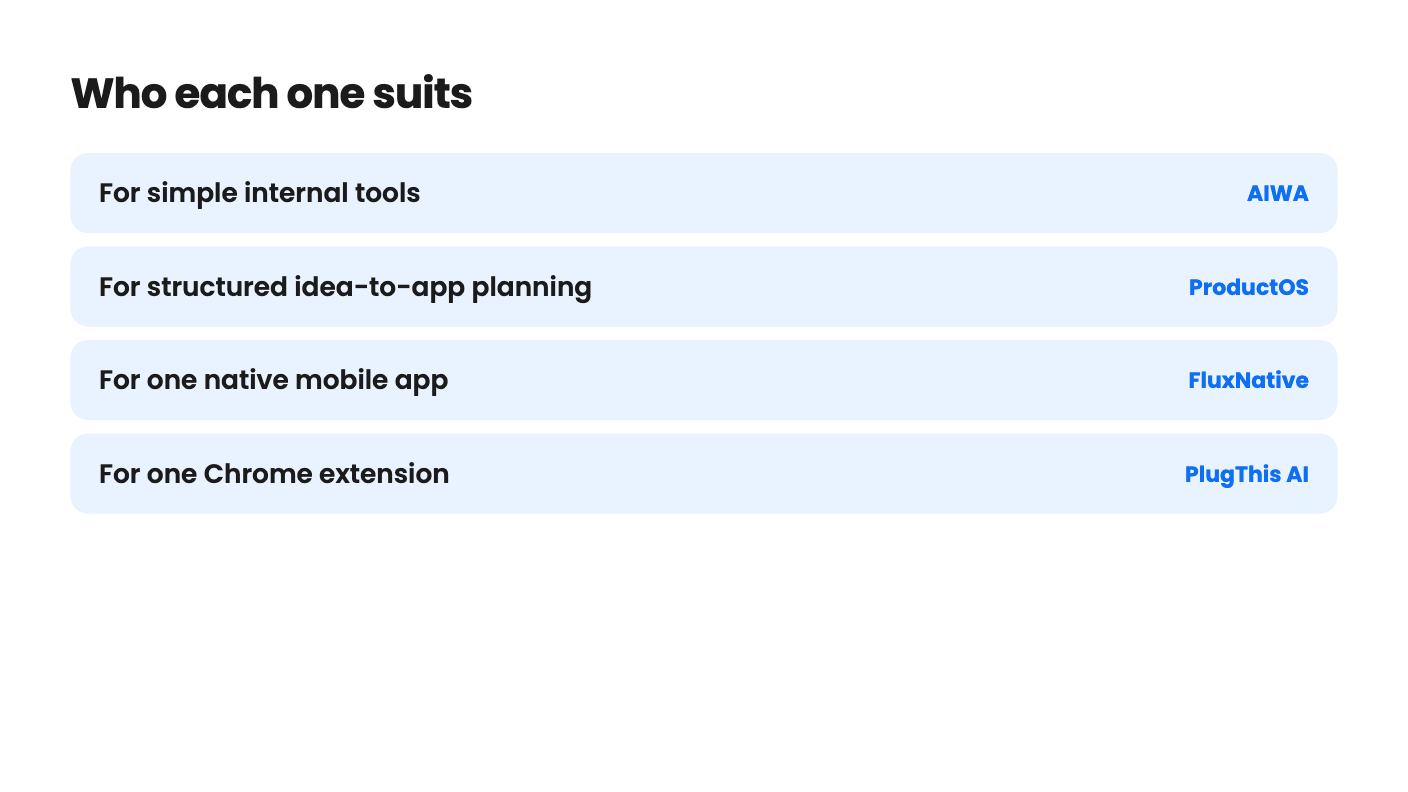
Pick the narrowest tool that matches your actual job, buy the lowest tier, and read the refund terms on the AppSumo page before you pay.
How this article was made: researched from each tool's official listing and our reviews of it, and written with help from AI. We have not tested these tools hands-on. Prices and deal terms change, so check AppSumo before you buy. See our affiliate disclosure.