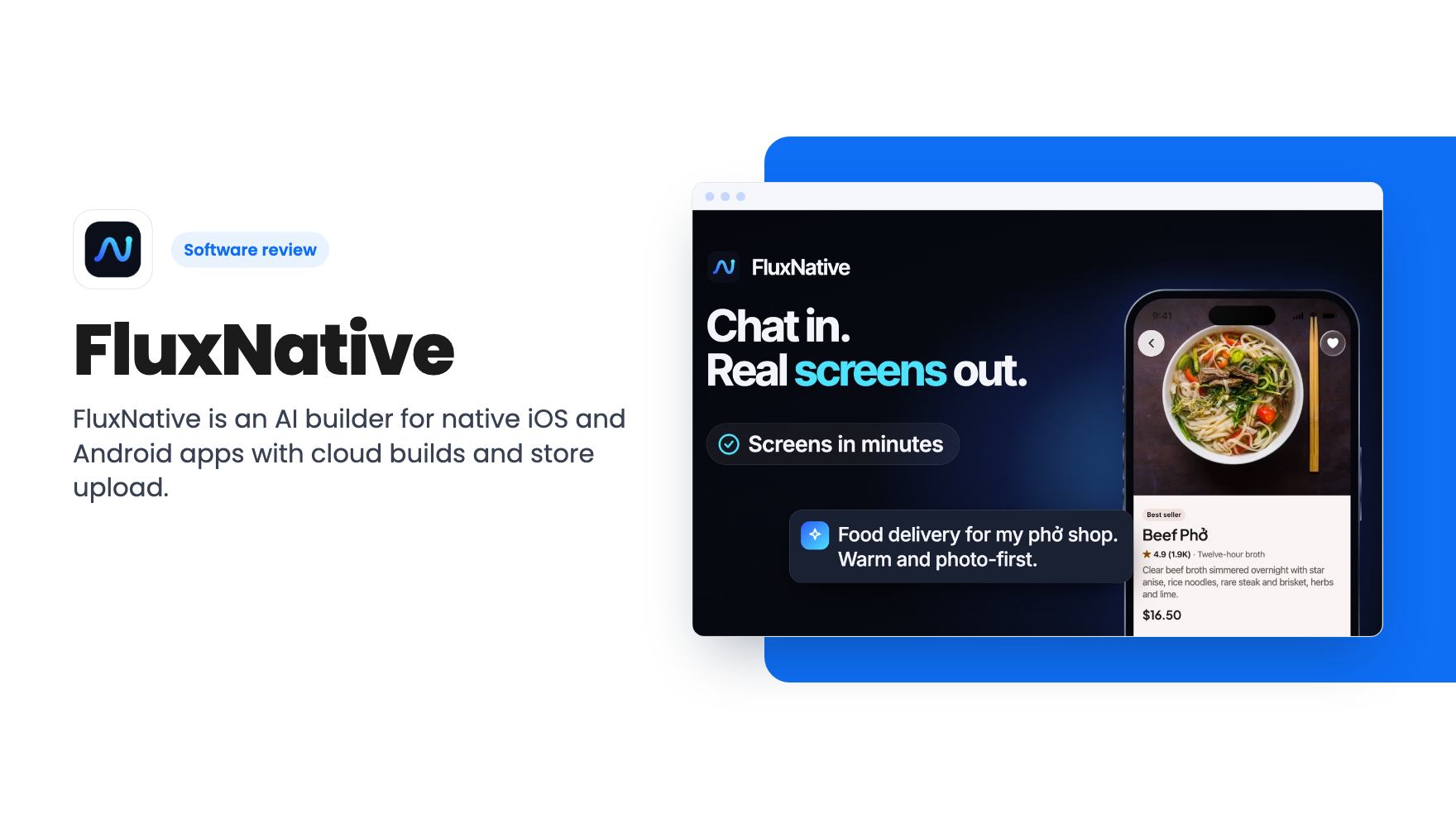
Say you run a small service business and you’d like a customer app in the App Store. You don’t own a Mac, you don’t write code, and the last agency quote made you close the tab. FluxNative is aimed at that gap, and right now it’s on AppSumo as a lifetime deal starting at $69.
We haven’t used it, so everything below comes from the listing. There’s no product video to go on either, which is worth knowing before you buy.
What FluxNative actually builds
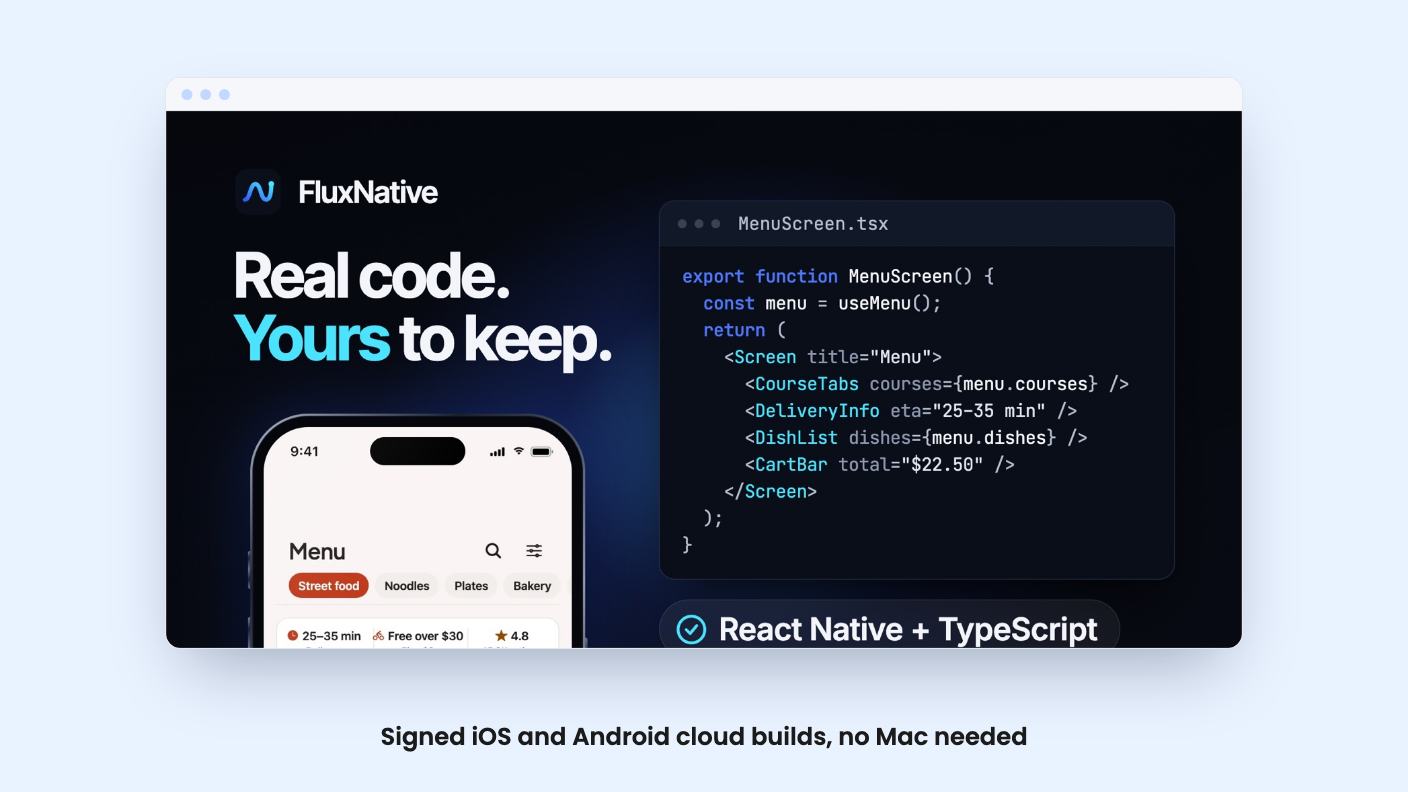
It’s an AI app builder that writes React Native code in TypeScript. You can start from a prompt, from screenshots, or from a Figma plugin, and you can fork templates if a blank page isn’t your thing. If you already have an Expo app, you can import it and keep going.
After the first draft, you edit by chat, and revisions are undoable. That matters more than it sounds, because AI edits sometimes make things worse. There’s also a live browser preview with a shareable link, where you can tap to change text and styles.
The listing positions it against Lovable, Bolt.new and FlutterFlow. Its claim is that Lovable only does web apps, Bolt runs store builds on your own computer, and FlutterFlow is a visual Flutter editor. That’s the vendor describing its competitors, so take it as a pitch, not a review.
The shipping side is the real draw
Plenty of tools can generate a pretty screen. Getting a signed build onto a phone is where most people stall, and this is where FluxNative puts its effort.
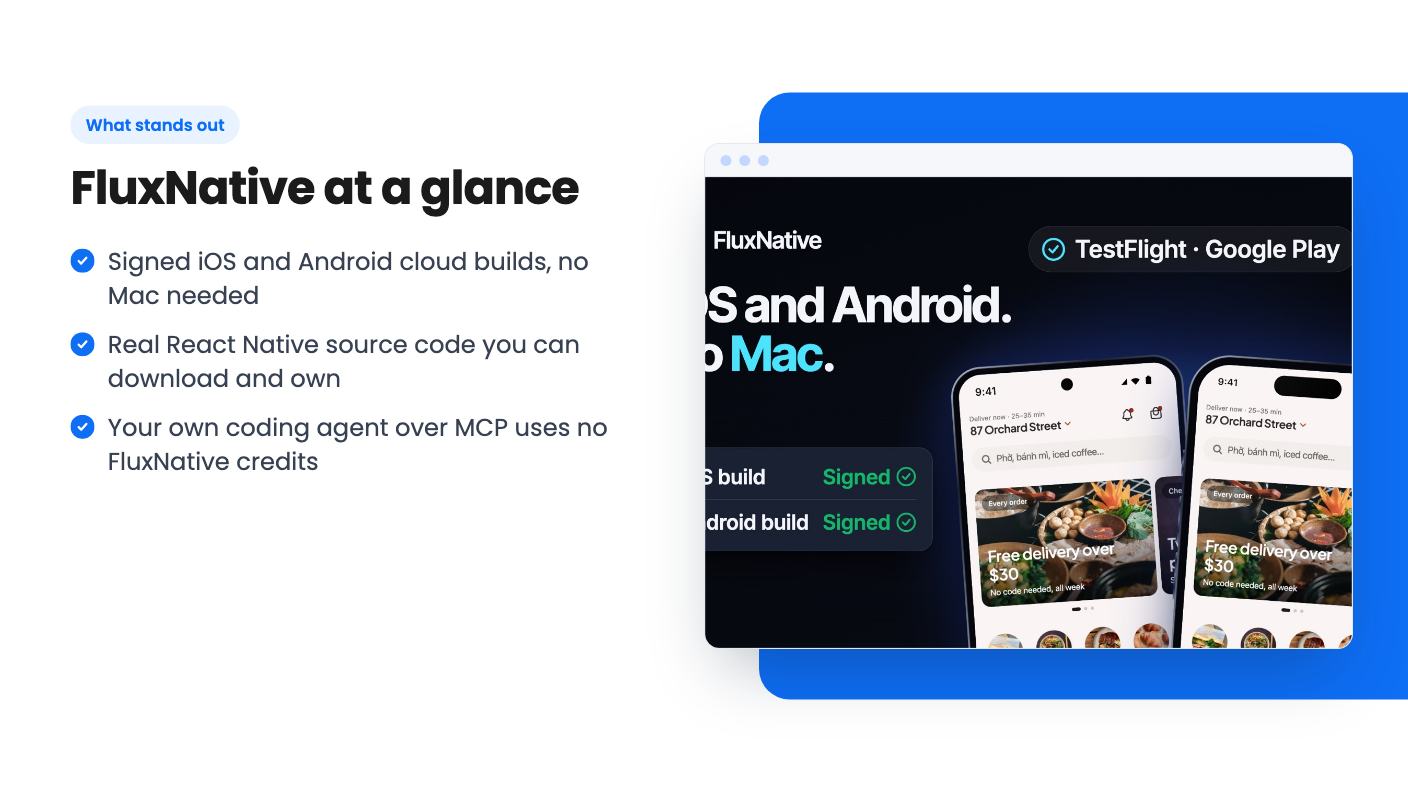
It signs iOS and Android builds in the cloud, so no Mac is required. It uploads to TestFlight and Google Play, and it submits for review only after you confirm. A release and security check runs before you submit. Failed or canceled builds cost no credits, which is a fair policy given how often first builds break.
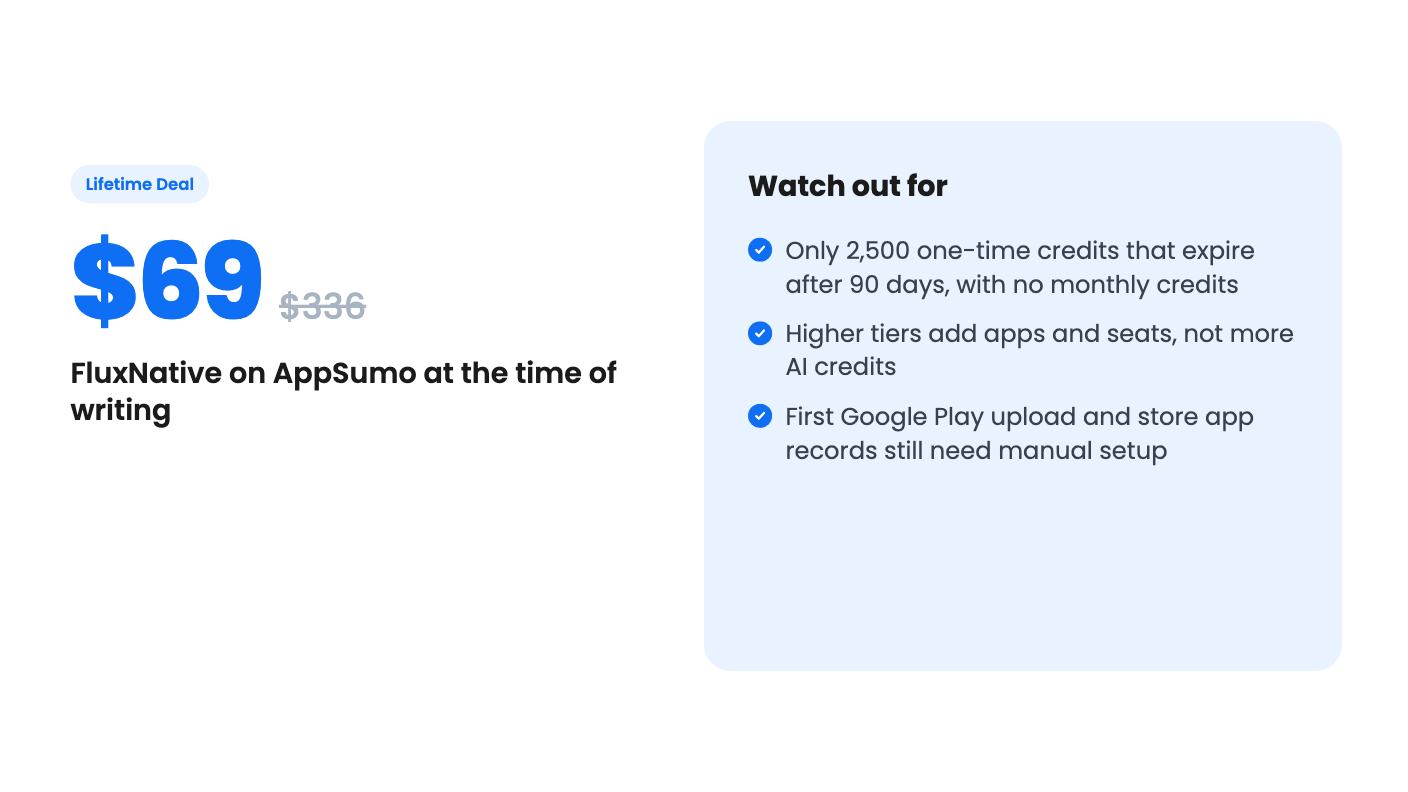
The listing is refreshingly upfront about the limits. You create the app record once in each store’s console, and the first Google Play upload is done by hand there. Both stores review every app, and nobody can promise approval. The listing doesn’t mention developer account fees for the stores, so budget for those separately.
Backends, payments and bringing your own AI
You can connect Supabase, Firebase, Appwrite or your own API. For subscriptions and in-app purchases, it supports RevenueCat, but you connect your own project. That’s sensible, though it means more accounts to set up than the headline suggests.
The feature I’d pay the most attention to is MCP support. You can point Claude Code, Cursor, Codex or another MCP client at your app, either through the desktop app or a remote connection. Those edits run on your own AI subscription and use no FluxNative credits. Native builds still do.
That’s the practical way to make this deal work. If you’re comfortable with a coding agent, you spend credits on builds and let your own tools do the editing. If you’re not, you’ll be spending credits on every chat.
There’s also a grab bag of growth extras: a landing page you can publish to Vercel, Netlify, Cloudflare or Firebase, a growth agent that drafts an audience and campaign plan, a help assistant called Flumi, and a team workspace with roles. The listing gives no detail on how good any of these are, so I’d treat them as bonuses.
Credits are the catch
Lifetime access doesn’t mean lifetime AI. Every license gets 2,500 starter credits, added once at activation and valid for 90 days. The deal has no monthly credits.
Here’s what that means using the listing’s own figures. A typical chat change is 100 to 700 credits. A new app’s first build is usually 500 to 1,500. A signed Android build is 200 to 250, and an iOS build is 300. Spend a few thousand credits on one app and you can burn through the starter balance within a handful of sessions.
Top-ups are $3 per 1,000 credits and last 365 days. By that math a 300-credit iOS build is about 90 cents, and a heavy chat change could run a couple of dollars. That’s not outrageous, but it turns a one-time price into an ongoing cost the moment you build seriously. The listing doesn’t say whether top-up pricing can change.
Picking a tier
Every tier has the same features, including source download and MCP. The differences are limits only.
- Tier 1, $69 (listed at $336): 3 apps, 1 team seat, 1 build at a time.
- Tier 2, $149 (listed at $336): 10 apps, 3 seats, 2 builds at a time.
- Tier 3, $299 (listed at $768): 30 apps, 10 seats, 2 builds at a time.
Notice that all three tiers get the same 2,500 starter credits. Paying more buys room, not AI usage. The 30 apps in Tier 3 sit on the same small credit balance until you top up.
One license covers one workspace and licenses don’t stack. You must activate within 60 days, and you can switch between tiers. AppSumo’s 60-day refund applies. For most solo buyers, Tier 1 is the sensible test, and you can upgrade later from your AppSumo account.
Who should skip it
Skip it if you want web apps. The listing frames this as native mobile, so it’s no substitute for Lovable or Bolt there. Skip it if you need a predictable monthly bill, because the credit model makes cost depend on how often you iterate.
It’s also a young product by the look of the listing. There’s no demo video, no customer numbers and no roadmap detail, and the review summary on AppSumo is marketing copy. If your business depends on this app, a tool with a longer track record is safer.
A complete beginner may struggle too. Creating store records, handling a manual first Google Play upload and wiring up a backend are real tasks, even with AI help.
If you do buy, use the refund window properly. Activate early, build one small real app end to end, and watch how fast the 2,500 credits disappear before the 60 days are up.
How this review was made: researched from FluxNative's official listing, and written with help from AI. We have not tested FluxNative hands-on yet. Prices and deal terms change, so check AppSumo before you buy. See our affiliate disclosure.