You’ve got an app idea, a few hundred dollars at most, and no developer on call. Two AppSumo lifetime deals promise to get you from that spot to something live, and they go about it in opposite ways. One starts at the App Store. The other starts at a research report.
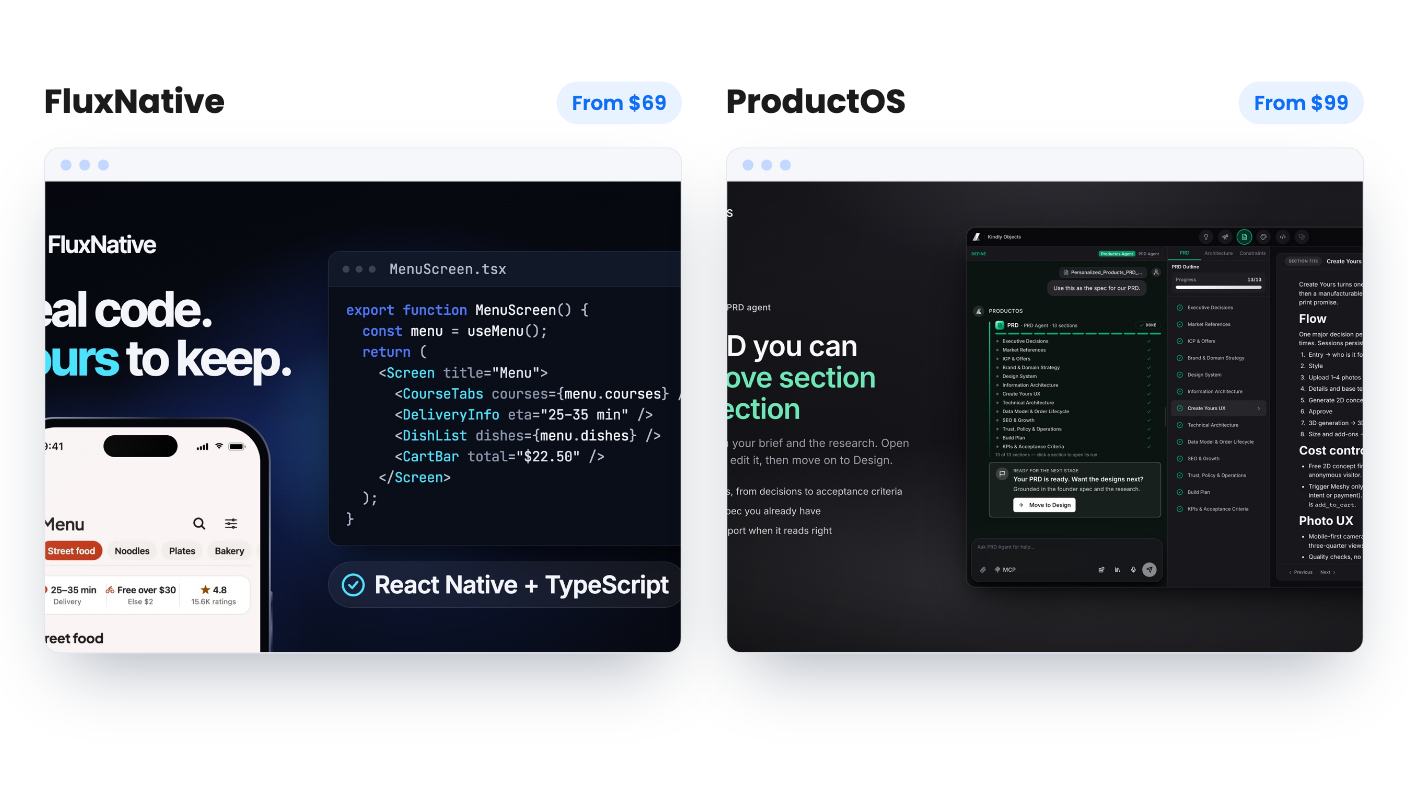
We haven’t used either tool, so everything here comes from the listings. Neither has a demo video, which is worth knowing before you spend anything.
Two different starting points
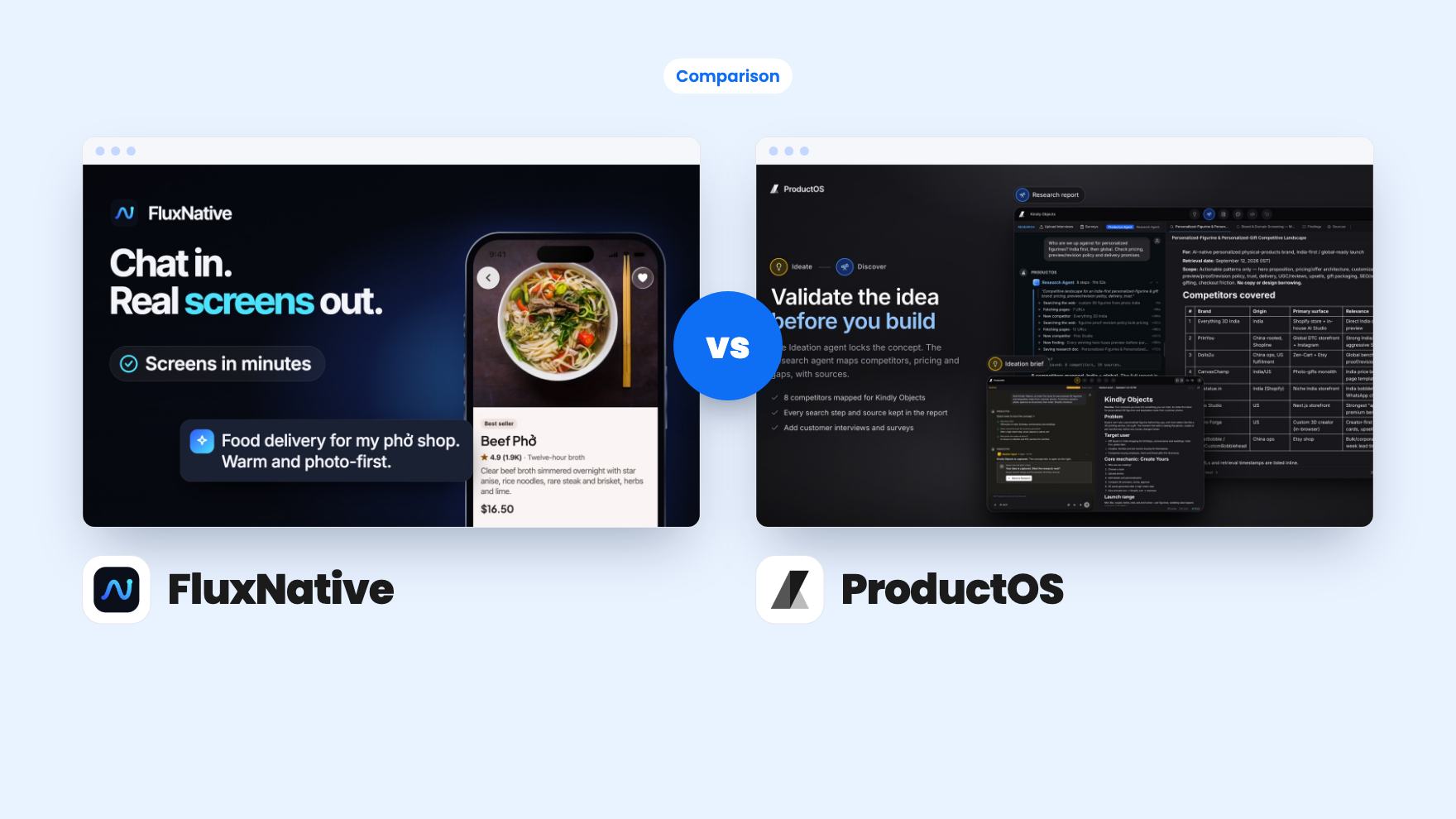
FluxNative is an AI builder for native mobile apps. It writes React Native code in TypeScript from a prompt, screenshots or a Figma plugin, then lets you edit by chat. Its whole pitch is that you can get a signed build onto a phone without a Mac.
ProductOS works the other way round. Its agents ask questions about your idea, research competitors, draft a product requirements document and build a design system. Code comes last, and it can be Next.js, Expo, Astro or WordPress.
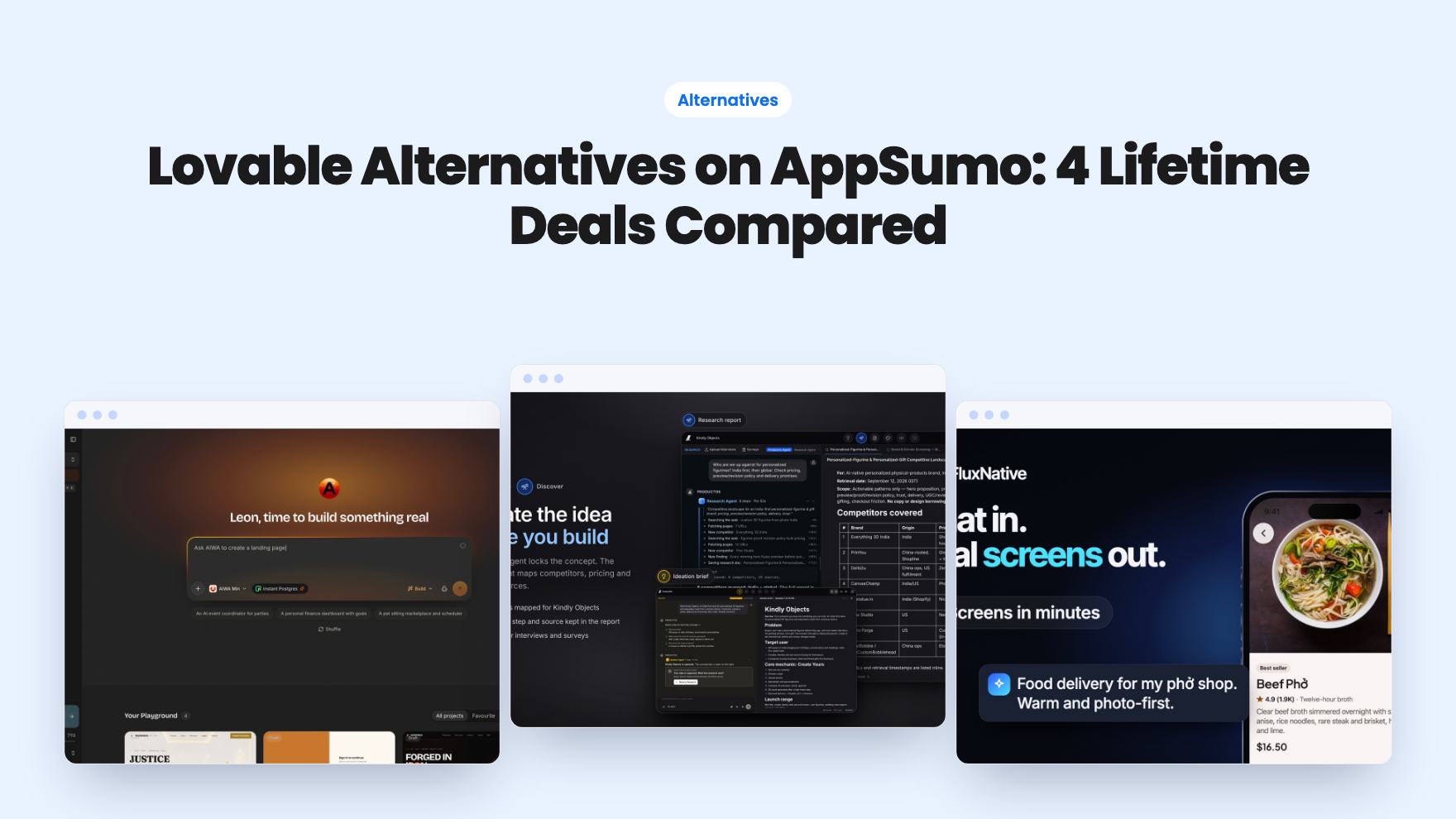
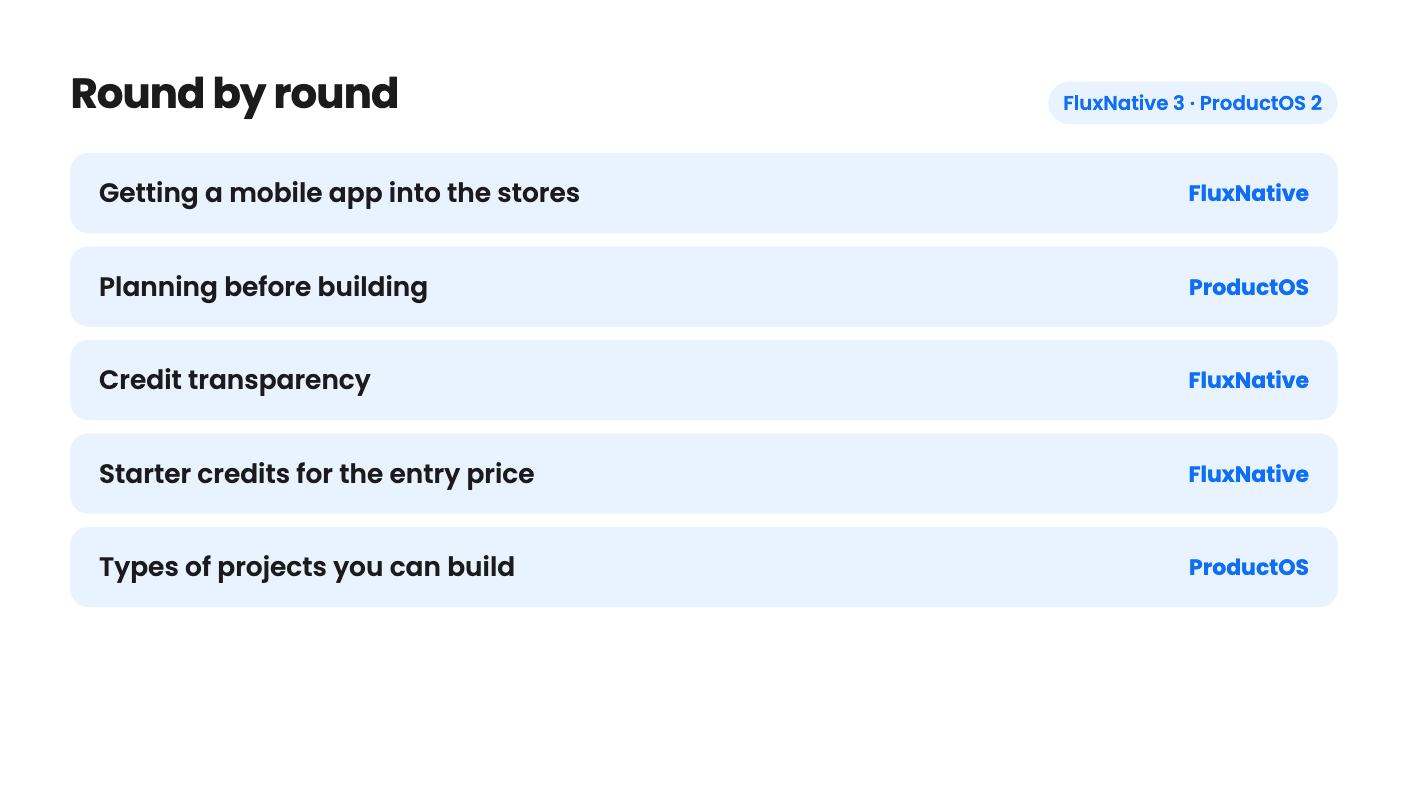
Both list Lovable and Bolt.new as alternatives, which is why they end up in the same search. But the job is different. If you already know what you’re building and need it on a phone, FluxNative fits. If you’re still not sure the idea is worth building, ProductOS is closer to what you need.
Where FluxNative earns its price
Getting a build signed and uploaded is where many first-time app makers get stuck, and FluxNative puts its effort there. It signs iOS and Android builds in the cloud, uploads to TestFlight and Google Play, and only submits for review after you confirm. A release check runs first to flag common rejection causes.
Failed or canceled builds cost no credits. That’s a fair policy, since first builds break often.
The listing is honest about the gaps. You create the app record in each store’s console yourself, and the first Google Play upload is manual. The listing doesn’t mention store developer account fees, so budget for those separately.
The most useful feature may be MCP support. You can point Claude Code, Cursor or Codex at your app, and those edits run on your own AI subscription with no FluxNative credits used. If you’re comfortable with a coding agent, that stretches the deal a long way.
Where ProductOS earns its price
The Research agent saves a sourced report with retrieval dates and links, and you can follow the searches and pages it fetched. You can also upload customer interviews or run surveys. That makes the research something you can check, which is rare in this category.
The PRD agent covers audience, brand, information architecture, UX flows, technical architecture, data model, SEO and acceptance criteria. You approve it section by section before moving to design. We like that, because it forces a decision before credits go into code. Whether the drafts are actually good, the listing can’t tell us.
After design comes the build, with a live preview on desktop and mobile, plus a Code Doctor review that lists findings worst first. Publishing is one click to a ProductOS subdomain with your own domain connected in the same dialog. You’d still want a developer to look at anything that handles payments.
Credits decide the real cost
Neither deal gives you unlimited AI. This is the part to read slowly.
FluxNative gives 2,500 starter credits once, valid for 90 days, with no monthly credits. A chat change runs 100 to 700 credits, a first build 500 to 1,500, an Android build 200 to 250 and an iOS build 300. You could burn through the balance in a few sessions. Top-ups are $3 per 1,000 credits and last 365 days, so a 300-credit iOS build works out to about 90 cents. That’s manageable, and at least you can do the math.
ProductOS gives 1,000 launch credits on its cheapest tier, granted once, never refilled, and they don’t expire while your license is valid. Credits pay for agent work, preview compute and hosting, and hosting is charged monthly. So a live site keeps draining the balance. The listing gives no per-task estimate and no top-up price.
That gap is the biggest weakness in the ProductOS listing. You can’t work out what a finished product costs, and neither can we. FluxNative is the more honest of the two here.
Tiers and limits
FluxNative has three tiers, and every tier has the same features. Only the limits change.
- Tier 1, $69: 3 apps, 1 seat, 1 build at a time.
- Tier 2, $149: 10 apps, 3 seats, 2 builds at a time.
- Tier 3, $299: 30 apps, 10 seats, 2 builds at a time.
All three get the same 2,500 starter credits, so paying more buys room, not AI usage. That makes Tier 1 the sensible test for a solo buyer.
ProductOS has five tiers, and here the extra money does buy more credits:
- Tier 1, $99: 1,000 credits, 1 agent, 1 user, 1 live product.
- Tier 2, $199: 2,000 credits, 2 agents.
- Tier 3, $399: 4,000 credits, 4 agents.
- Tier 4, $799: 8,000 credits, 8 agents, 5 users, 3 live products.
- Tier 5, $1,499: 15,000 credits, 25 agents, 15 users, 5 live products.
Tiers 2 and 3 still allow one user and one live product, so for a single project you’re paying for a bigger fuel tank. Both deals have a 60-day activation window and AppSumo’s 60-day refund. With ProductOS, a refund revokes the license and any unused credits.
Which one to buy
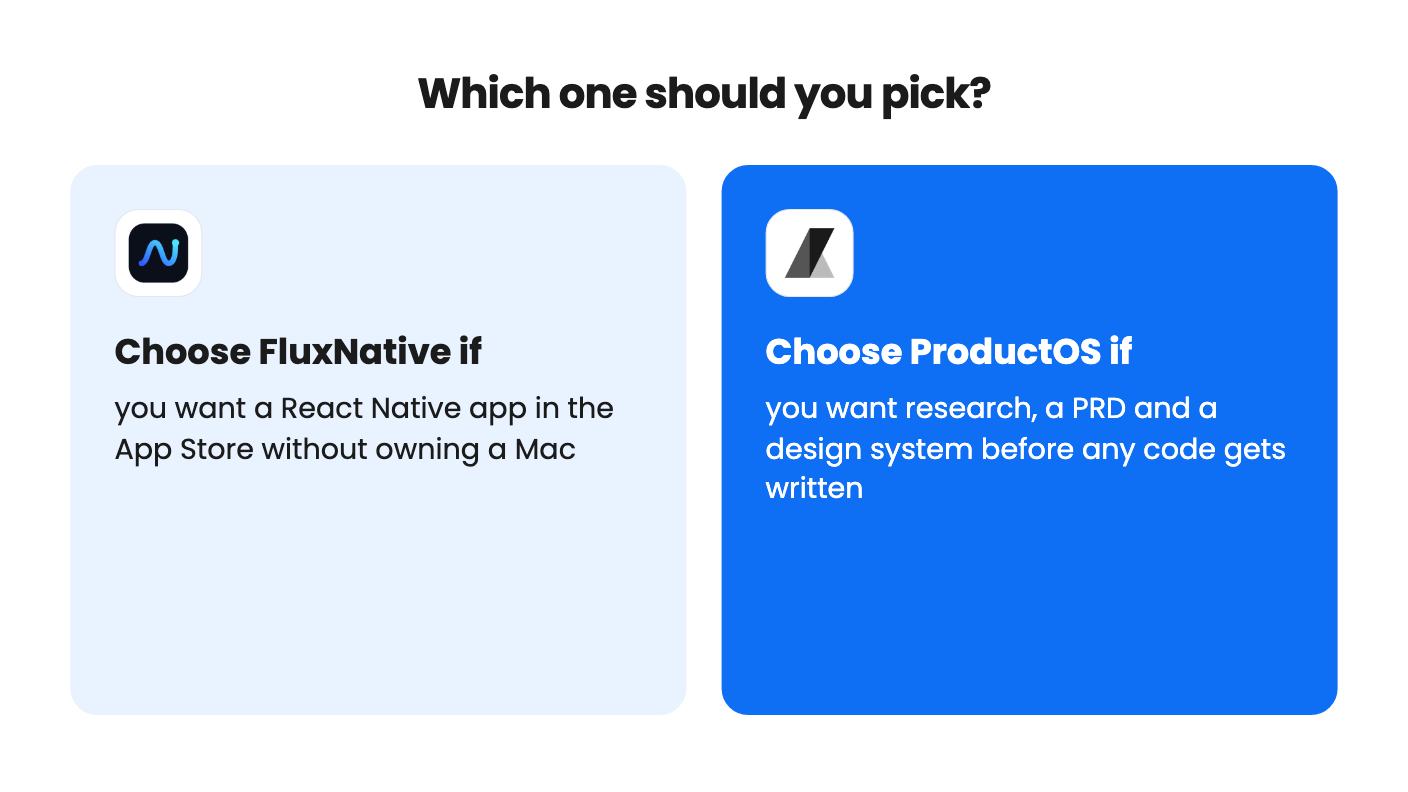
Buy FluxNative Tier 1 if you want one mobile app in the stores and you’re happy to let your own coding agent do the editing. Skip it if you want web apps, a predictable monthly bill, or a product with a proven history. The listing shows no customer numbers, and a complete beginner may find the store setup heavy.
Buy the ProductOS $99 tier if you’re a founder or product manager who wants a structured path from idea to a repo you own, and you’ll treat it as a cheap trial. Skip it if you expect free hosting or unlimited builds. It has one AppSumo review, a 5.00 average, which tells us very little.
Whichever you pick, use the refund window properly. Activate early, build one small real thing, and watch how fast the credits drop before day 60. That single test will tell you more than either listing can.
How this comparison was made: researched from both tools' official listings and demo videos, and written with help from AI. We have not tested FluxNative or ProductOS hands-on yet. Prices and deal terms change, so check AppSumo before you buy. See our affiliate disclosure.