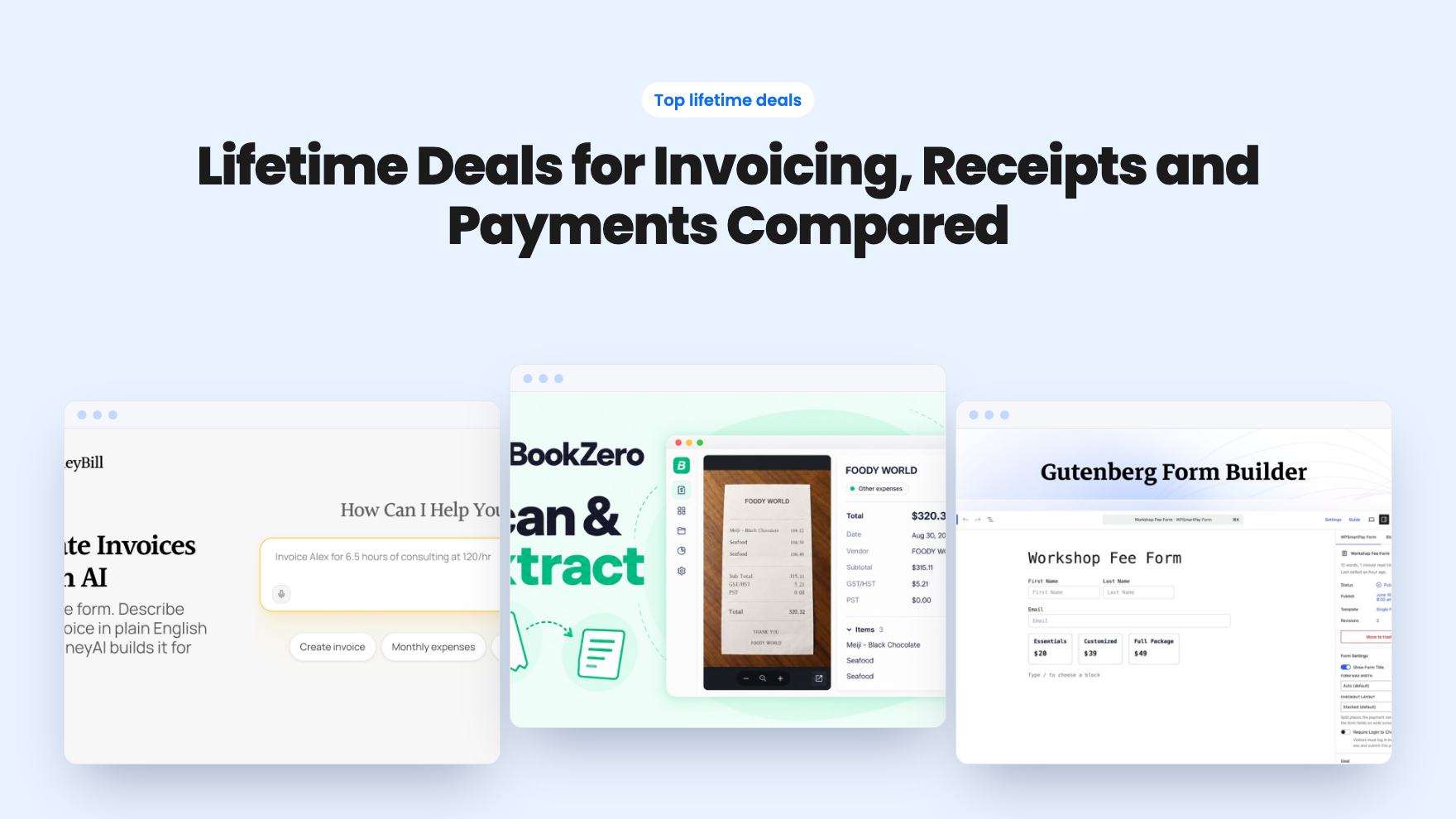
Say you’ve finished a consulting job and need to get paid. You can email the client an invoice, or you can point them to a checkout page on your own website. That choice is the real split between HoneyBill and WPSmartPay, and it should decide which lifetime deal you look at first.
We haven’t used either tool. Everything here comes from the listings, and I’ll say so where they go quiet.
Two different ways of getting paid
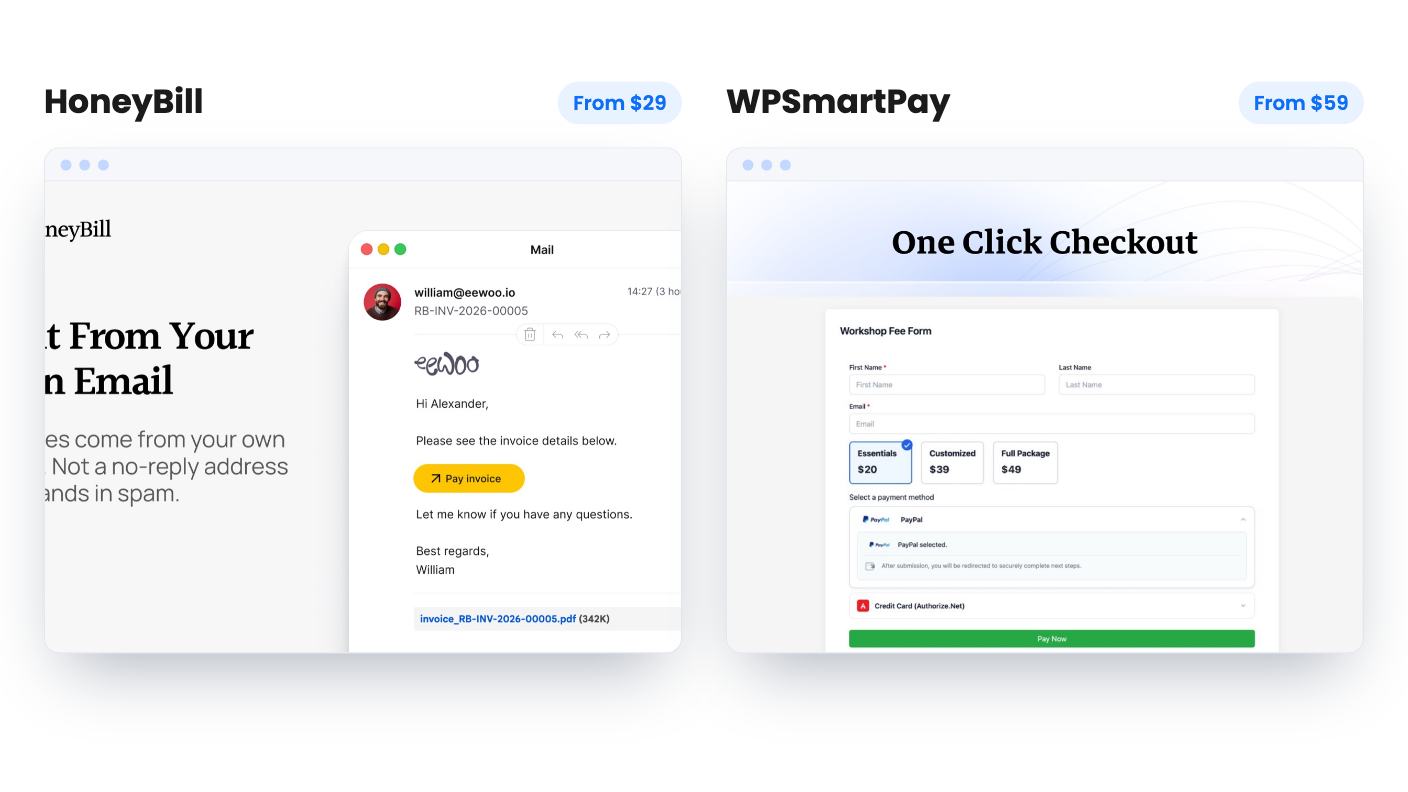
HoneyBill is an invoicing tool. You describe a job in plain English or a voice note, it drafts the invoice with line items and totals, and it sends a branded PDF from your own Gmail or Outlook account. The client pays through a hosted checkout page.
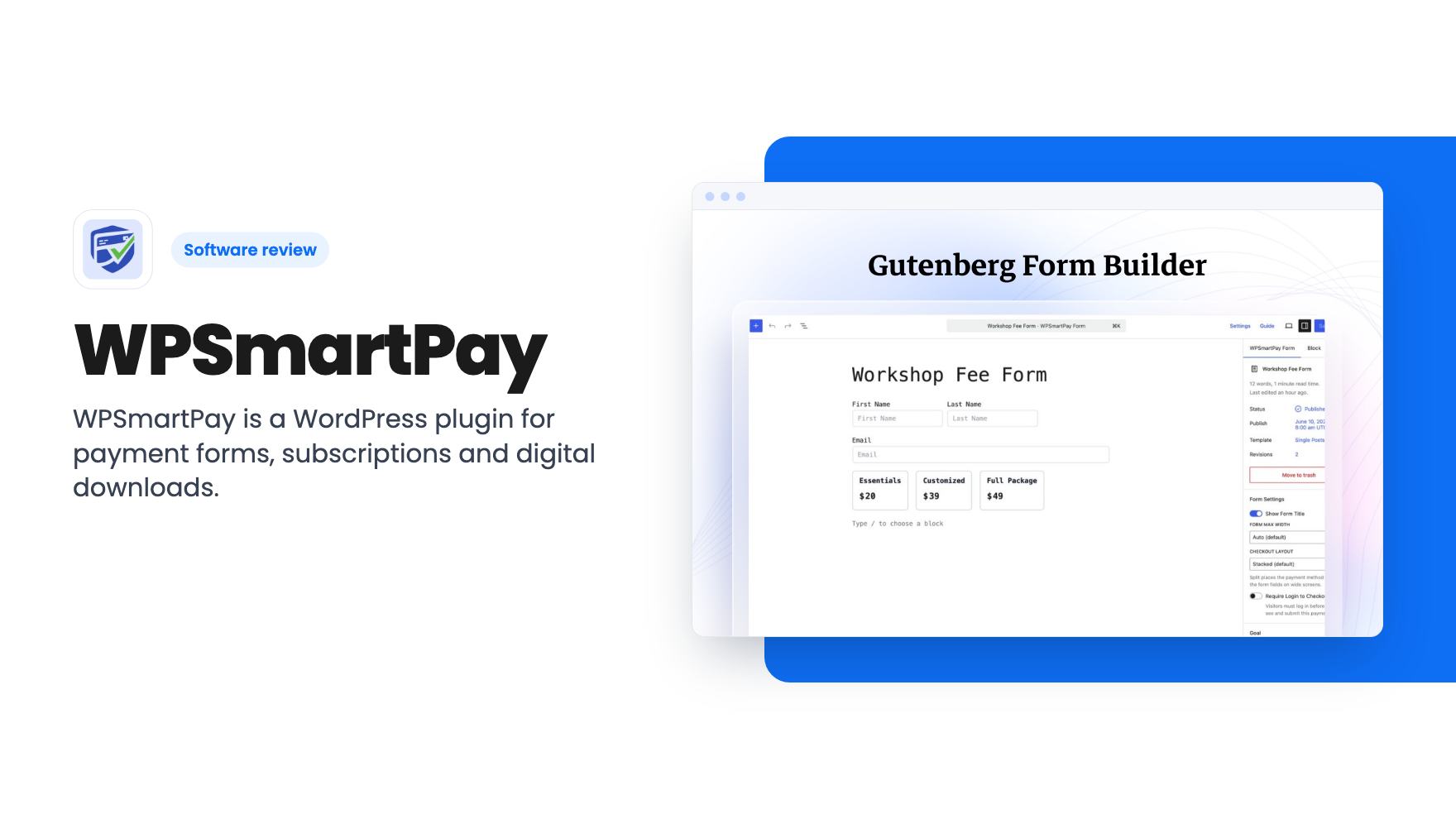
WPSmartPay is a WordPress plugin. It puts payment forms, subscriptions, donations and digital downloads on the site you already have. Nobody gets an invoice by email unless you set that up. They land on a page, pick an option and pay.
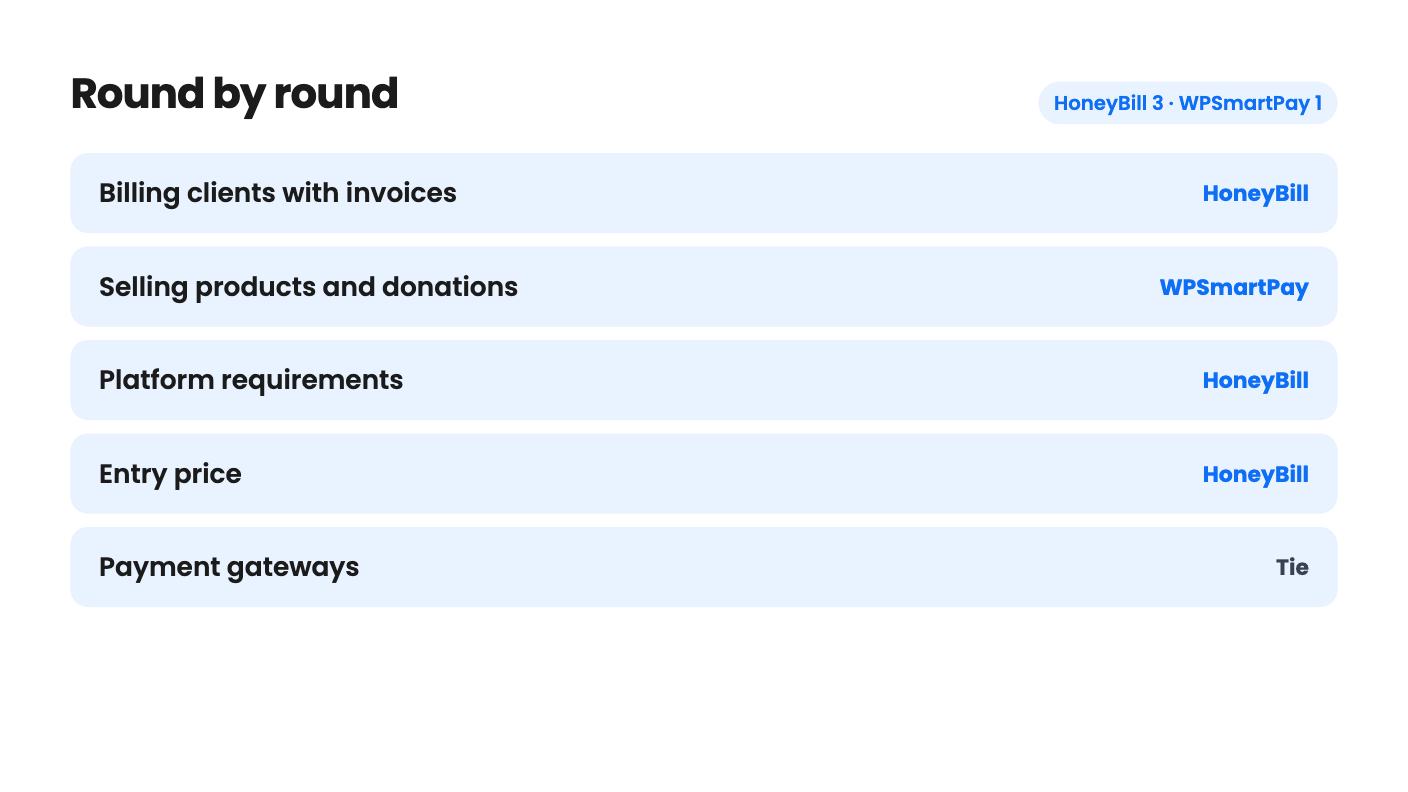
Those are different jobs. If your clients expect a bill after the work is done, HoneyBill is the closer match. If your customers arrive at your site and buy something, WPSmartPay is.
AppSumo files WPSmartPay under invoicing and lists Gumroad as its alternative. HoneyBill’s alternatives are Xero, FreshBooks and Invoice2go. Notice that the two lists don’t overlap. That tells you how the vendors see themselves.
Where HoneyBill earns its place
The feature I’d care about most is sending from your own address. The listing says invoices arrive from you rather than a generic billing inbox, which should help them get opened. No tool can promise inbox placement, so treat that as a better chance, not a guarantee.
Then there’s follow-up. You can see when a client has viewed an invoice, and automatic payment reminders go out so you don’t have to write the awkward nudge. For anyone who chases late payers, that alone may justify $29.
There’s also time and project tracking, plus a dashboard with built-in reports. The listing doesn’t go deeper than that, and AppSumo’s own review summary says buyers want more advanced reporting. This is not bookkeeping software. Nothing in the listing mentions expenses, bank feeds or tax.
The AI drafting is the headline, but I’d keep my expectations modest. The listing doesn’t say how it handles a messy description, so you’ll want to read every draft before it goes out.
Where WPSmartPay earns its place
WPSmartPay is stronger if you sell things. Under its products section you add a title, cover image, description and files, choose One Time or Subscription billing, and set a base price, an optional sale price and variations. The FAQ says you can sell eBooks, audio, illustrations, games, photos and videos, with a list of supported file types.
The form builder works inside the Gutenberg block editor. You can embed a form anywhere with a block or shortcode, let buyers choose their own amount, or fix the price. Donation forms are covered too, which is why nonprofits appear in its best-for list.
Payments route straight to your own accounts through Stripe, PayPal, Mollie, Paddle and bKash. The Paddle option needs a verified Paddle account first, so plan for that wait. The listing also doesn’t say how tax or VAT is handled for each gateway. If you sell into the EU, ask before you buy.
You also get coupons, anti-spam controls, branded receipts and a dashboard showing revenue, completed payments and active subscriptions. It mentions CRM, Zapier and Slack connections without naming the CRMs, so verify those.
Prices and tier limits
HoneyBill has two lifetime tiers: $29 (list $77) and $79 (list $144). WPSmartPay has three: $59 (list $119), $99 (list $199) and $199 (list $399).
Here’s where both listings get muddy, and HoneyBill’s is worse. Read in order, the first column of its feature table gives you 5 invoices a month, unlimited projects, custom domains, AI generation and team members, but no recurring invoices. The second column gives you unlimited invoices and recurring invoices, but 5 projects, one email account, and no AI or custom domains.
A cheaper tier with a monthly cap is believable. A pricier tier that drops the AI feature is not. Either the columns are swapped or the table is wrong, and the listing doesn’t say which. Ask the seller in the Q&A before you pay, especially if recurring retainers matter to you. You can upgrade between tiers while the deal is live, which softens the risk.
WPSmartPay’s only listed feature difference is site count, shown as 50 / 5 / 1 with no labels. By price order it looks like 50 sites on the $199 tier and one on the $59 tier, but that’s our reading. If you only run one site, the $59 tier is probably all you need.
WPSmartPay also says future AI models may come at a discount or may need an add-on. It doesn’t say what AI features exist, so don’t count that as a reason to buy.
Support, reviews and risk
HoneyBill has 19 reviews averaging 4.42 out of 5. WPSmartPay has 6 averaging 4.67. Neither sample is big, and the AppSumo summaries are marketing copy. I wouldn’t let the higher WPSmartPay score sway you, since six reviews can’t tell you much.
The complaints are worth reading, though. HoneyBill buyers mention fiddly custom domain setup and a wish for deeper reporting. WPSmartPay buyers mention limited customization and slower support. If you need heavy design control over checkout pages, the WPSmartPay listing shows no template library or styling options.
Both deals carry a 60-day money-back guarantee and require you to activate your license within 60 days. That makes either one a fairly cheap experiment. The bigger question is longevity, and neither listing gives a founding date, team size or roadmap. With any lifetime deal you’re betting the company keeps the product alive.
Which one to buy
Pick HoneyBill if invoices are how you get paid. That means freelancers and consultants who bill often, want mail to come from their own address, and don’t want to think about reminders. Get the tier question answered first, because it decides what you actually receive.
Pick WPSmartPay if you already run WordPress and your income comes from products, memberships, donations or simple payment links. It’s a poor choice if you aren’t on WordPress, and a weak one if you want a polished invoice trail with follow-ups.
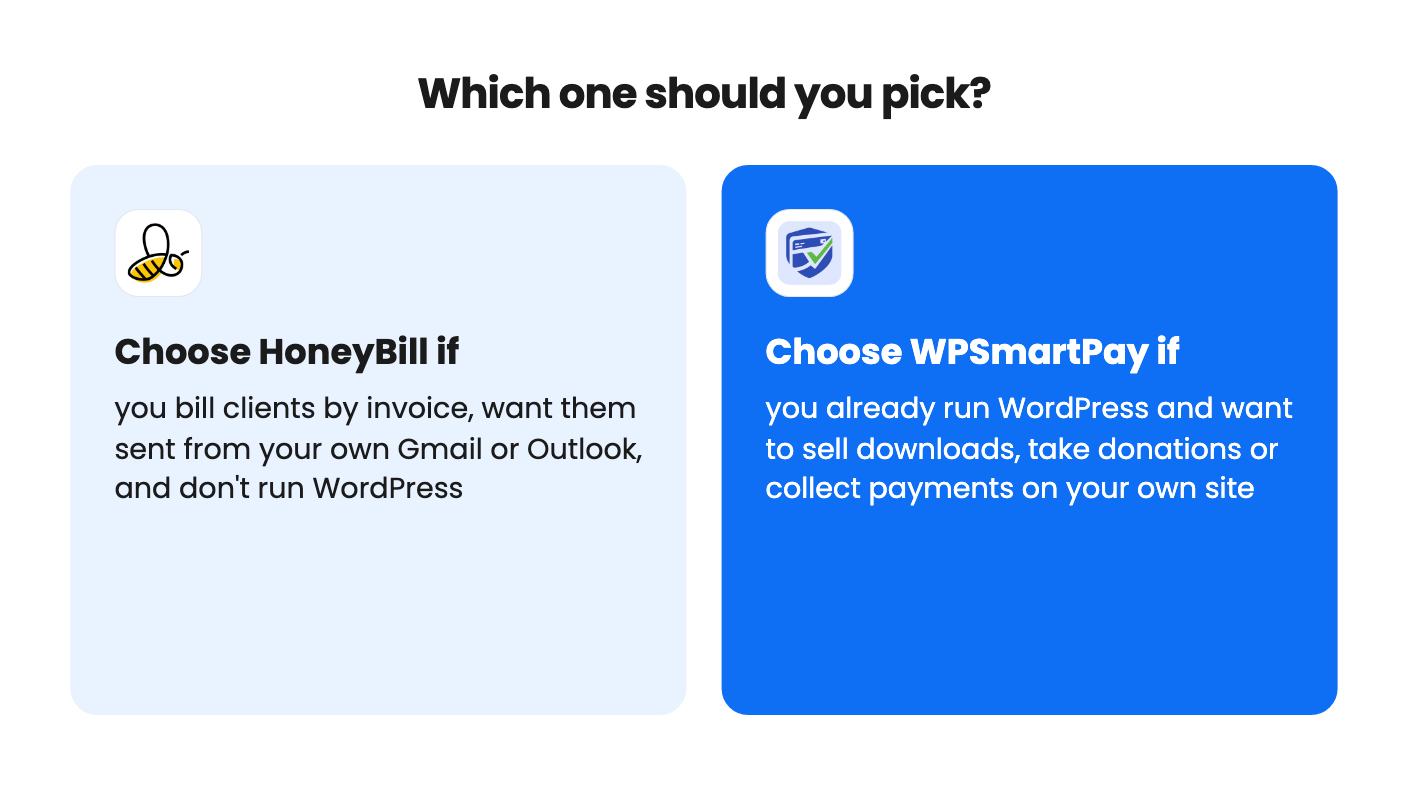
Some people will want both. A consultant who bills clients and also sells a guide on their site has two separate jobs here, and neither tool covers the other’s. If you can only choose one, choose the one that matches how money reaches you today.
How this comparison was made: researched from both tools' official listings and demo videos, and written with help from AI. We have not tested HoneyBill or WPSmartPay hands-on yet. Prices and deal terms change, so check AppSumo before you buy. See our affiliate disclosure.