AI Writing & VideoTop deals
AppSumo Deals Ending Before Black Friday 2026: Buy or Wait?
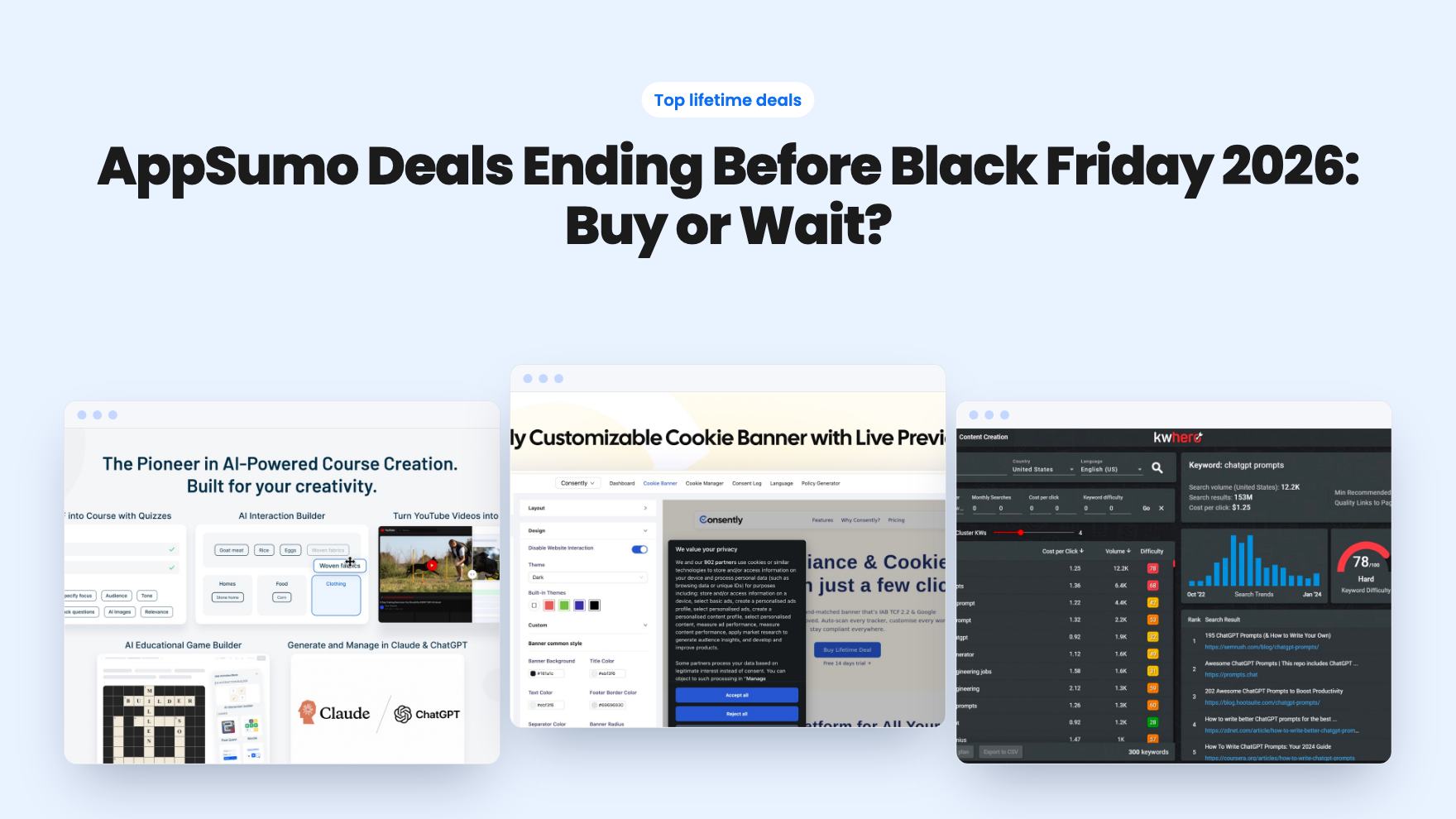
Fourteen AppSumo lifetime deals end before Black Friday on November 27, 2026. Here are the seven worth a look now, and who should skip them.
AIWriteBook covers the KDP path but runs on credits. Inkfluence AI is cheaper and quicker for workbooks and lead magnets.
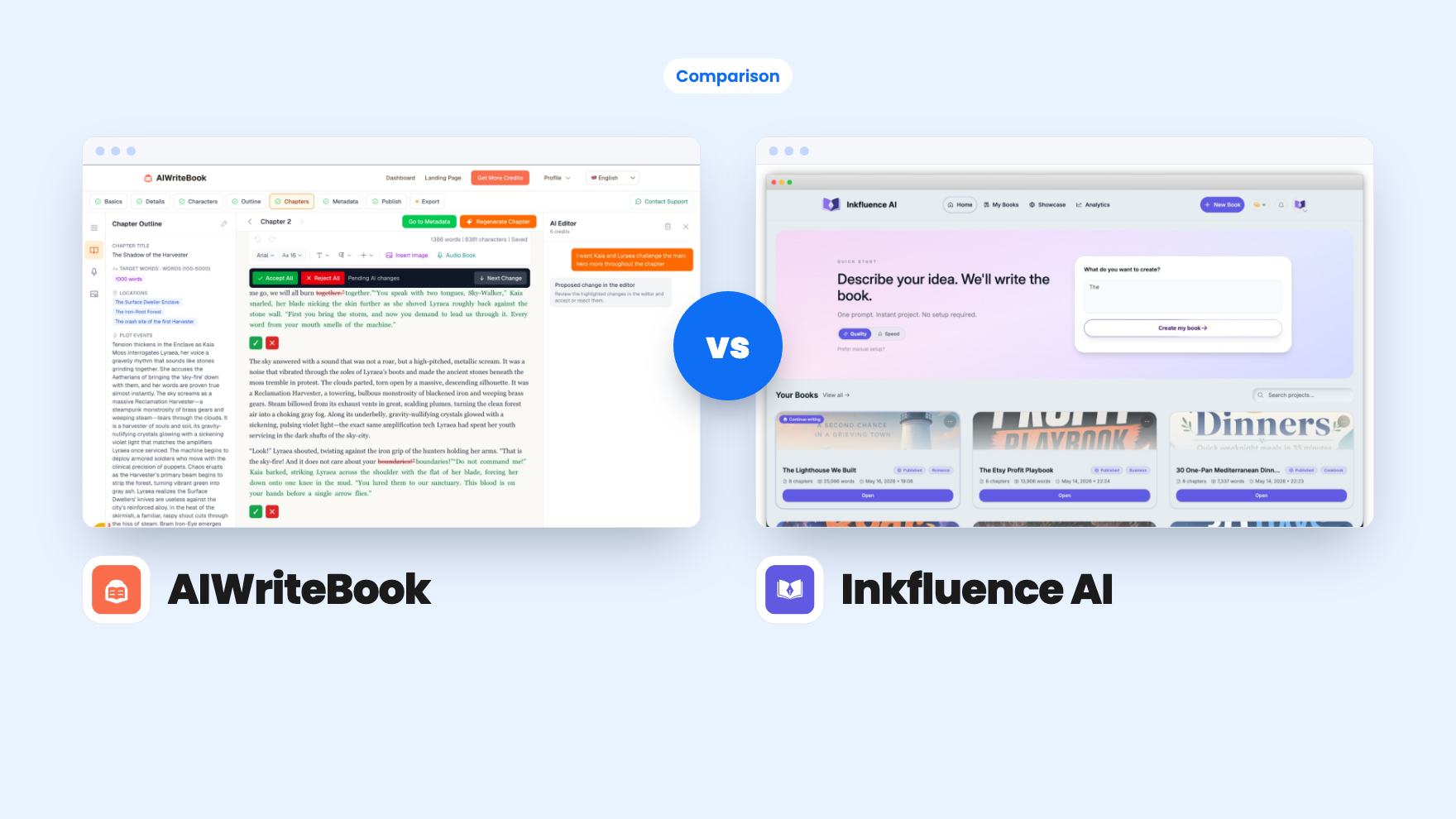
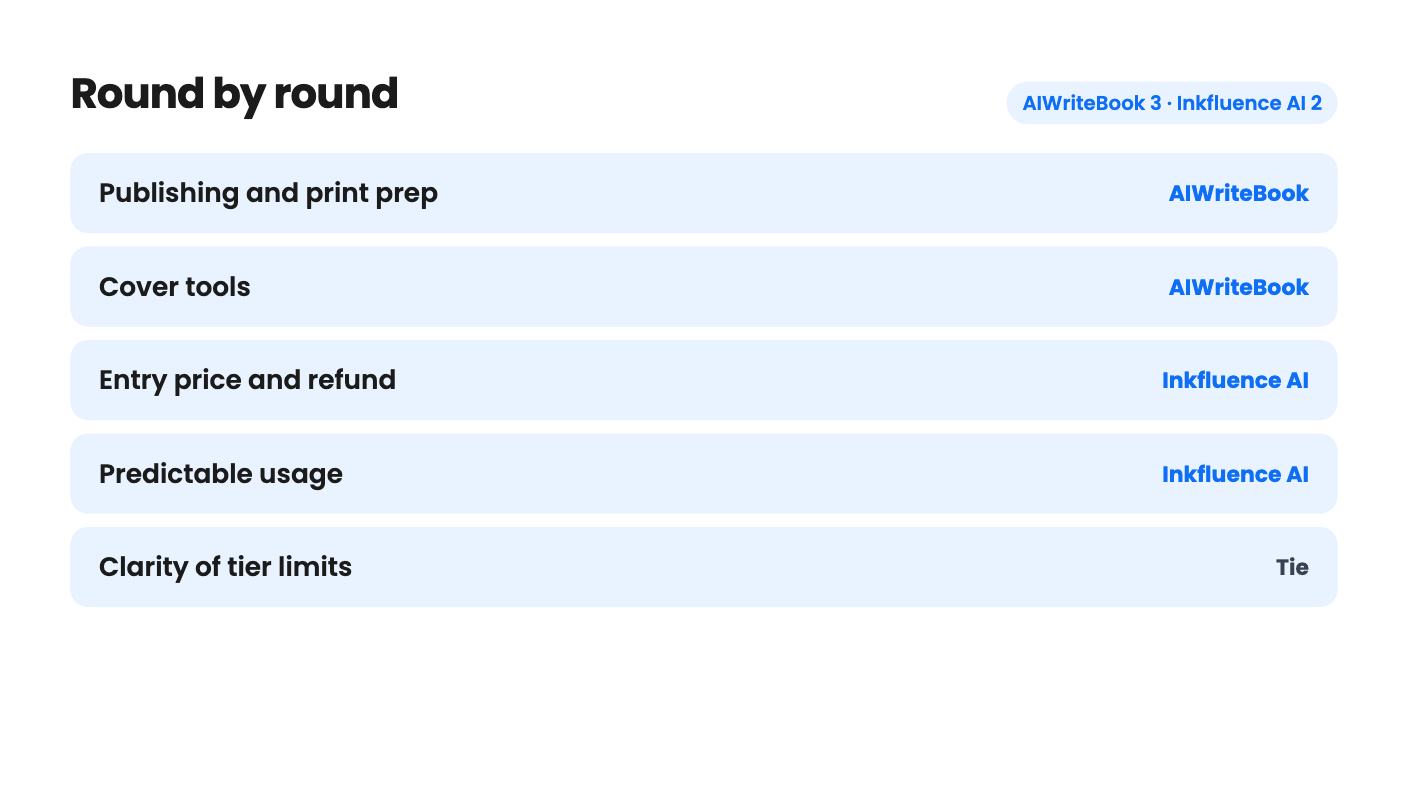
AIWriteBook takes 3 rounds, Inkfluence AI takes 2.
| Round | Winner | Why |
|---|---|---|
| Publishing and print prep | AIWriteBook | AIWriteBook lists a print-ready PDF, a wrap cover sized to your page count, and KDP keyword and category research, while Inkfluence mentions none of that. |
| Cover tools | AIWriteBook | AIWriteBook offers 21 art styles and a spine-aware wrap cover, whereas Inkfluence has templates, AI covers and a 3D mockup but no mention of print cover specs. |
| Entry price and refund | Inkfluence AI | Inkfluence starts at $49 against $79 for AIWriteBook, and both offer a 60-day money-back guarantee. |
| Predictable usage | Inkfluence AI | AIWriteBook spends credits on every action, while Inkfluence's table appears to list unlimited chapters on tiers 1 and 2, though its columns are unlabeled. |
| Clarity of tier limits | Tie | AIWriteBook never says which credit figure belongs to which tier, and Inkfluence's FAQ contradicts its own audiobook row. |
| Buyer track record | AIWriteBook | AIWriteBook shows 219 AppSumo reviews at 4.73 against 39 reviews at 4.03 for Inkfluence, though AppSumo's own summary for AIWriteBook cites different numbers. |
| AIWriteBook | Inkfluence AI | |
|---|---|---|
| Starts at | $79 | $49 |
| List price | $144 | $89 |
| Plan | Lifetime Deal | Lifetime Deal |
| Deal ends | Dec 3, 2026 | Dec 1, 2026 |
| Best for | Authors, Freelancers, Solopreneurs | Authors, Content creators, Online coaches |
| Alternative to | Novelcrafter, Scrivener, Sudowrite | Canva, Jasper, Scrivener |
You’ve got a book idea and a deadline, and the real trouble is everything around the writing. Outline, cover, formatting, an export file that a store will accept. Both of these lifetime deals promise to take that chore list off your hands, but they aim at different kinds of books and different kinds of buyers.
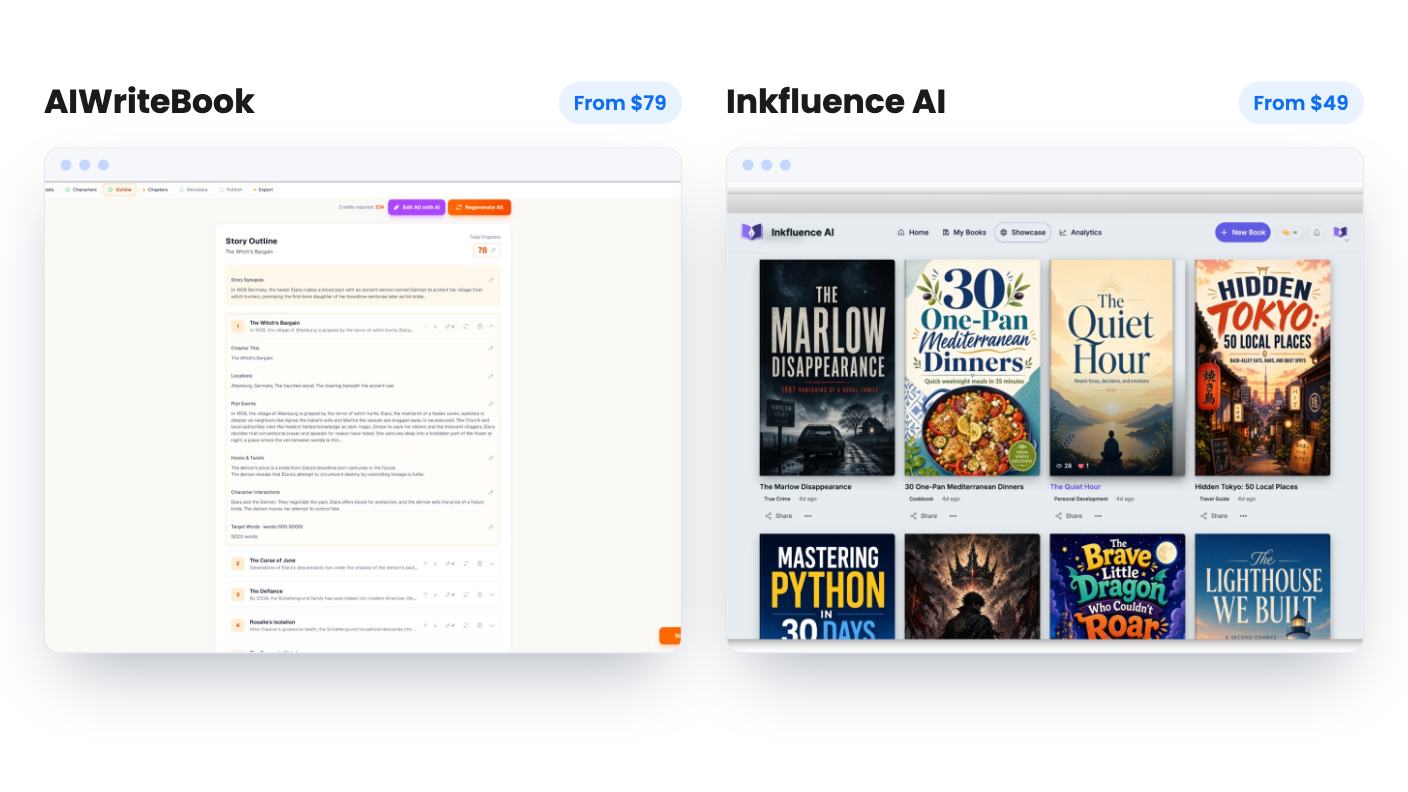
We haven’t used either tool. Everything here comes from the AppSumo listings, so treat the claims as the vendors’ own.
AIWriteBook wants to be a small publishing house in a browser. The listing counts over 45 tools across writing, editing, publishing and launch. It handles fiction, nonfiction, picture books, coloring books and comics, and it goes as far as press kits, ARC review requests and launch graphics.
Inkfluence AI is narrower and faster. You describe a book in one prompt and it drafts chapters, sections and content. You pick from 33 book types, including cookbooks, lead magnets and workbooks, then add a cover and export. That’s the whole loop.
So the real question is what you’re making. If you’re building a catalog of Amazon books, AIWriteBook is the closer fit. If you’re turning out quick guides for a mailing list or a client, Inkfluence is probably enough.
This is where AIWriteBook pulls ahead for authors. You upload a sample of your own writing and the listing says each chapter is written to match your voice, rhythm and dialogue. For nonfiction you can add PDFs and notes as references, and chapters cite them. The first reference file is free, and each after that costs 10 credits.
Fiction gets character cards, a plot outline, a plot twist helper and an editorial letter that scores your book on 30 criteria. It also claims to catch continuity slips, like a character renamed in chapter 9. None of that can be judged from a listing, but it shows the vendor is thinking about people who care about their prose.
Inkfluence offers much less here. You get a rich text editor with autosave for each chapter, and that’s it. AppSumo’s own review summary mentions limited prompt control, which fits a one-prompt design. You steer at the start and repair afterward.
For a serious fiction writer, that gap matters. For a 30-page workbook, it probably doesn’t.
Both tools do covers, and both export PDF, EPUB and DOCX. The difference is what happens after the export.
AIWriteBook says its print files meet the specs of KDP, IngramSpark, Lulu and Draft2Digital. It builds a wrap cover with the spine sized to your page count. Its designer has 21 art styles and draws your title and author name into the art, with each new version costing 30 credits. There’s also keyword research and category selection drawn from live Amazon data, though the listing doesn’t say how often that data refreshes.
Inkfluence has cover templates you can customize, AI-generated covers, uploaded artwork applied across a project, and a 3D mockup preview. The mockup is a nice touch for Gumroad pages. But the listing doesn’t mention trim sizes, print-ready cover templates or any print-on-demand layout, so a paperback bound for KDP would need extra checking on your side.
Inkfluence does say you keep full commercial rights and can sell anywhere. AIWriteBook’s listing doesn’t address rights in the material we have. Either way, check Amazon’s own rules on AI-generated content.
Here are the lifetime tiers side by side.
AIWriteBook’s lifetime label needs a careful read, because you pay once but spend credits every month on every action. A 20-chapter book costs 60 credits in outlines. Chapters then cost 300 on Gemini, 400 on Grok or 600 on Claude, before covers, illustrations or edits. Monthly credit figures of 5,000, 2,500, 1,000 and 500 appear in the listing, but it never says which belongs to which tier. On tiers 3 and 4 you can connect your own OpenRouter key so each action costs 1 credit, but then you pay the model provider directly.
Inkfluence’s feature table has four values per row but no column labels. Read in order, the first two tiers show unlimited chapters, 60 or 30 audiobook chapters a month, 38 AI voices, and 100 or 50 AI illustrations a month. The last two show 80 and 35 chapters a month with no audiobooks or illustrations. That would make the cheaper tiers the generous ones. It might be right, or the table might be ordered differently, and the listing doesn’t say. The FAQ also claims audiobooks are included in every plan, which the table contradicts.
So neither vendor makes this easy. Inkfluence’s caps look simpler if the table is read as written. AIWriteBook’s credit model is more flexible but harder to budget.
Both deals share some terms: activate within 60 days, upgrade while the deal is live, downgrade only within 60 days of purchase. AIWriteBook adds that access to future AI models may come at a discount or need an add-on. The deals end on December 2, 2026 for AIWriteBook and November 30, 2026 for Inkfluence AI.
AIWriteBook shows 219 AppSumo reviews averaging 4.73, though AppSumo’s own summary text says 4.6 from over 1,300 reviews. Those figures don’t match, so read the real reviews. The summary mentions occasional credit consumption problems and interface quirks.
Inkfluence has 39 reviews averaging 4.03. That’s a thinner base and a lower score, and the summary flags limited prompt control. It does credit the addition of 38 audiobook voices after launch, which hints at active development. There’s also an iOS app with real-time sync, which AIWriteBook doesn’t mention.
One more note on evidence. AIWriteBook’s demo video is a founder talking for about a minute, with no screen recording of the product. Inkfluence has no demo video at all. Neither listing lets you see the output.
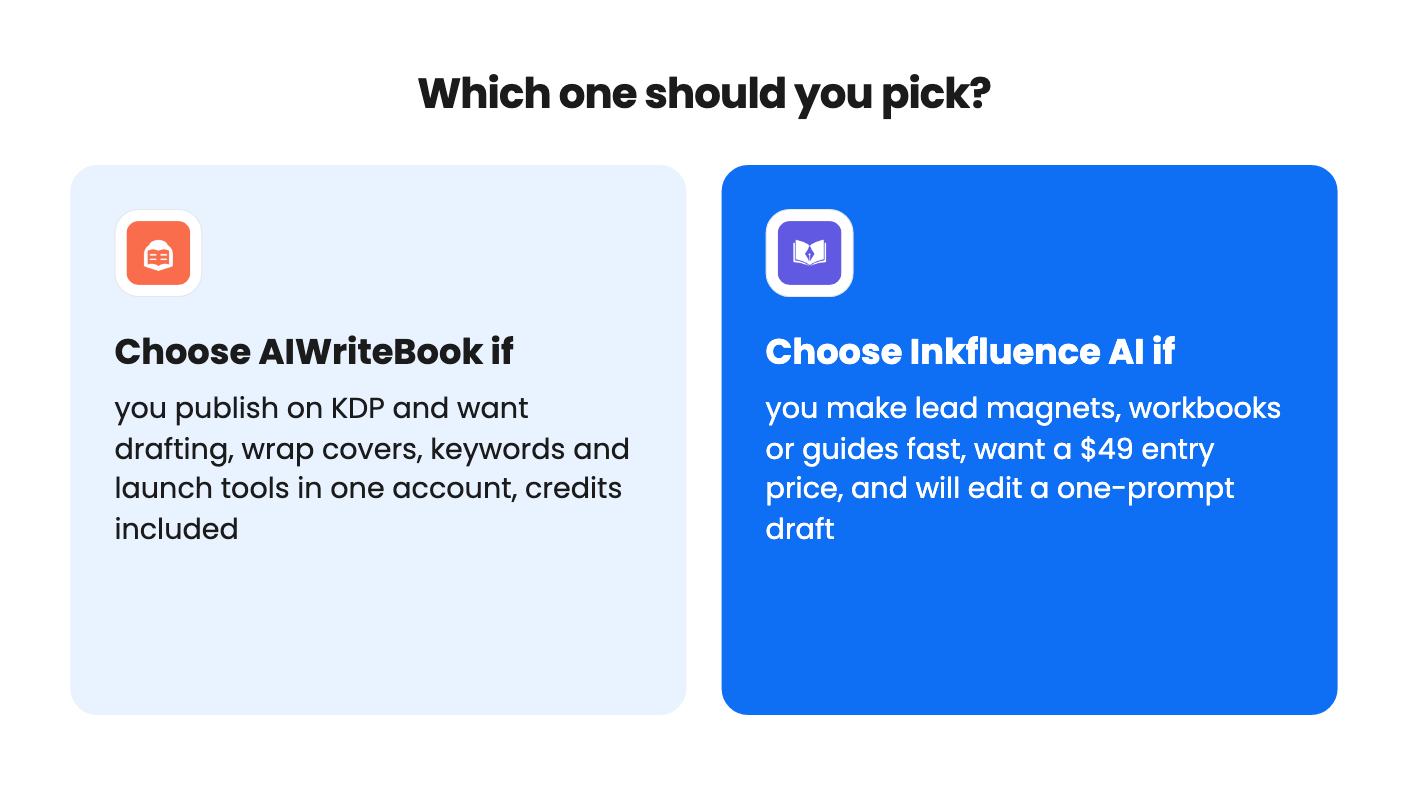
Buy AIWriteBook if you’re publishing on Amazon, want voice matching and KDP prep in one place, and can live with a credit meter. Buy Inkfluence if your books are guides, workbooks or lead magnets and you’d rather pay $49 and edit than learn a credit system.
But whichever you pick, use the 60-day refund the way it’s meant to be used. Run a real project through it with your own material, check the tier limits with support before you spend past the entry level, and ask for the money back if the output isn’t something you’d put your name on.
Inkfluence AI starts at $49 (list $89) and AIWriteBook starts at $79 (list $144). Both give you 60 days to ask for a refund, so the real cost of testing either is low.
AIWriteBook looks stronger on paper. It lists print-ready interiors, wrap covers with a spine sized to your page count, and KDP keyword and category research. Inkfluence says its exports are ready for KDP but doesn't mention trim sizes or print cover templates.
No. AIWriteBook lists monthly credit figures of 5,000, 2,500, 1,000 and 500 without saying which tier gets which. Inkfluence has a feature table with unlabeled columns and an FAQ that conflicts with it on audiobooks. Ask support before buying above the entry tier.
How this comparison was made: researched from both tools' official listings and demo videos, and written with help from AI. We have not tested AIWriteBook or Inkfluence AI hands-on yet. Prices and deal terms change, so check AppSumo before you buy. See our affiliate disclosure.
Fourteen AppSumo lifetime deals end before Black Friday on November 27, 2026. Here are the seven worth a look now, and who should skip them.
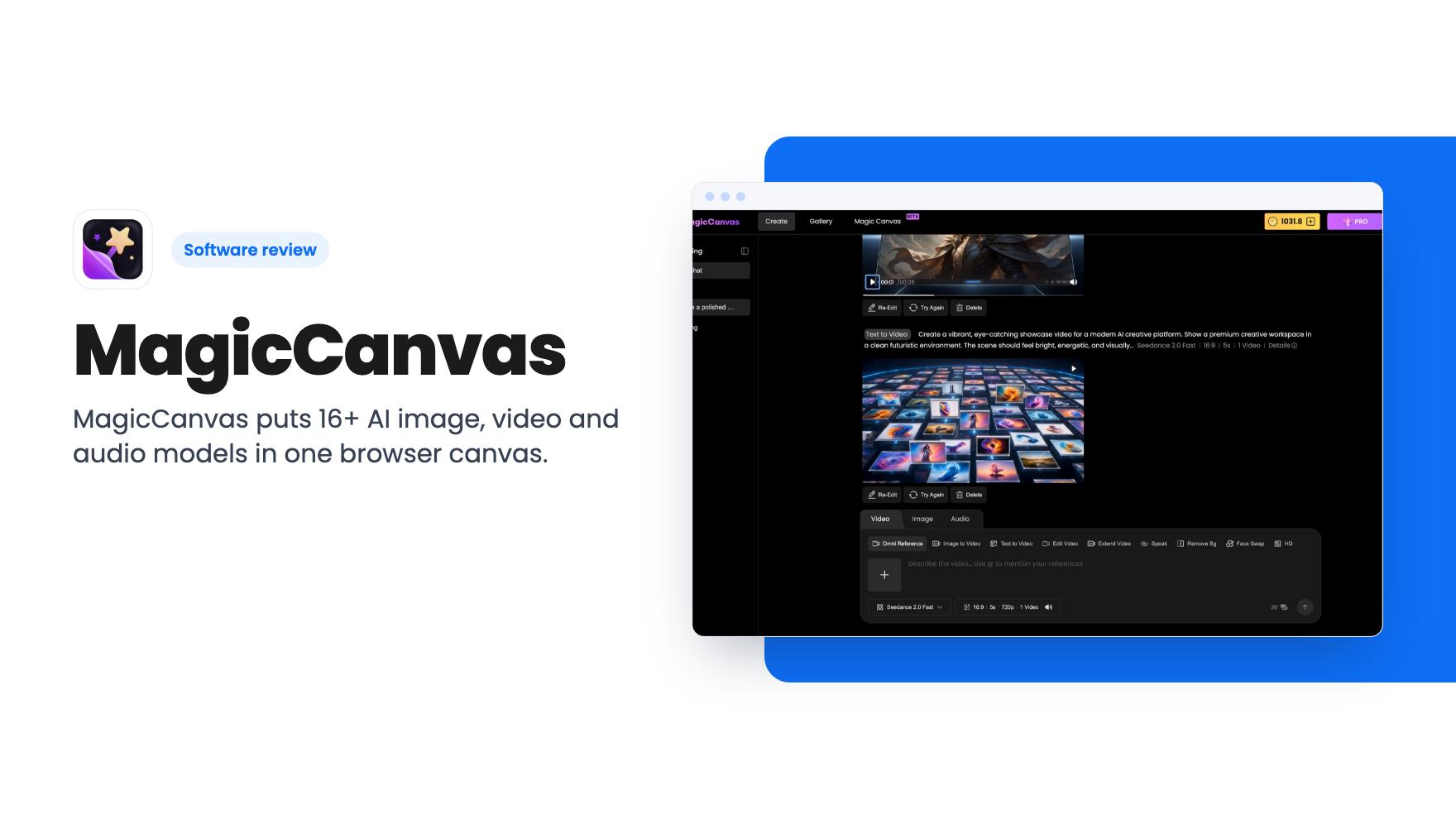
MagicCanvas puts 16+ AI image, video and audio models in one browser canvas. The $59 lifetime deal looks cheap, but the monthly credit caps matter most.
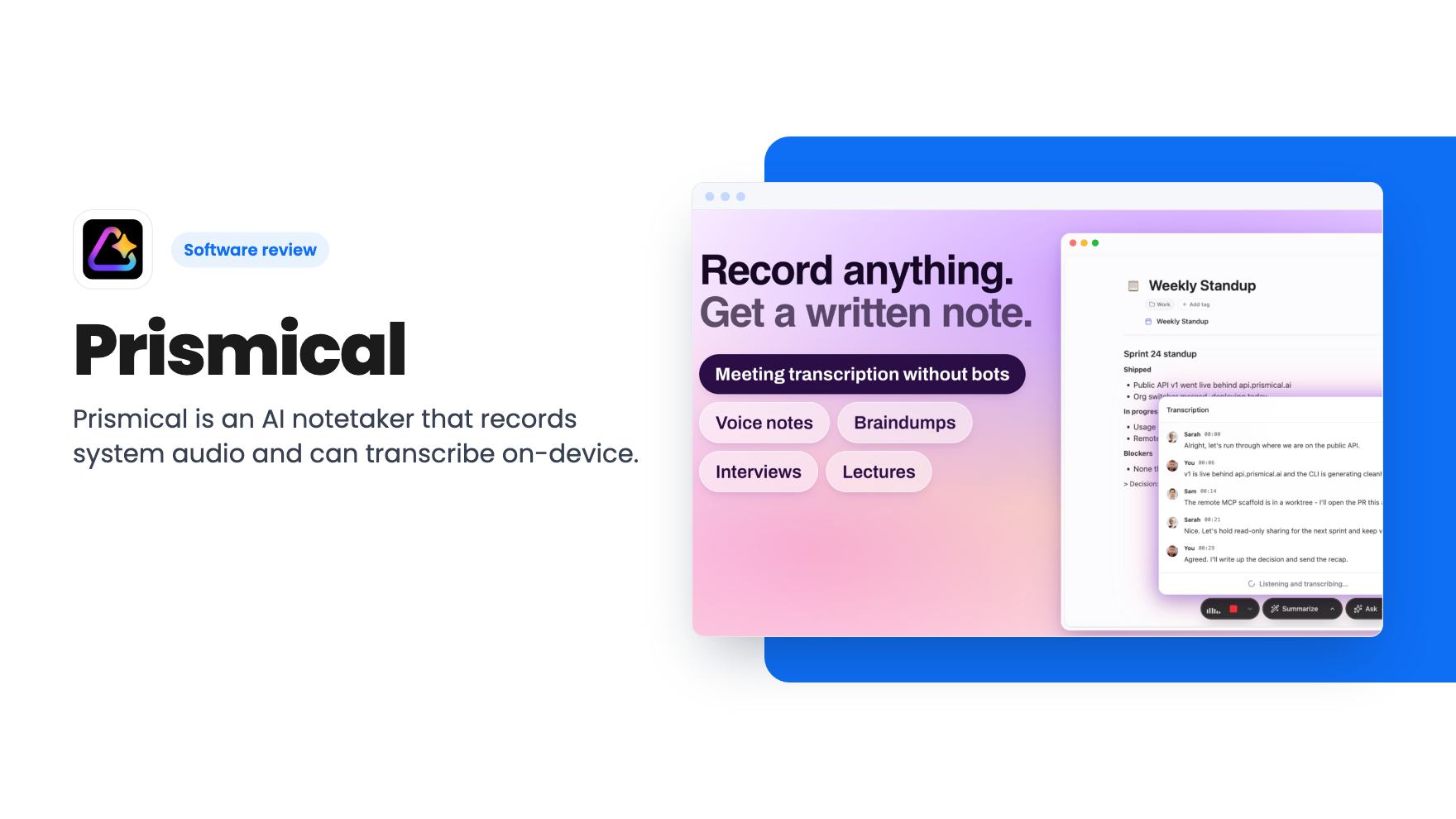
Prismical is an AI notetaker that records system audio and can transcribe on-device. The AppSumo lifetime deal runs $59 to $749, and the tier limits matter.