AI Writing & VideoTop deals
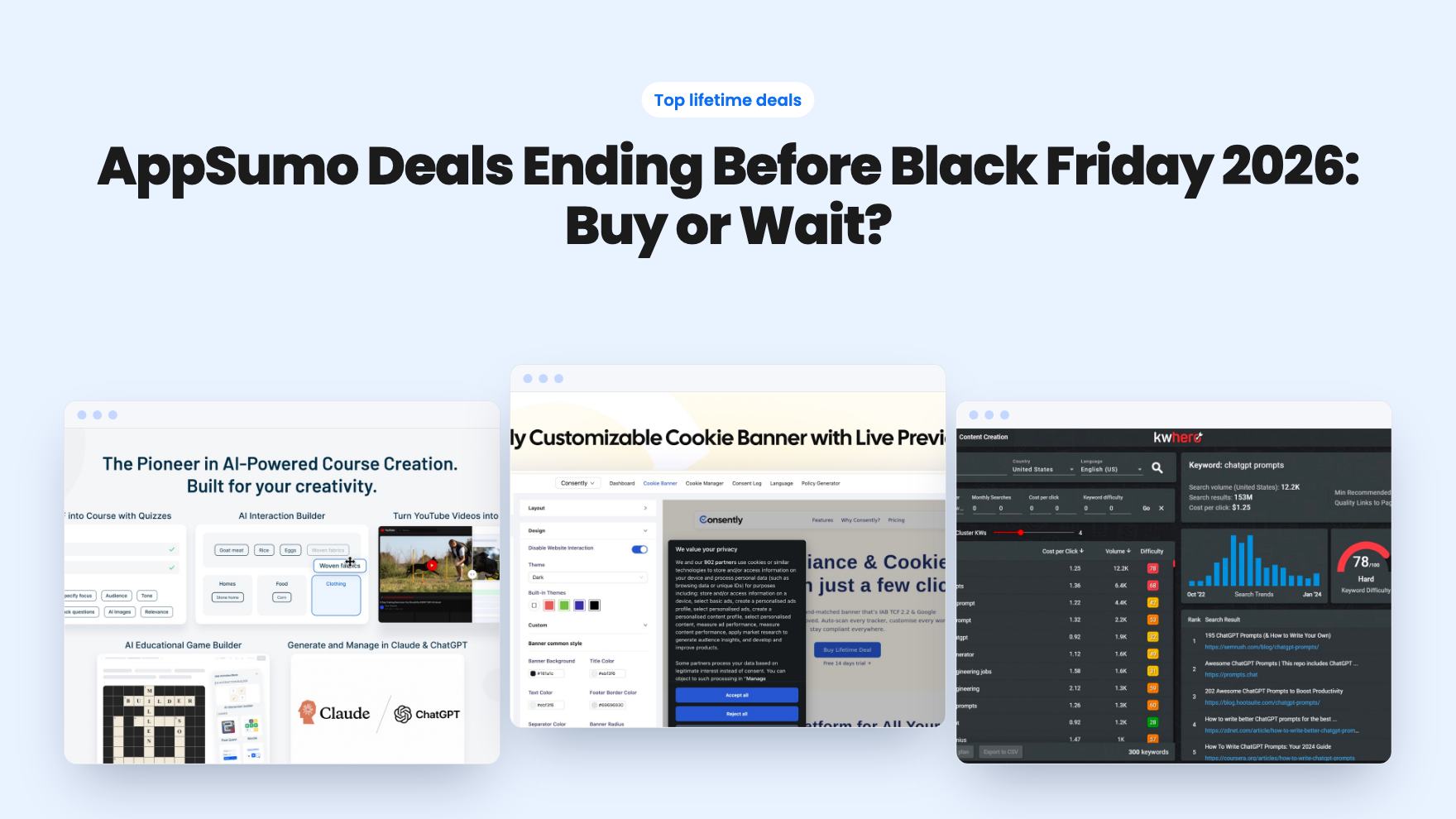
AppSumo Deals Ending Before Black Friday 2026: Buy or Wait?
Fourteen AppSumo lifetime deals end before Black Friday on November 27, 2026. Here are the seven worth a look now, and who should skip them.
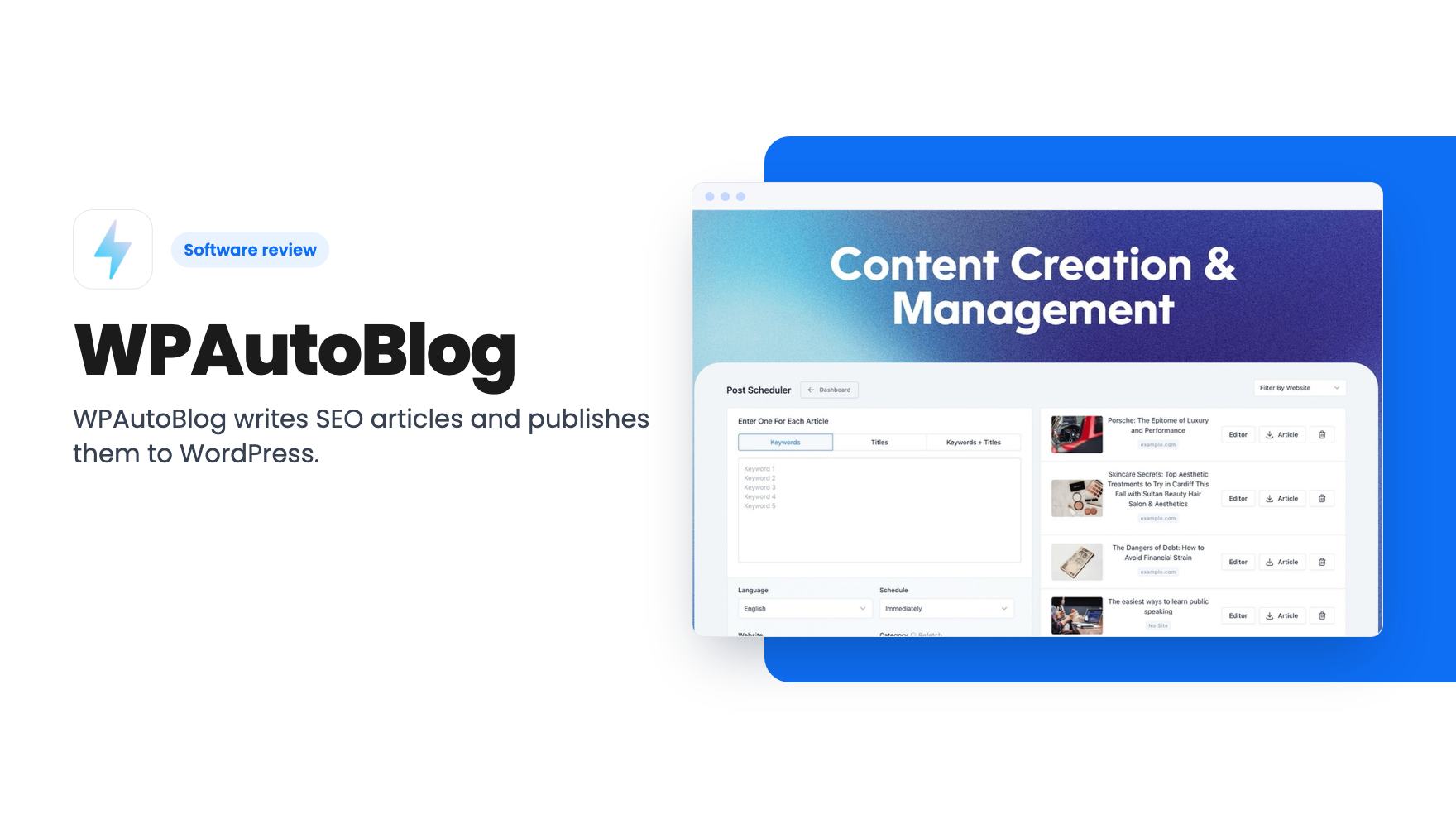
WPAutoBlog writes SEO articles and publishes them to WordPress. The AppSumo deal runs $39 to $312, and the tier you pick sets your monthly article cap.
Lifetime deal price
$39$11466% off
Lifetime Deal
Our take: Buy a low tier if you run one or two WordPress blogs and want drafts with the SEO plugin fields already filled in, and you're happy to edit everything. Skip it if you're not on WordPress, if you want Web Research on every post, or if you need to see sample output before paying.
Picture a small business blog with three posts from last spring and a note on the to-do list that says “write more content.” You know weekly posts would help. Nobody has the time, and a freelancer costs more than the blog earns. That’s the gap WPAutoBlog is aimed at, and it’s why a $39 lifetime price gets attention.
We haven’t used the tool, and there’s no demo video to go on. Everything below is a buyer’s reading of the AppSumo listing, which is marketing copy, so we’ve focused on the limits it’s less keen to shout about.
It’s an AI writing and publishing tool built only for WordPress. You enter keywords or titles, pick options such as Web Research, images, FAQs, tables, internal links and YouTube embeds, and generate an article. Then you edit it, publish it, or schedule it to go live on a connected site.
Connecting is simple on paper. You enter your site URL, log in to WordPress when redirected, and approve the connection. The catch is that your site has to support the WordPress REST API and allow the connection. A locked-down host or an aggressive security plugin could get in the way, and the listing doesn’t say how the tool copes.
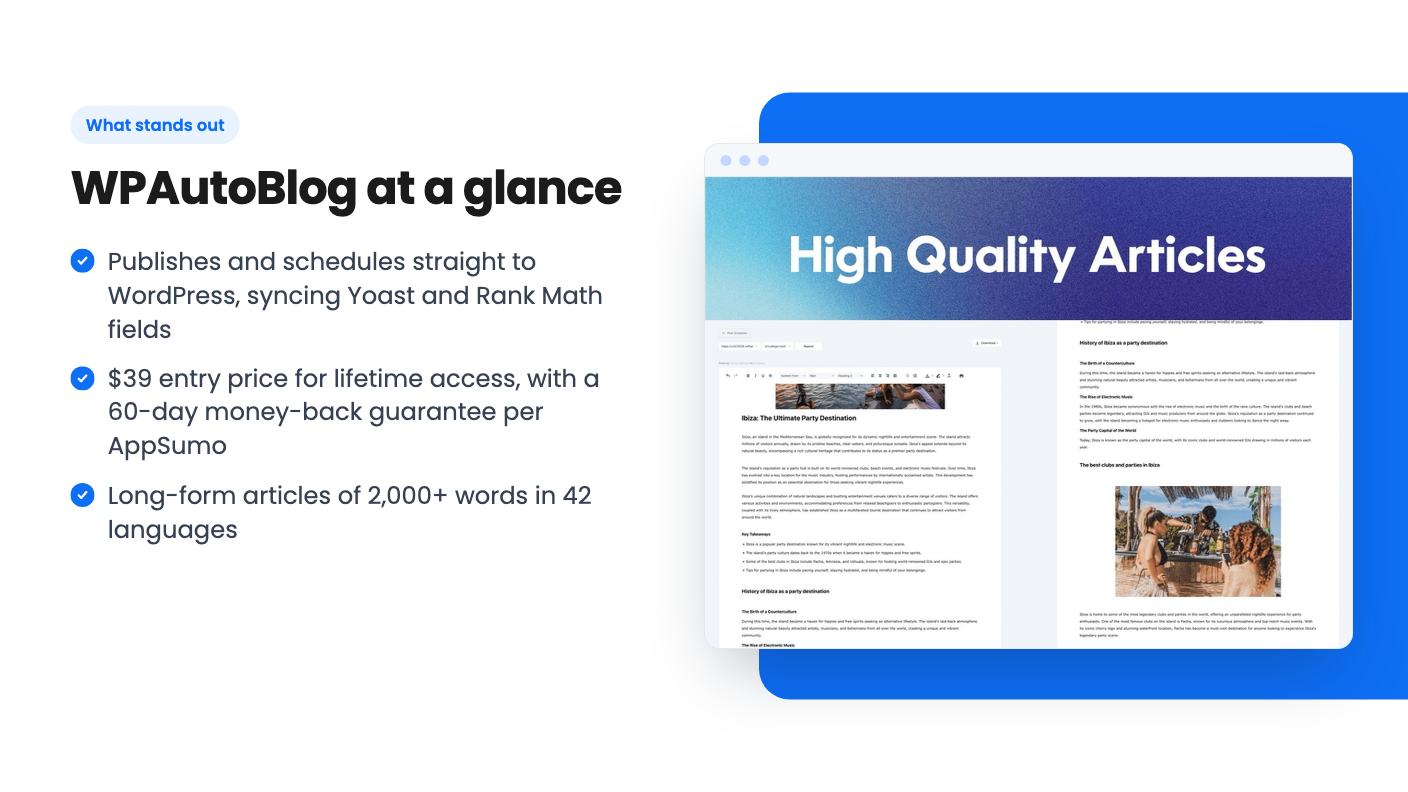
The pitch is volume. Articles run past 2,000 words with h1, h2 and h3 structure, in 42 languages. A post scheduler handles multiple blogs, which matters if you look after client sites.
WPAutoBlog says it syncs meta titles, descriptions and focus keywords with Yoast, Rank Math and other popular SEO plugins. That’s small, but it saves real clicks. Filling those fields by hand on every post is the sort of chore that makes people drift away from blogging.
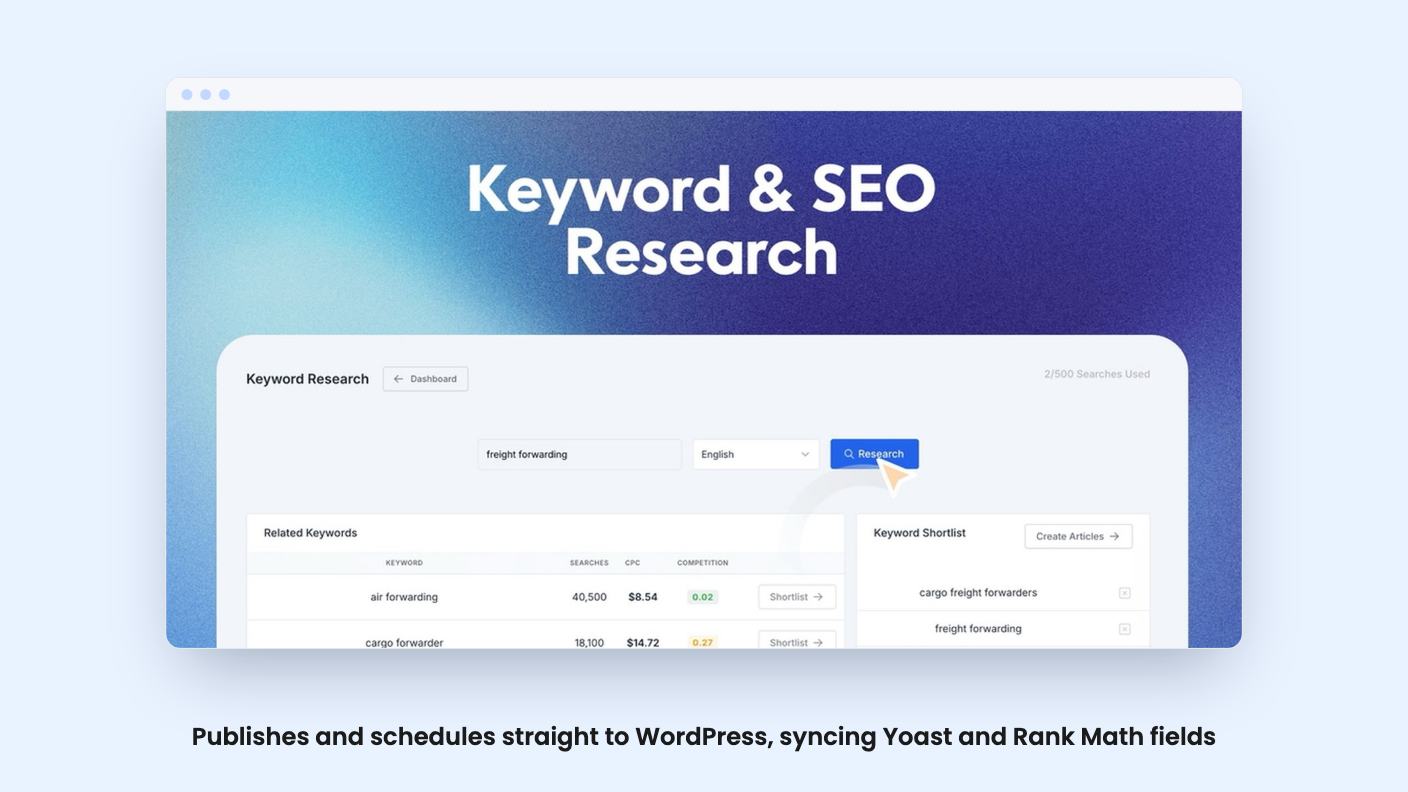
There’s also keyword research showing search volume, CPC and keyword difficulty, and the standard version comes with every tier. The listing doesn’t say where the data comes from or how fresh it is. Don’t expect it to replace a dedicated SEO tool.
The copy also promises “exponential organic traffic growth” and content that “ranks faster than ever before.” We’d ignore both. The listing offers no traffic numbers, case studies or example articles, and no writing tool can guarantee rankings.
The cap that matters is articles per month. Going by the feature table and the FAQ, the tiers work out like this:
The listing shows the monthly numbers from highest to lowest while the prices run lowest to highest, which is easy to misread. We matched them using the FAQ, which says Tier 3 is the first to get Questions research, Trends and AI images.
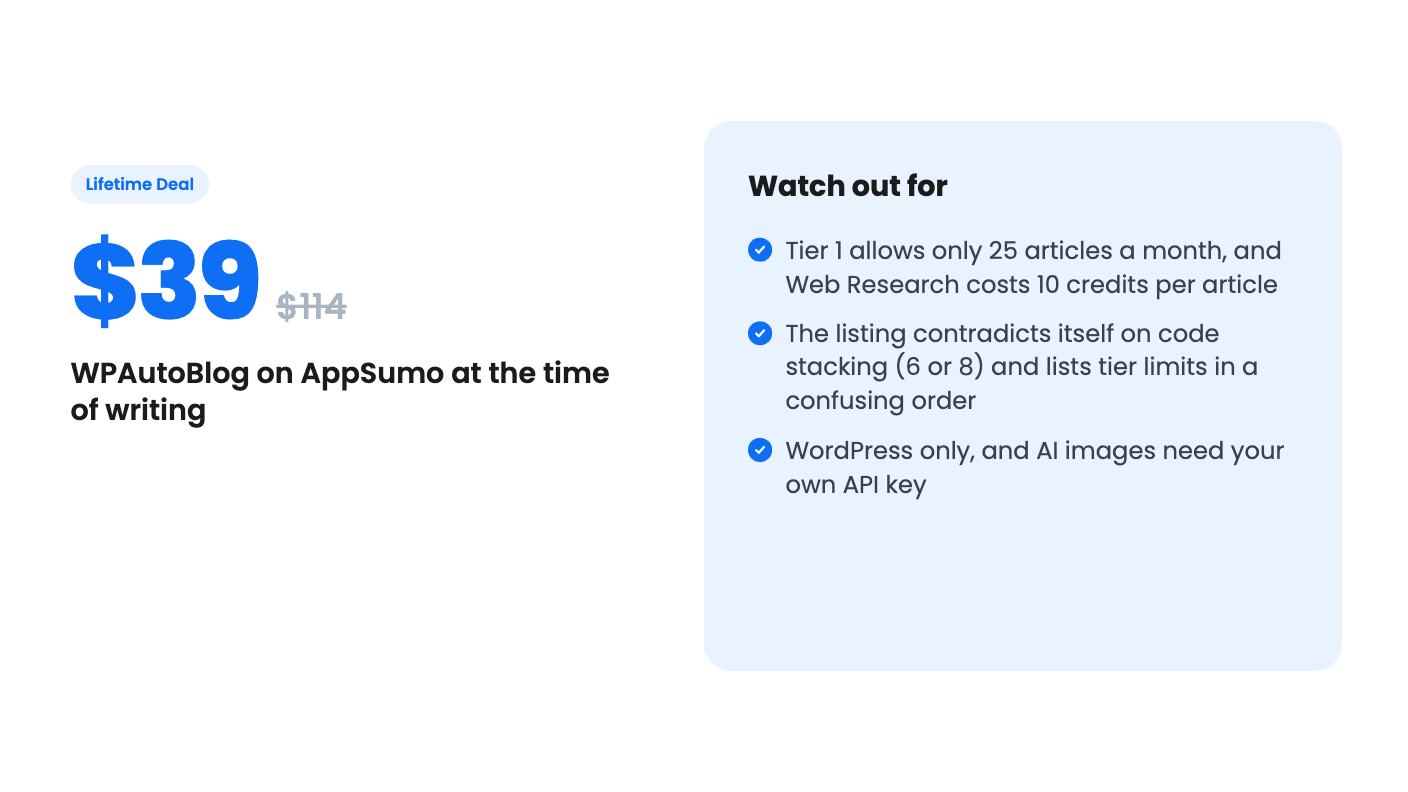
Now the catch. Web Research uses 10 article credits per generated article. On Tier 1 that’s two researched articles a month, with a few plain ones left over. On Tier 2 it’s five. If research-backed posts are the whole point for you, the cheapest tier is a trial, not a plan.
The listing doesn’t say whether unused articles roll over. Assume they don’t.
The FAQ spells out the gating, and it’s the best reason to think twice before grabbing the minimum.
Tier 3 adds Questions research, Search trends research and AI image generation. Those images use your own API key, so you’ll pay an image provider separately. Tier 4 adds Pabbly and webhook export. Tier 6 brings Listicle generation, Keywords Pro, SEO Reports and a white-label WordPress connector. Tiers 7 and 8 add MCP access, which lets compatible AI clients list your connected sites and articles and create or generate new ones.
For a single-site owner, Tier 3 looks like the sensible starting point to us. For agencies, the white-label connector at Tier 6 is the interesting line, though 500 articles a month spread across several clients disappears quickly.
The plan details say you can stack up to 6 codes. The FAQ says up to 8, matching Tier 8. Both can’t be right, and you want that settled before spending $312.
The listing also doesn’t name the AI models behind the writing, show a sample article, or explain how the brand voice matching works. AppSumo’s own review summary admits “occasional quality inconsistencies.” That’s marketing copy, but it’s a fair hint that you’ll be editing before you publish. The summary also quotes two different ratings, 4.69 from 173 reviews and 4.6 from 172, which suggests it was put together loosely.
A lifetime deal also depends on the company staying around and paying its model bills for years. The listing promises all future plan updates, but it says nothing about how old the product is or where it’s heading.
The deal suits a small business or solo blogger with one or two WordPress sites who wants a steady stream of first drafts with SEO fields filled in. It also fits an agency owner who will use the scheduler and white-label connector and read every post before it goes live. The 60-day guarantee gives you room to try it on your own niche.
Skip it if you’re not on WordPress, since nothing else is supported. Skip it if you expect finished posts that need no editing, or if you plan to run Web Research on every article at a low tier. And if you only need four or five posts a month, a cheaper monthly tool you can cancel may do the job.
Our advice: start at Tier 1 or 2 only as an experiment, and use the refund window properly. Generate a handful of articles in your own topic, read them critically, and check how they land in your SEO plugin. If the drafts need little work, step up a tier. If they need heavy rewriting, you’ve saved yourself a few hundred dollars.
The listing prints the monthly numbers from the top tier down. Matching them to the FAQ gives 25 articles a month on Tier 1 ($39), 50 on Tier 2, 150 on Tier 3, 250 on Tier 4, 350 on Tier 5, 500 on Tier 6, 750 on Tier 7 and 1,000 on Tier 8 ($312). Confirm the figures on the AppSumo page before buying.
The listing names WordPress as its only integration, and your site must support the WordPress REST API and allow the connection. Tier 4 and up add Pabbly or webhook export, and Tiers 7 and 8 add MCP access, but publishing is built around WordPress.
AppSumo's summary mentions a 60-day money-back guarantee, and the plan terms say you must redeem your codes within 60 days of purchase. Check the exact refund conditions on AppSumo before you pay.
How this review was made: researched from WPAutoBlog's official listing, and written with help from AI. We have not tested WPAutoBlog hands-on yet. Prices and deal terms change, so check AppSumo before you buy. See our affiliate disclosure.
Fourteen AppSumo lifetime deals end before Black Friday on November 27, 2026. Here are the seven worth a look now, and who should skip them.
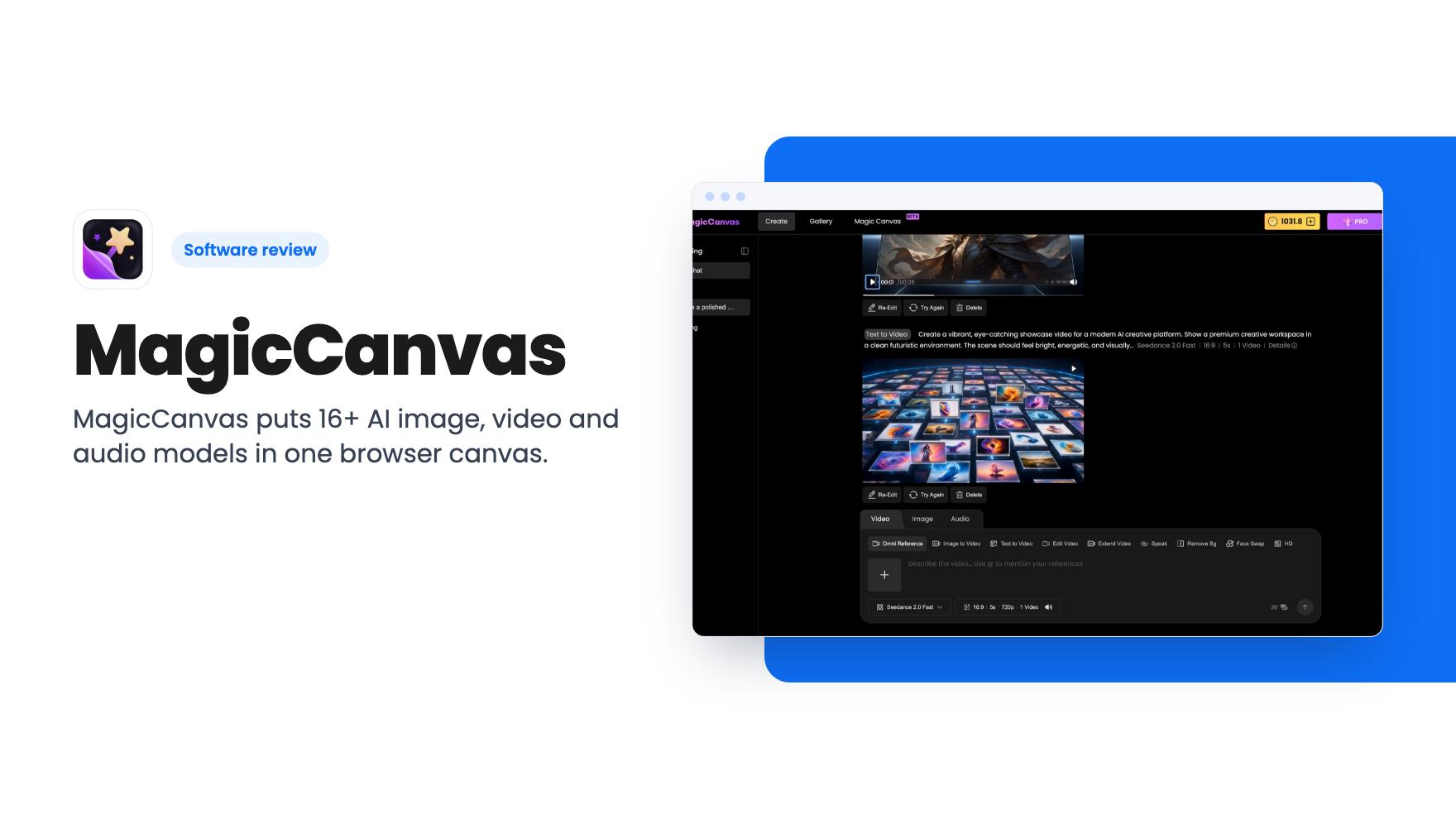
MagicCanvas puts 16+ AI image, video and audio models in one browser canvas. The $59 lifetime deal looks cheap, but the monthly credit caps matter most.
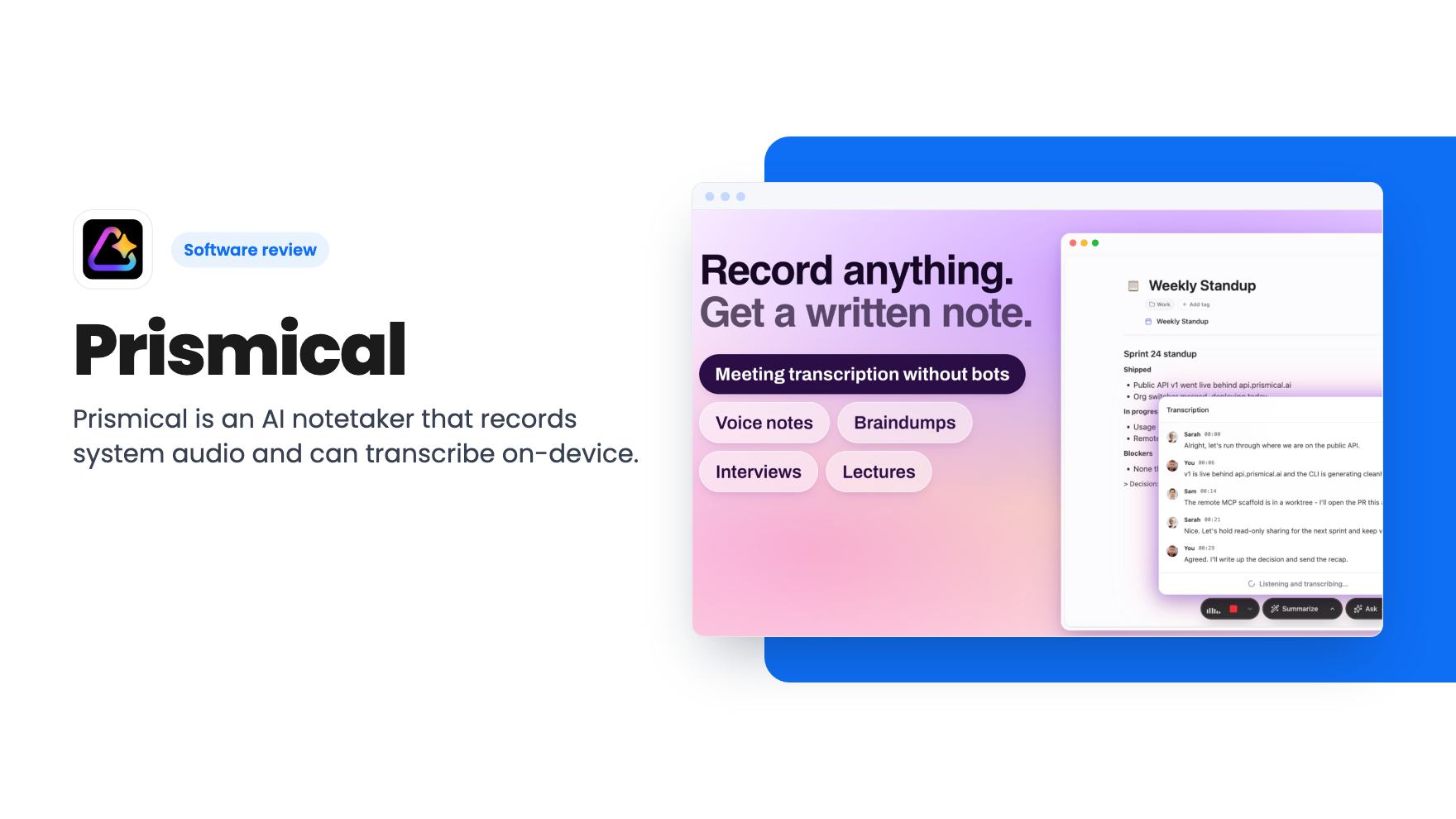
Prismical is an AI notetaker that records system audio and can transcribe on-device. The AppSumo lifetime deal runs $59 to $749, and the tier limits matter.