HR & PayrollReview
ResumeUp.AI Review: A $49 Lifetime Deal Built for Job Seekers
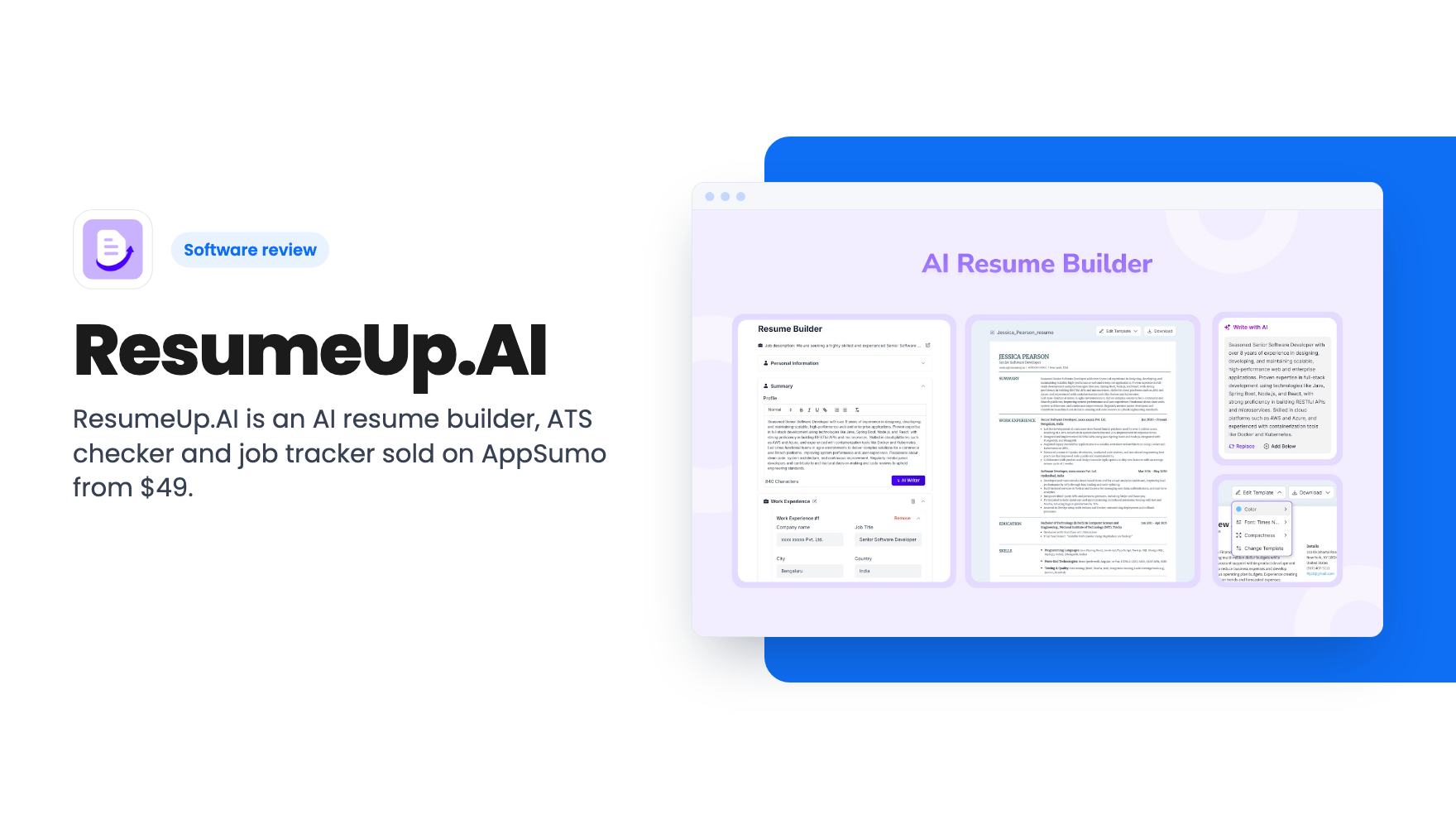
ResumeUp.AI is an AI resume builder, ATS checker and job tracker sold on AppSumo from $49. Here's what the listing says, what it leaves out, and who should buy.
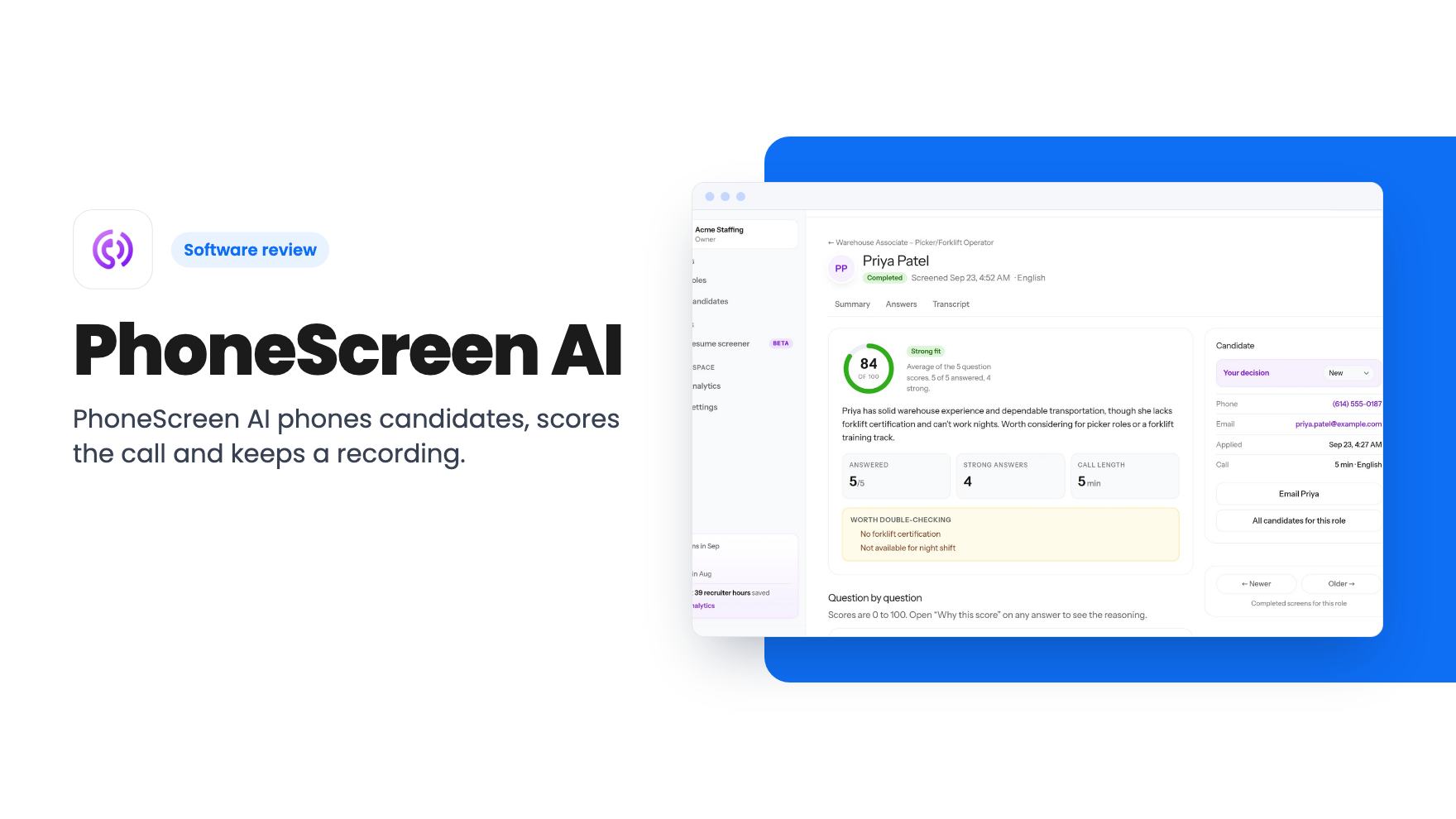
PhoneScreen AI phones candidates, scores the call and keeps a recording. The $99 AppSumo deal includes only 20 screens, then $4 each, for US and Canada numbers.
Lifetime deal price
$990
Lifetime Deal
Our take: Buy it if you hire a handful of roles a year, want a consistent first-round call, and can live with US and Canadian phone numbers. Skip it if you screen in volume, call candidates elsewhere, or need reference checks, because 20 screens go quickly and Reference Agent isn't included.
You post a job on Friday and by Monday there are 70 applications. Maybe 12 look promising on paper. Now you need to book 12 calls, chase people who don’t answer, and take notes that you’ll struggle to compare a week later. That first screening call eats evenings, and most of it is the same five questions asked 12 times.
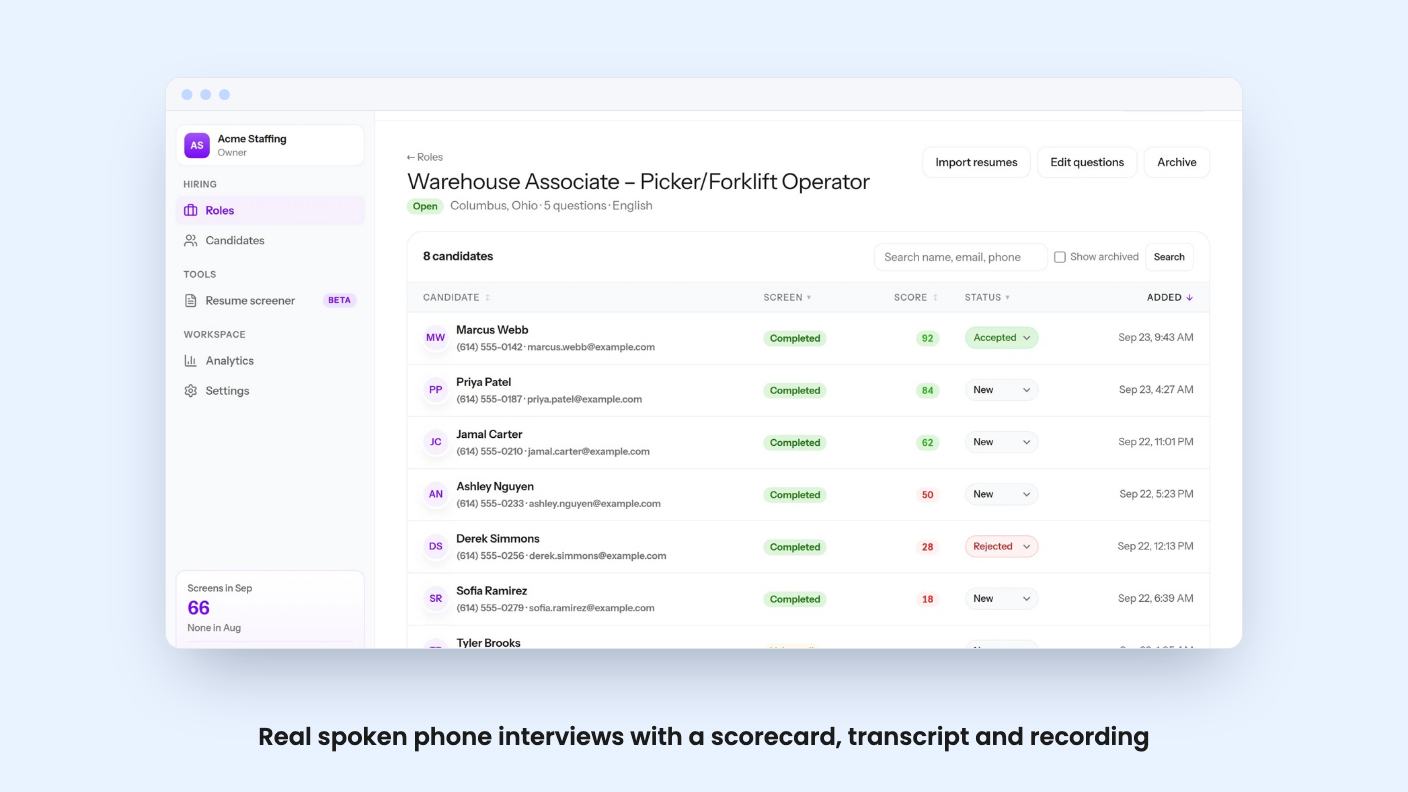
PhoneScreen AI is built to take that call off your plate. It’s listed on AppSumo as a $99 lifetime deal, and it’s pitched at recruiters, small businesses and agencies. We haven’t used it, so what follows is based on the listing and what it does and doesn’t say.
The core idea is simple. You set up a role and write the screening questions. Candidates get an interview link, and the AI phones them and conducts a spoken interview. The listing is clear that this is a real phone call, not a recorded video questionnaire like the VideoAsk-style tools it’s compared against.
After each completed screen you get a structured scorecard, a transcript and a recording. The listing says you can read the reasoning behind the scores and listen back to the call. That last part matters. A score on its own is hard to trust, and being able to hear the answer yourself is the sensible safeguard.
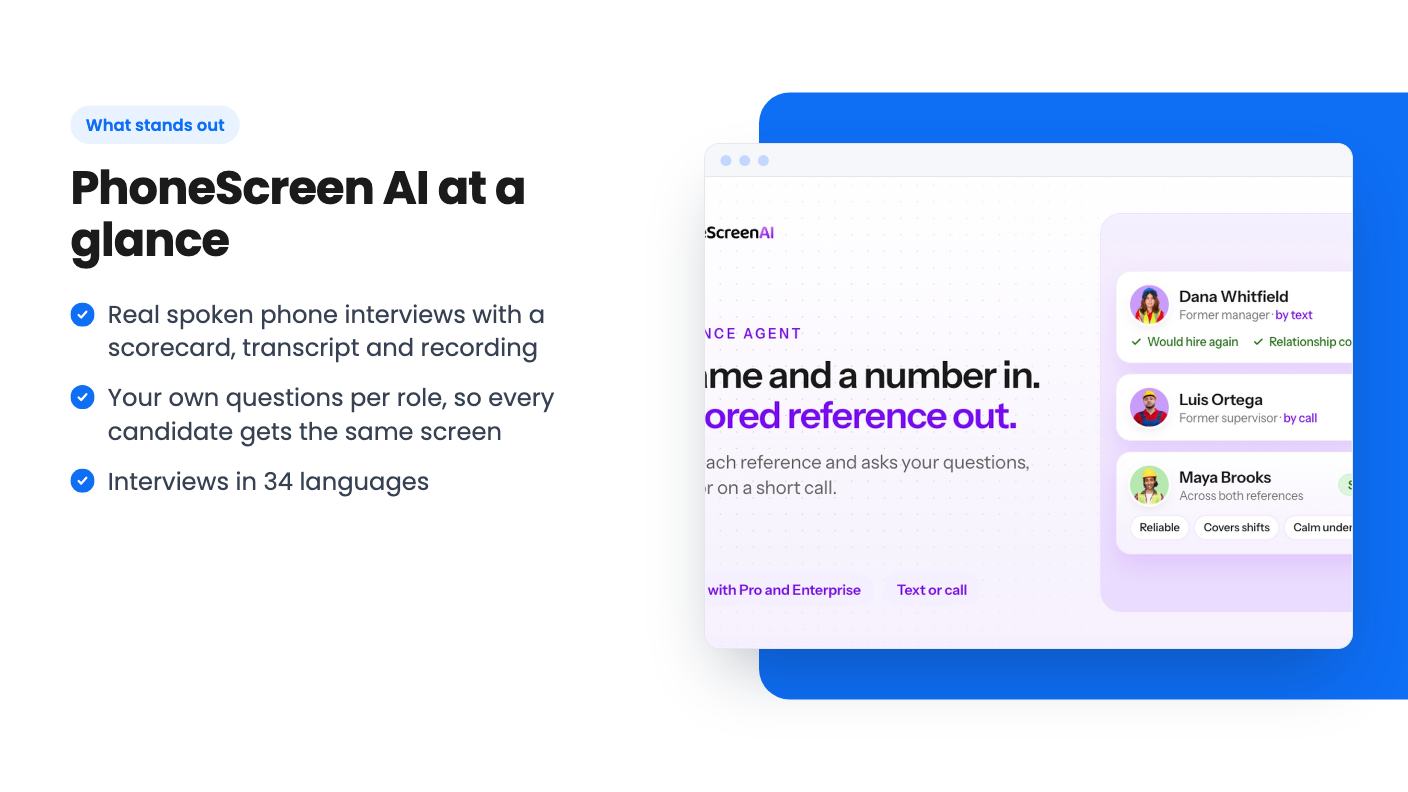
Two details stand out. The agent identifies itself as AI and tells callers the call is recorded, which is the right way to do it. And interviews can run in 34 languages, which is a useful range if your applicants don’t all speak the same one.
You can set your own screening questions for each role. Every candidate for that role then gets the same questions and is scored against the same rubric. For a small team without a formal hiring process, that consistency may be the main benefit. Human phone screens drift. The fifth call of the day is never quite the same as the first.
The listing doesn’t say how much control you get over the rubric, how follow-up questions are handled, or how the AI deals with a candidate who goes off on a tangent. There’s no product video, so we can’t say. Ask for a demo or check the help docs before you commit.
Before anyone gets a call, you can run resume screening. Candidates are organized by role, and you can see which phone screens are done and compare answers side by side. The listing is careful to say your team reviews the evidence and makes the hiring decision, and we’d treat it that way. This is a sorting aid.
The integration list is short but practical:
You don’t need to replace an ATS. You can drop the interview link into a job post or an ATS auto-reply and carry on as you are. Zapier gives you a way to push results elsewhere, though the listing doesn’t spell out what data flows through it.
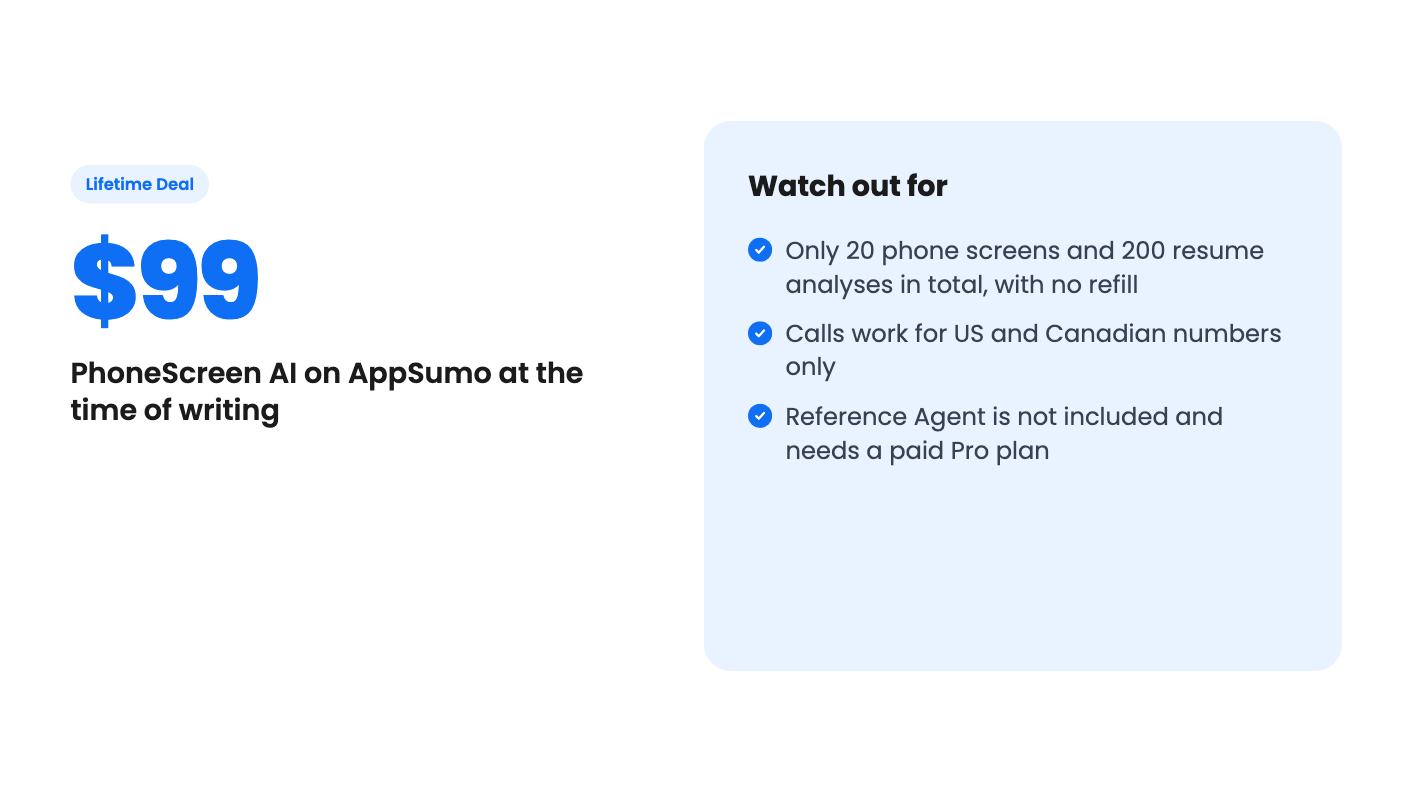
This is where you need to read the numbers rather than the headline. The deal is a single tier at $99. It gets you lifetime platform access for one organization, 20 phone screens in total and 200 resume analyses in total. Neither allowance refills.
Do the maths and 20 screens work out to about $4.95 each. Extra screens cost $4 each as one-time top-ups, and each top-up also adds 10 resume analyses. So the top-up price is lower than the effective price of your first 20. In plain terms, you’re paying roughly $19 for platform access and the resume credits, and the rest is prepaid screens at about the going rate.
That isn’t a bad structure. It’s honest, and it’s closer to pay-as-you-go than a true lifetime deal. If you hire twice a year and screen 10 people each time, 20 screens covers you for a year. If you hire constantly, you’ll be buying $4 top-ups from the start, and the lifetime label does little for you.
There are some helpful details. A screen only counts when it’s completed and scored, so voicemails, missed calls and technical failures don’t burn credits. Purchased credits don’t expire while your license is valid. And there are no recurring charges.
The listing also shows a list price of $0, which is clearly a placeholder, so we can’t tell you what the regular plans cost. That makes it hard to judge the discount. The only real comparison is the $4 top-up, and you can weigh that against the time you spend on first calls.
The biggest limit is geography. Calling currently supports US and Canadian phone numbers only. If you hire in the UK, Europe, India or anywhere else, the 34 languages won’t help you, because the call can’t reach the candidate. The listing doesn’t say when that will change.
Reference Agent is the second gap. It collects reference feedback by text or a short phone call, but it’s not in the deal. It needs a separate regular Pro or Enterprise subscription. If you were hoping the lifetime deal would cover reference checks too, it won’t.
Then there’s the usual caution with a young product. The listing gives no company size, no customer numbers and no roadmap. You also need to activate within 60 days, and the plan covers one organization. Agencies running screens for several clients should check what that means for them.
There’s a fairness question too. An AI that scores spoken answers can be wrong about accents, nerves or unusual phrasing. The listing says humans make the decision, and you should hold it to that. Listen to recordings for anyone near your cutoff.
This suits owner-managers and small agencies who hire a few roles a year, are US or Canada based, and want a consistent first screen without scheduling anything. The 20 included screens are enough to try it on a real hire, and the $4 top-up is a fair price to keep going. It’s a low-risk way to find out whether candidates will actually talk to an AI.
Skip it if you screen candidates in volume, hire outside North America, or need reference checks in the same tool. Also skip it if the phrase lifetime deal makes you expect unlimited use. You’re really buying platform access and a small bundle of credits, and we’d budget for top-ups from the first week.
You buy one-time top-ups at $4 per screen, and each one adds 10 resume analyses. According to the listing there's no automatic refill or subscription, and purchased credits don't expire while your license is valid.
No. The listing says only a completed, scored phone screen uses an included screen. Missed calls, voicemails, technical failures and withdrawals without a scored screen don't count.
Not yet. The listing says calling currently supports US and Canadian phone numbers. The interviews themselves can run in 34 languages, but the phone numbers are the limit.
How this review was made: researched from PhoneScreen AI's official listing, and written with help from AI. We have not tested PhoneScreen AI hands-on yet. Prices and deal terms change, so check AppSumo before you buy. See our affiliate disclosure.
ResumeUp.AI is an AI resume builder, ATS checker and job tracker sold on AppSumo from $49. Here's what the listing says, what it leaves out, and who should buy.
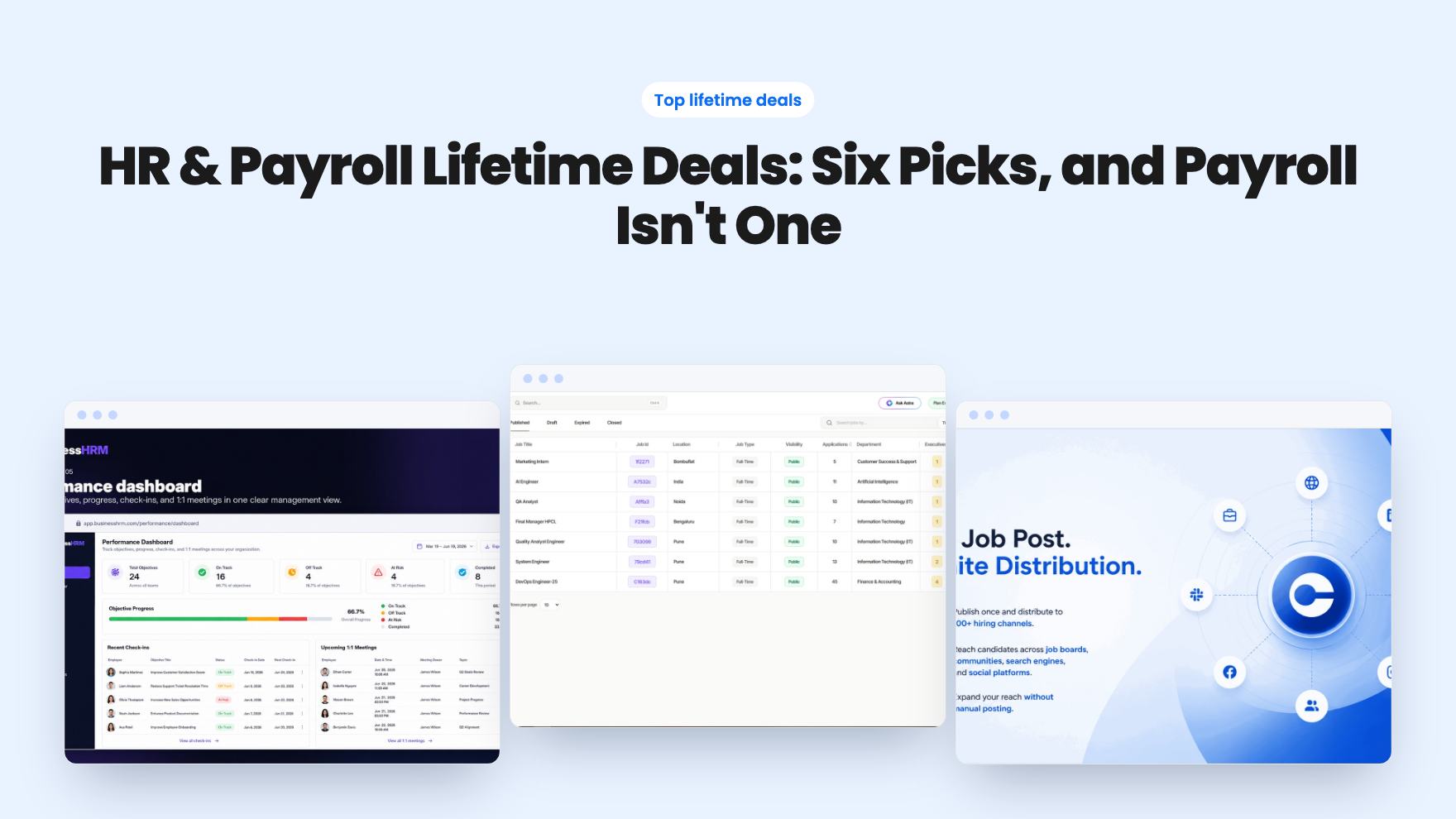
Six HR and hiring lifetime deals from $49 to $99, grouped by need. The listings don't mention payroll, and most are young products with caps to check.
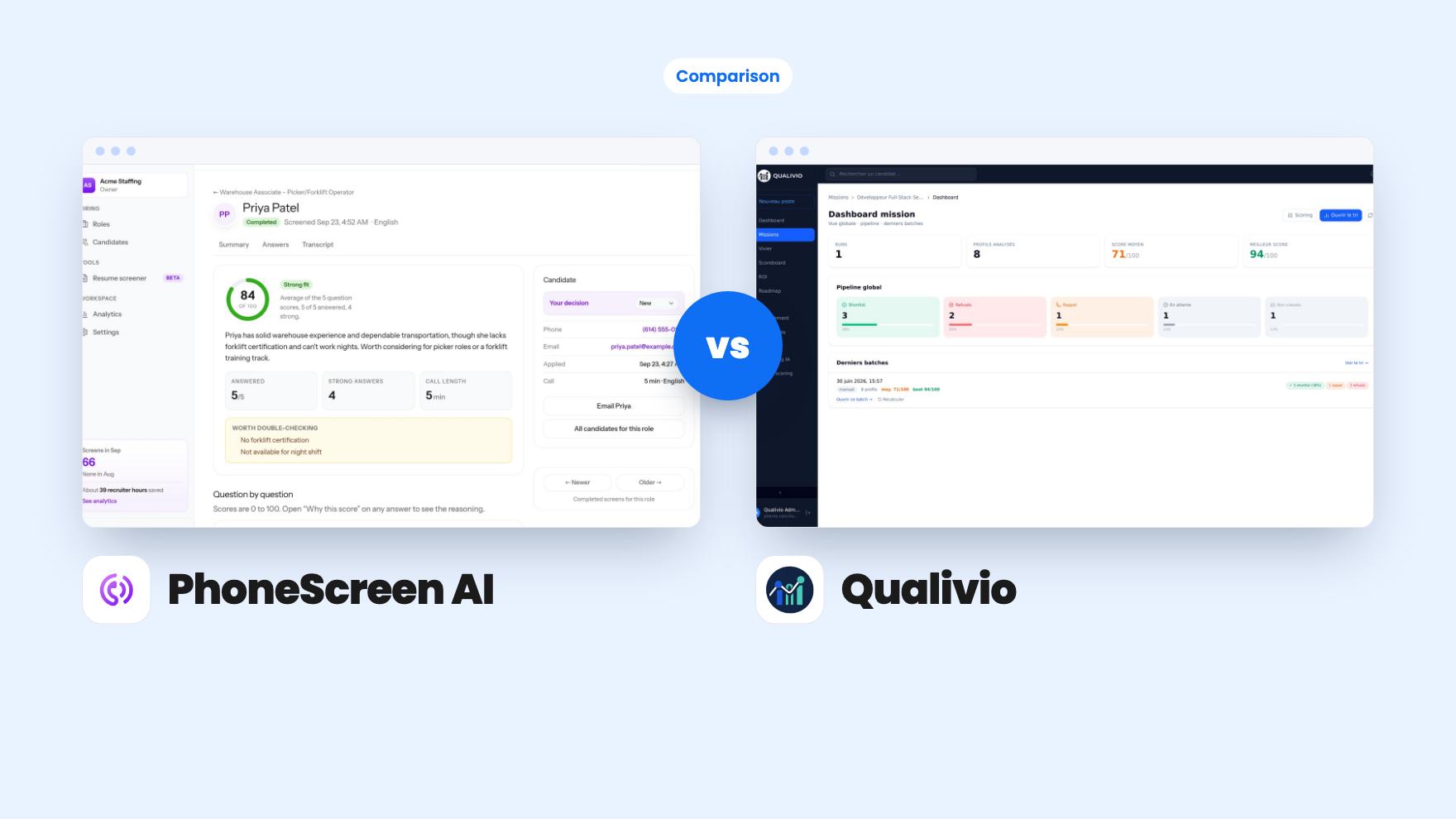
PhoneScreen AI phones candidates for $99 with 20 screens included. Qualivio ranks CVs from $69 with monthly caps. Here's which first round fits you.