SEO ToolsAlternatives
Linktree Alternatives on Lifetime Deal: 5 Tools Compared
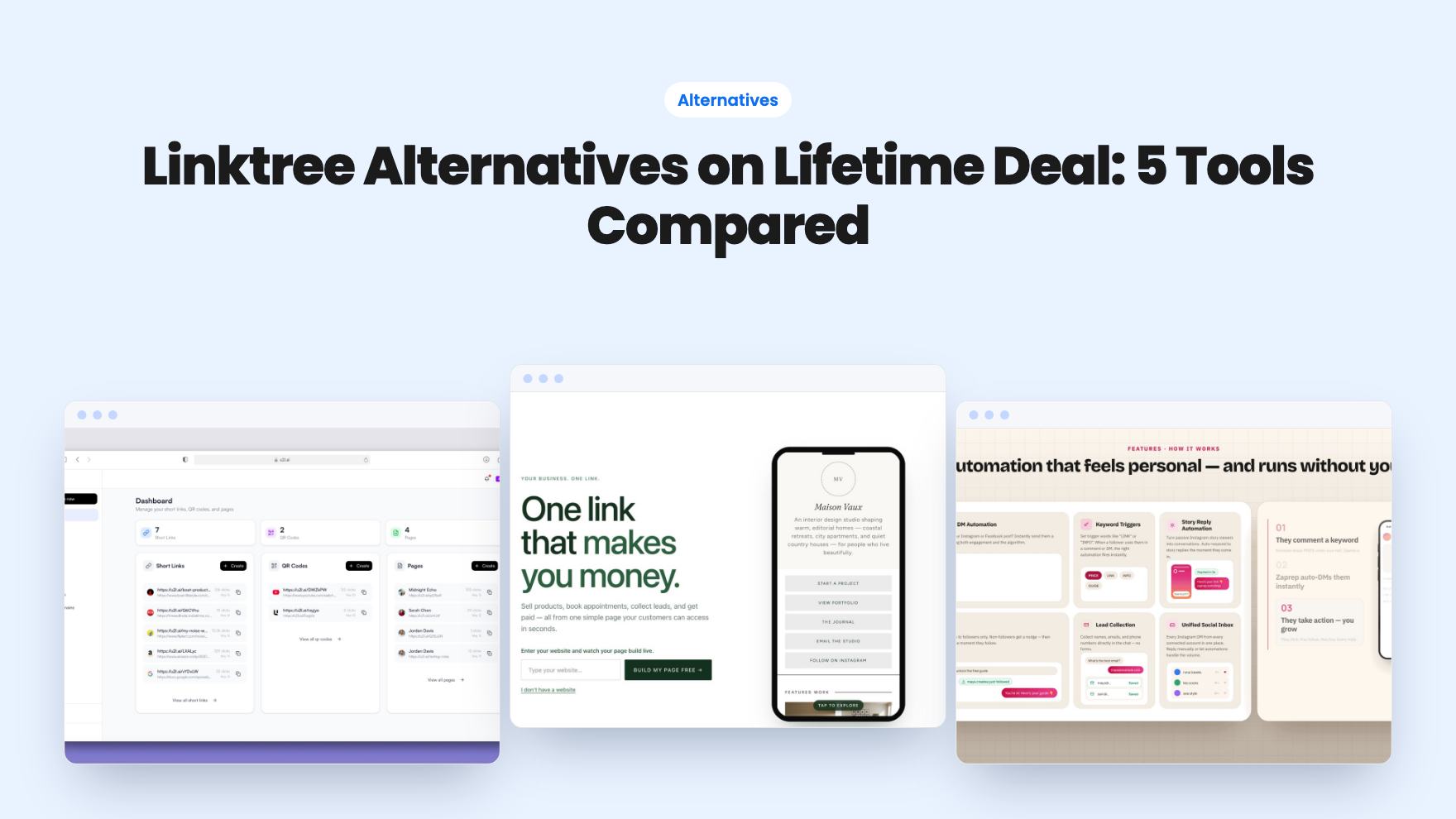
Five AppSumo lifetime deals named as Linktree alternatives, from $19 to $59 entry prices. See who each suits and what the listings leave out.
Two WordPress SEO lifetime deals compared. PageForge turns spreadsheets into pages, while SEOBetter writes and scores cited articles for AI search.
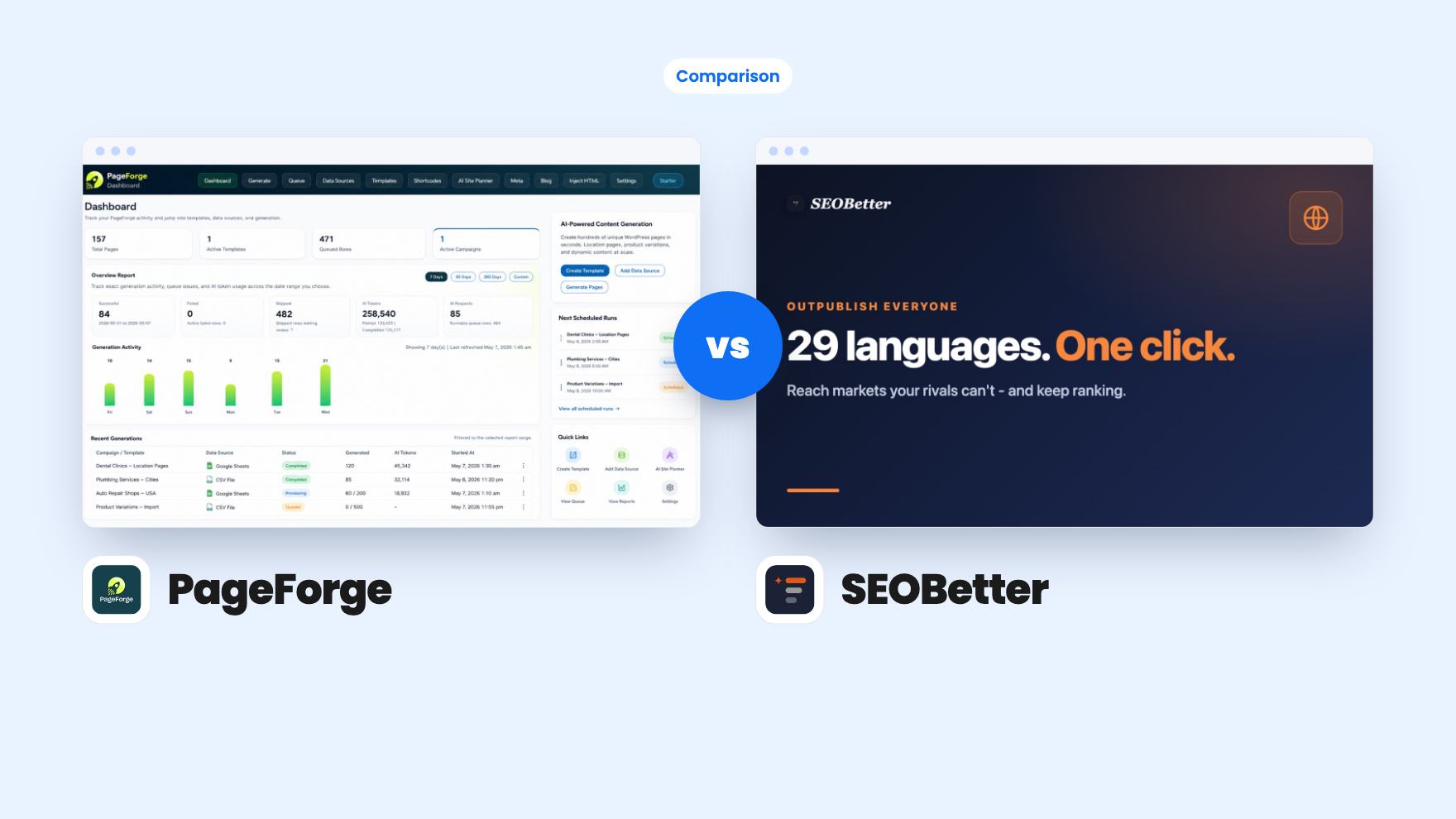
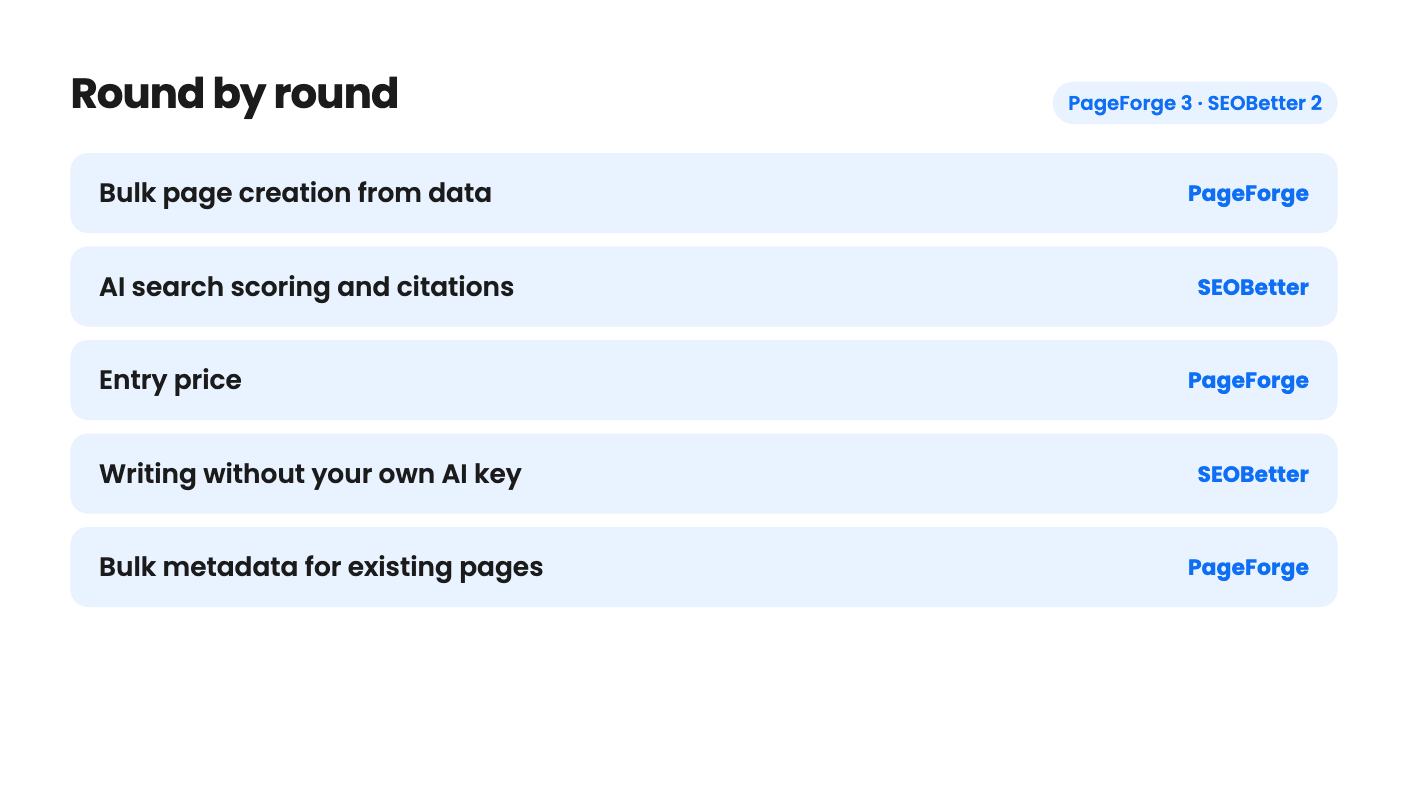
PageForge takes 3 rounds, SEOBetter takes 2.
| Round | Winner | Why |
|---|---|---|
| Bulk page creation from data | PageForge | PageForge maps CSV or Google Sheets columns to tokens and builds editable pages, posts and custom post types, which SEOBetter doesn't claim to do. |
| AI search scoring and citations | SEOBetter | SEOBetter gives each post a 0-100 GEO score with a fix list and says it checks every outbound link, while PageForge offers nothing comparable. |
| Entry price | PageForge | PageForge starts at $29 for one site, while SEOBetter starts at $69, though SEOBetter's own site counts are unclear. |
| Writing without your own AI key | SEOBetter | SEOBetter includes 2 to 8 cloud articles a month, while PageForge needs your own API key for any AI feature. |
| Bulk metadata for existing pages | PageForge | PageForge bulk-writes SEO titles and descriptions into Yoast and Rank Math fields, and SEOBetter's listing covers meta sync only for its own posts. |
| Clarity of the listing | Tie | PageForge contradicts itself on third-tier site counts, and SEOBetter lists its tier allowances in an order that looks reversed. |
| PageForge | SEOBetter | |
|---|---|---|
| Starts at | $29 | $69 |
| List price | $588 | $349 |
| Plan | Lifetime Deal | Lifetime Deal |
| Deal ends | Not listed | Not listed |
| Best for | Copywriters, Marketing agencies, Businesses | Bloggers, Marketing agencies, Small business owners |
| Alternative to | Yoast SEO | Yoast SEO, Rank Math, Surfer SEO |
Say your WordPress site needs more search traffic and you’ve set aside about $70 to fix that. One tool offers to turn a spreadsheet of 150 towns into 150 pages. The other offers to write a cited article from a single keyword and score it for ChatGPT and Google’s AI Overviews. Both are lifetime deals on AppSumo, both live inside WordPress, and both sit in the same SEO category. They still do different jobs.
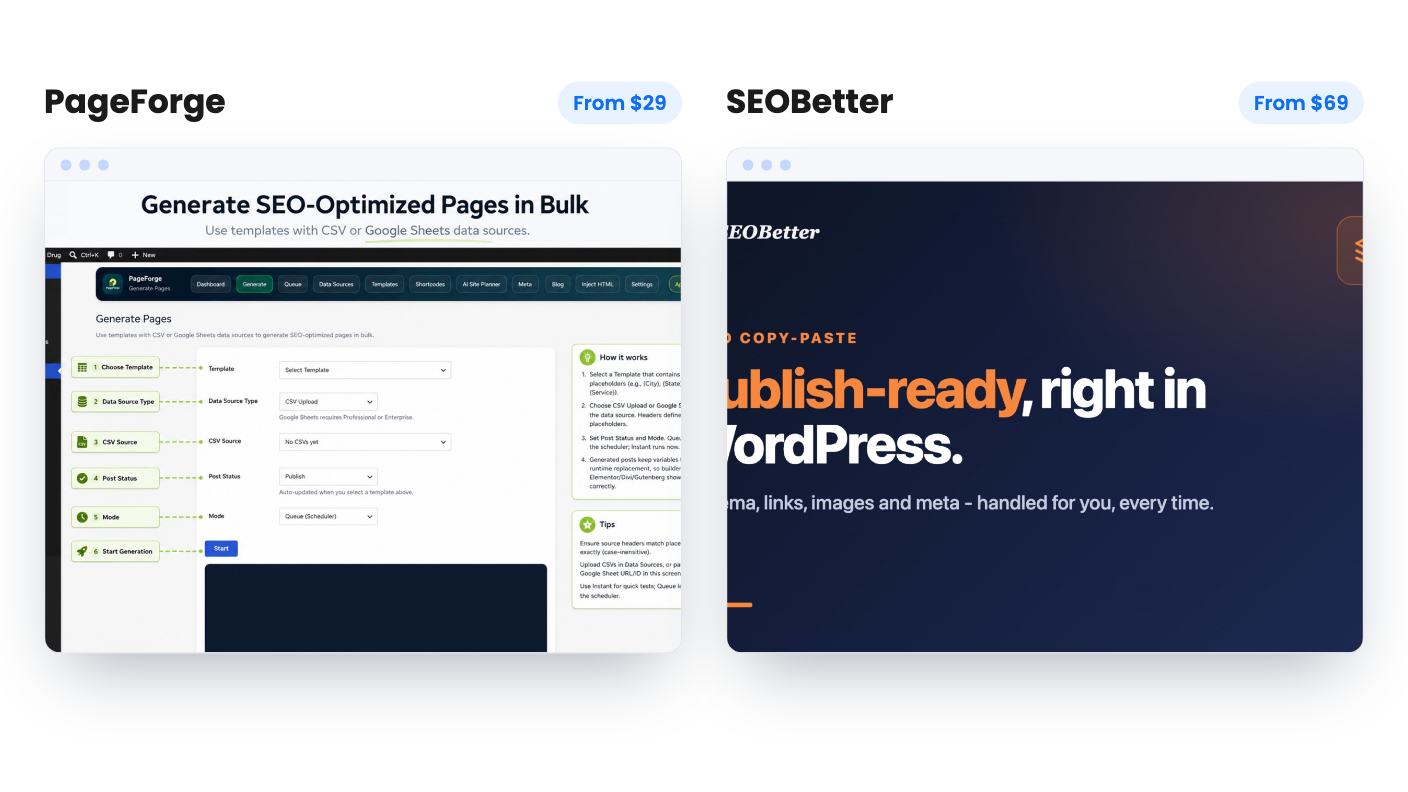
We haven’t used either one, so this comparison rests on the listings, which are marketing copy. Where they go quiet, we’ll say so.
PageForge is a page factory. You import a CSV or connect a Google Sheet, map each column to a content token, and it builds standard WordPress pages, posts or supported custom post types from one template. They stay editable in Gutenberg, Elementor or Divi. You can send each batch out as a draft, pending, private or published.
SEOBetter is a writing and scoring tool. You give it a keyword, it builds a live search research brief, writes a draft around the sources it finds, and scores the result from 0 to 100 for how likely an AI answer engine is to cite it. There are 21 content types, from how-tos to buying guides.
So the first question isn’t which is better. It’s whether your problem is many pages or better pages. If you serve 80 suburbs and have a page for none of them, that’s PageForge territory. If you have 40 older posts that sit on page two with no sources or statistics, that’s SEOBetter territory.
Both tools have something for existing posts, and they’re quite different.
PageForge’s bulk metadata feature generates SEO titles and meta descriptions for pages, posts and custom post types, using dynamic fields or optional AI help. The results land in Yoast SEO and Rank Math fields. If your site has hundreds of blank or duplicated meta descriptions, that’s a practical afternoon of work saved. If your metadata is already decent, it matters much less.
SEOBetter’s answer is the GEO Optimizer. It adds statistics, quotes and sources to posts you’ve already published. That’s a gentler way to improve a site than rewriting from scratch, and we think it’s the most useful idea in either listing for a small business with a modest archive.
The listing doesn’t show what either edit looks like on a real page, so judge both on a small sample first.
PageForge generates blog drafts from keywords, with headings, an introduction, sections and FAQs. You bring your own key for OpenAI, Claude, Gemini or DeepSeek, and the usage bill is yours. The listing doesn’t estimate what a batch costs.
SEOBetter takes a more guarded approach to AI writing. It says every outbound link is checked and dead or invented URLs are removed before publishing. For local posts, Google Places verification is meant to stop it making up businesses. We can’t confirm either claim, but they target the failure that makes AI articles risky to publish.
The catch is volume. The cloud allowance is small, between 2 and 8 articles a month depending on tier. The larger allowance, 12 to 60 articles, requires your own AI key. So even with SEOBetter you’ll probably end up paying a provider if you publish often.
One caution applies to both. Machine-written pages need a human edit, and hundreds of near-identical templated pages can look thin to Google if only the town name changes. PageForge gives you the machinery. The quality of each page is still your job.
PageForge costs $29, $58, $87 or $116, and you can stack up to four codes. The cheapest tier covers one site and drops Google Sheets sync, so you’d work from CSV files. Tier 2 at $58 gives you 5 sites and Sheets sync. The listing also contradicts itself: the plan table says the third tier covers 10 sites, while the FAQ says three codes cover 20. Get that settled in writing before you stack.
SEOBetter costs $69, $138, $207 or $276, also stackable to four codes. Every tier gets all 21 content types, 29 languages, unlimited team seats, 3 Brand Voice profiles and future updates. What changes is the allowance, and here the listing looks backwards. Read in order, the $276 tier gets the fewest sites (1) and the fewest cloud articles (2). The likely explanation is that those rows are listed in reverse, but the listing doesn’t say. Check before you buy more than one code.
On raw entry price, PageForge wins at $29 against $69. SEOBetter does make a fair comparison against its own subscription: Pro is $39 a month or $349 a year, so one code costs less than two months. Both deals carry a 60-day redemption window, and SEOBetter’s listing mentions AppSumo’s 60-day refund window.
Ignore the list prices on both. $588 and $349 are numbers designed to make the discount look large.
Neither listing tells us how long the product has existed, how big the team is, or how often it ships updates. SEOBetter’s FAQs are written by the vendor, who says so, and we have no independent reviews for either tool.
PageForge also doesn’t say how many pages one run can create or which schema types it supports. Its comparison against MPG, LPagery, Page Generator Pro and WP All Import is cut off in our material, so we can’t tell you how it claims to differ from those established plugins.
SEOBetter’s extras, such as the Search Console dashboard, decay alerts, the AI crawler audit and the MCP connection to Claude, Cursor or Grok, are named but not detailed. Treat them as bonuses, not reasons to buy.
SEOBetter also leans on a Princeton-led paper that found cited sources and statistics raised visibility in AI answers by up to about 40%. That’s the vendor’s chosen headline. It’s a research finding, not a result to expect on your own site, and the listing admits no tool can guarantee a citation.
Buy PageForge’s $29 tier if you run one WordPress site with a real dataset behind it, such as service areas, locations or product variants, and you’re comfortable doing the editing that stops those pages looking thin. Start with a small batch of drafts and read five before publishing anything. Skip it if you want finished articles with no effort or your site isn’t on WordPress.
Buy one SEOBetter code if you’re on WordPress, you care about being quoted by AI answer engines, and your older posts need sources and statistics. Run the score on a few posts and use the refund window to decide whether the fix lists are useful. Skip it if you need many cloud-written articles each month or you’re on Webflow, Wix or Shopify.
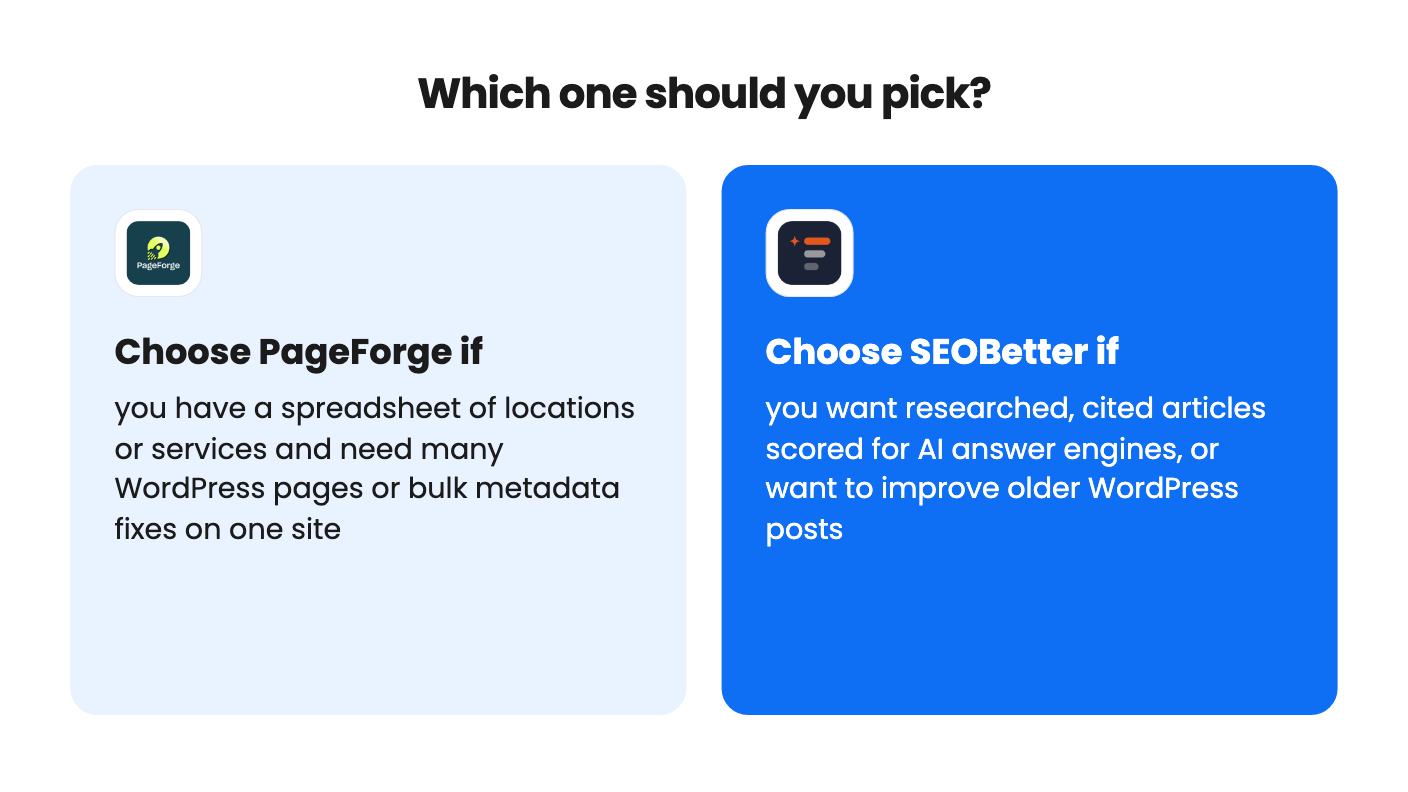
If you honestly need both jobs done, buy the cheaper PageForge tier first, since it solves the more mechanical problem, then try one SEOBetter code on your best older posts.
No. PageForge writes metadata into Yoast and Rank Math fields. SEOBetter syncs its title, description and schema into Yoast, Rank Math, AIOSEO or SEOPress. Keep your current SEO plugin with either tool.
PageForge needs one only for its AI features, and its CSV, template and page-generation workflows work without AI. SEOBetter includes a small monthly allowance of cloud articles, but its higher volume comes from bringing your own key.
No. WordPress is the only platform in PageForge's integrations list. SEOBetter's listing says Webflow, Wix and Shopify aren't supported yet, and it makes no promise about when that might change.
How this comparison was made: researched from both tools' official listings and demo videos, and written with help from AI. We have not tested PageForge or SEOBetter hands-on yet. Prices and deal terms change, so check AppSumo before you buy. See our affiliate disclosure.
Five AppSumo lifetime deals named as Linktree alternatives, from $19 to $59 entry prices. See who each suits and what the listings leave out.
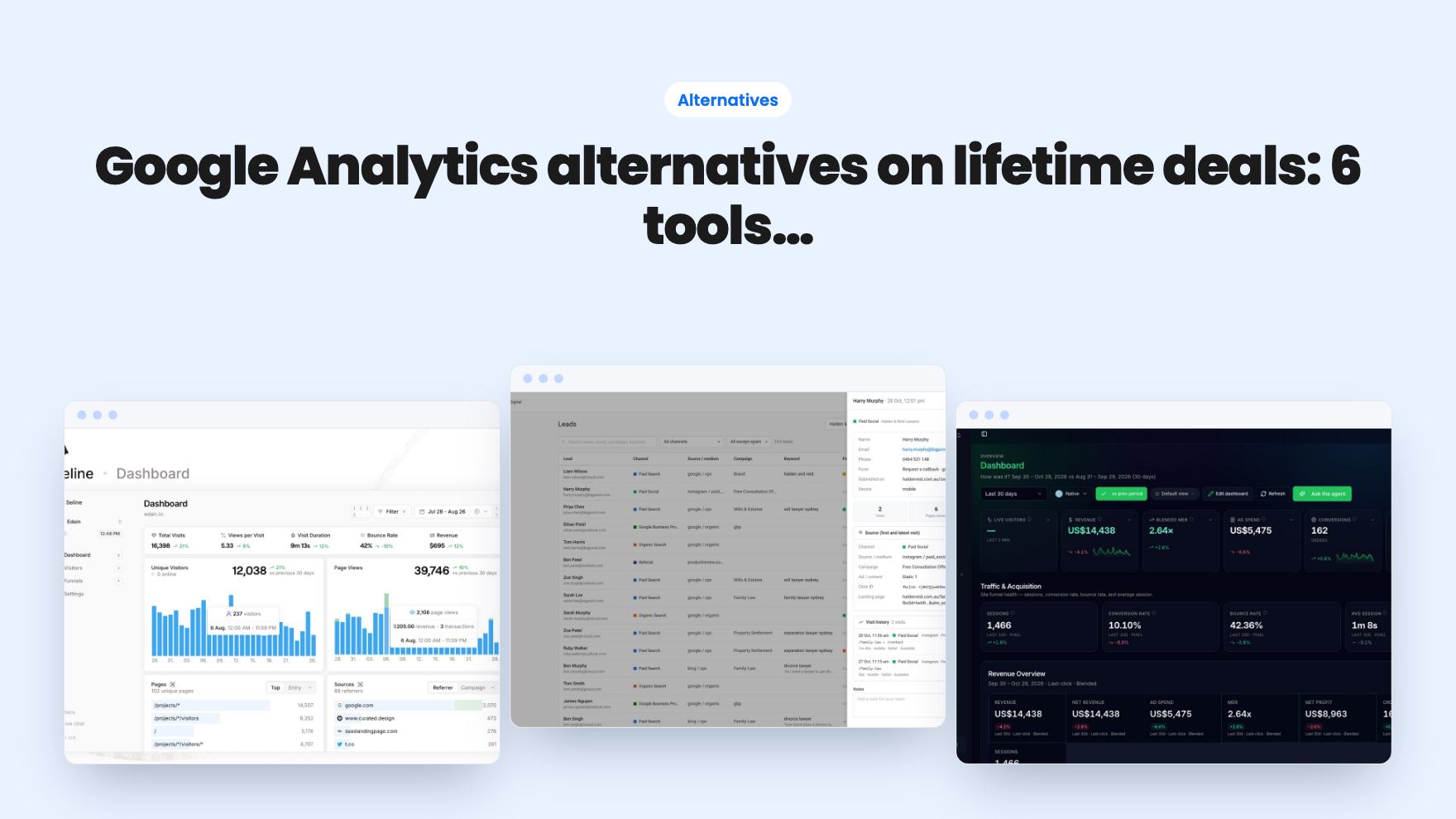
Six AppSumo lifetime deals pitched as Google Analytics alternatives, grouped by the job you need done, with tier limits and gaps spelled out.
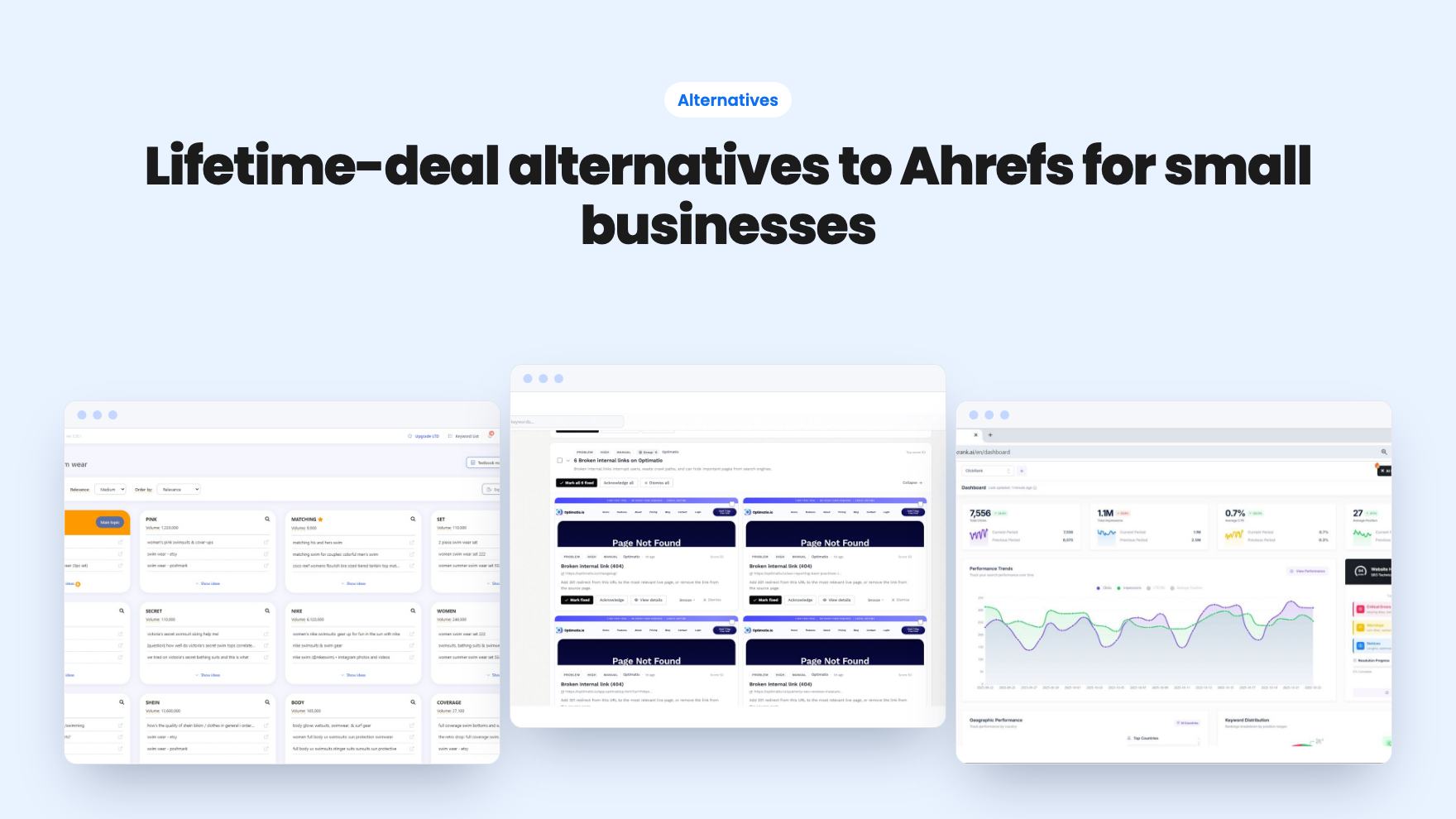
Ten AppSumo lifetime deals named as Ahrefs alternatives, grouped by job: keywords, site fixes, AI search tracking and competitor research. Limits included.