SEO ToolsAlternatives
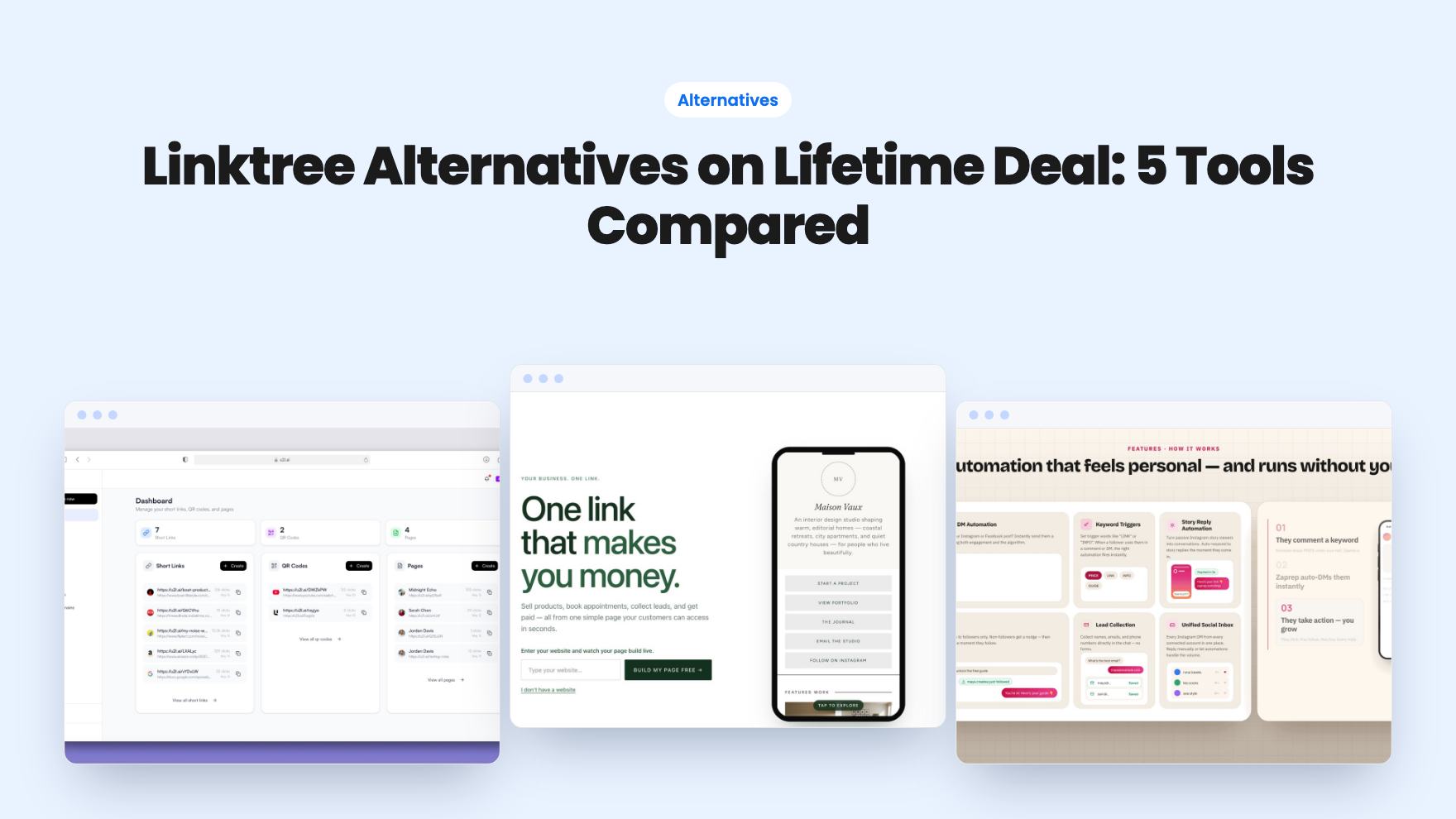
Linktree Alternatives on Lifetime Deal: 5 Tools Compared
Five AppSumo lifetime deals named as Linktree alternatives, from $19 to $59 entry prices. See who each suits and what the listings leave out.
CiteRank audits your pages and tracks AI citations. Honeylog reads server logs to show which AI bots visit. Here's which lifetime deal fits.
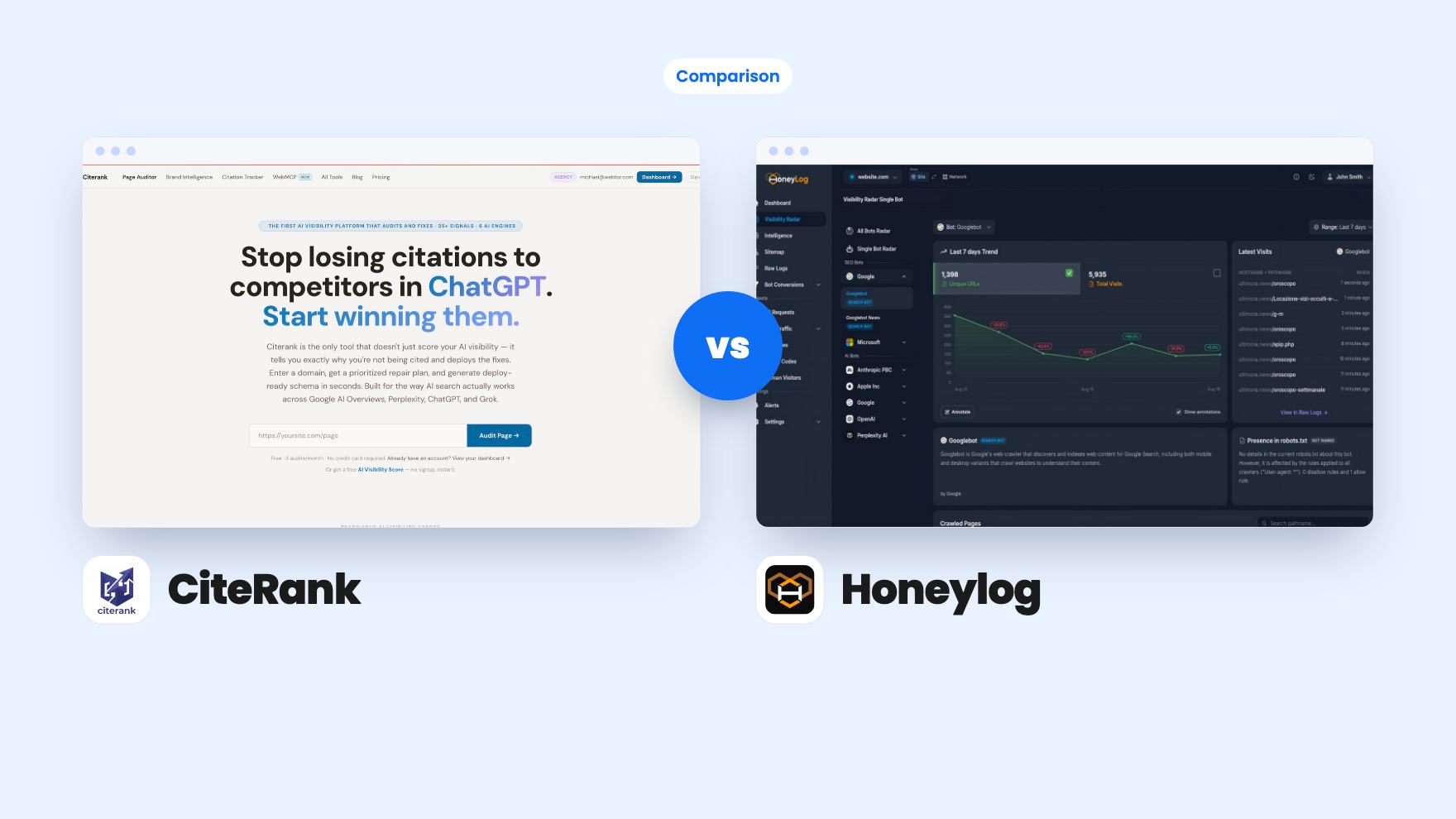
CiteRank takes 1 round, Honeylog takes 2.
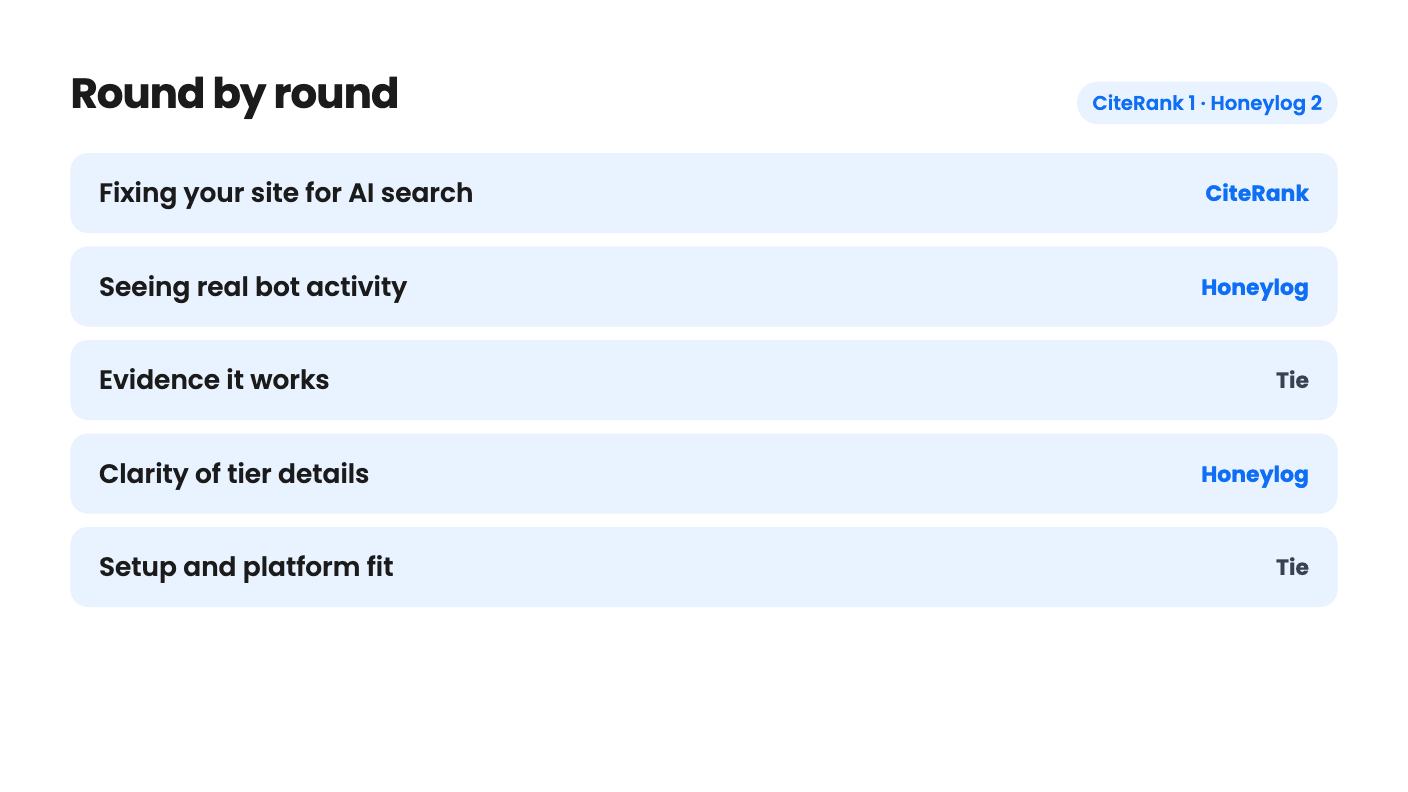
| Round | Winner | Why |
|---|---|---|
| Fixing your site for AI search | CiteRank | CiteRank ranks issues by impact on AI citation and can push schema and meta fixes to WordPress, while Honeylog only shows you the gaps. |
| Seeing real bot activity | Honeylog | Honeylog reads your actual server or CDN logs, names crawlers like GPTBot, ClaudeBot and PerplexityBot, and flags spoofed user agents. |
| Evidence it works | Tie | CiteRank has 2 AppSumo reviews and Honeylog has 3, and neither listing offers proof of results. |
| Clarity of tier details | Honeylog | Honeylog lists events, users, sites and data retention per tier, while CiteRank's plan table is jumbled and unclear on what each tier includes. |
| Setup and platform fit | Tie | CiteRank's most distinctive feature needs WordPress, and Honeylog needs access to server or CDN logs. |
| CiteRank | Honeylog | |
|---|---|---|
| Starts at | $49 | $59 |
| List price | $599 | $129 |
| Plan | Lifetime Deal | Lifetime Deal |
| Deal ends | Not listed | Nov 11, 2026 |
| Best for | Marketers, Marketing agencies, Small business owners | Ecommerce, Marketers, Web design agencies |
| Alternative to | Profound | Google Analytics, Screaming Frog |
Traffic has gone flat, and someone tells you AI answers are eating your clicks. There are two sensible first moves. You can fix your pages so AI tools are more likely to cite you, or you can find out which bots are visiting at all. CiteRank is built for the first. Honeylog is built for the second.
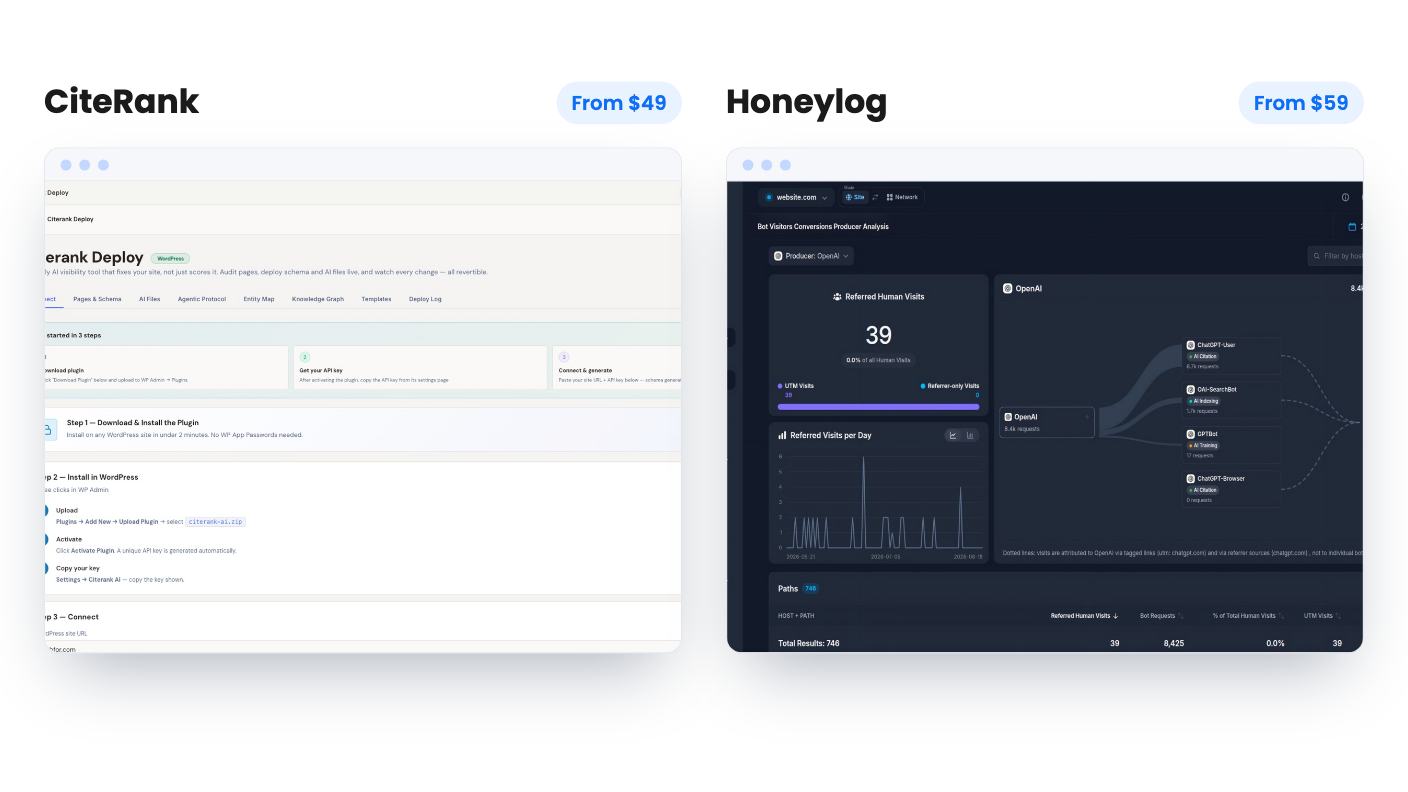
Both sit in the same AppSumo category, so a small business owner shopping for AI search help could easily land on each. They answer different questions, though, so this isn’t a like-for-like contest. Think of it as choosing where to start.
CiteRank looks at your content from the outside. Its AI Visibility Audit scores 35+ signals, including schema, entity clarity, crawlability and passage structure, then sorts the issues by their impact on AI citation. You end up with a to-do list.
Honeylog looks at what already happened. It reads your server or CDN logs, with no script and no code changes, and shows which crawlers hit which pages. You end up with a record.
One tells you what to change. The other tells you what the bots did. If your budget covers only one, decide which gap hurts more: no plan, or no data.
The Citation Tracker is what lifts CiteRank above a plain checklist. It reports citation rank in Google AI Overviews, Perplexity and ChatGPT, with week-over-week changes, competitor share of voice and a custom prompt library. The listing’s FAQ also mentions Gemini.
Then there’s Deploy, which pushes schema and meta tag fixes to WordPress with before and after diffs. For an owner who reads a report and never acts on it, that’s a real advantage. The catch is that the FAQ puts Deploy on the Agency plan, and the plan table doesn’t make clear which lifetime tier that is.
The listing also doesn’t say how often prompts are checked or how many each tier allows. Those limits decide whether tracking is useful, and they’re missing.
Honeylog names the crawlers it tracks: GPTBot, ClaudeBot, PerplexityBot, Google-Extended, Bytespider, CCBot, Meta-ExternalAgent, Applebot-Extended and Amazonbot. It also claims to separate AI citation bots from training bots and ordinary search crawlers. That helps if you want to welcome one group and block another.
Spoofing detection is the most concrete feature in either listing. Honeylog compares a request’s claimed user agent with the IP ranges that vendors such as OpenAI, Anthropic, Perplexity and Google publish. Anything claiming to be a known bot from outside those ranges gets flagged.
Sitemap intelligence suits bigger sites. You add your sitemap URLs, they’re scanned right away and then roughly hourly, and you can see which declared pages bots never fetch. The listing shows the gap but mentions no fix.
Treat the referral claim with caution. Honeylog says it connects bot crawls to human visits using UTM tags and referrers. AI chat tools often send visitors with no referrer, and the listing doesn’t say how that’s handled.
CiteRank has three tiers: $49 (list $599), $99 (list $1,188) and $199 (list $1,788). Those list prices look inflated, and we’d ignore them.
The plan table is the real problem. It shows six columns of values for audits, domains and crawler limits, and some rows are blank. Several columns clearly belong to plans outside the three lifetime tiers. What we can piece together is that white-label reports, client workspaces and Deploy appear to be true in only one column, probably the top plan. That’s an inference, not a fact.
Honeylog has five tiers and spells out the caps:
That’s far easier to plan around. The snag is that the listing never defines an event. If it means every logged request, 150,000 a month could vanish fast on a busy site. Custom alerts also show as N/A on the two cheapest tiers, even though the feature copy promises automated alerts.
Both deals require activation within 60 days. Honeylog’s is open only to brand-new users and ends November 10, 2026, so that one has a clock on it.
Neither listing shows evidence that it works. CiteRank doesn’t show that fixing its flagged issues leads to more citations, and its claim that a verified Knowledge Graph entity is the strongest predictor of AI Overview citation comes with no source. Honeylog doesn’t show how accurate its attribution is.
Both products also look young. CiteRank has 2 AppSumo reviews, both 5 stars. Honeylog has 3, averaging 4.67. Those are tiny samples, and neither listing says how long the product has existed or what’s planned next. A lifetime deal on an early product always carries some risk.
We haven’t tested either tool, so everything here is a read of the listings.
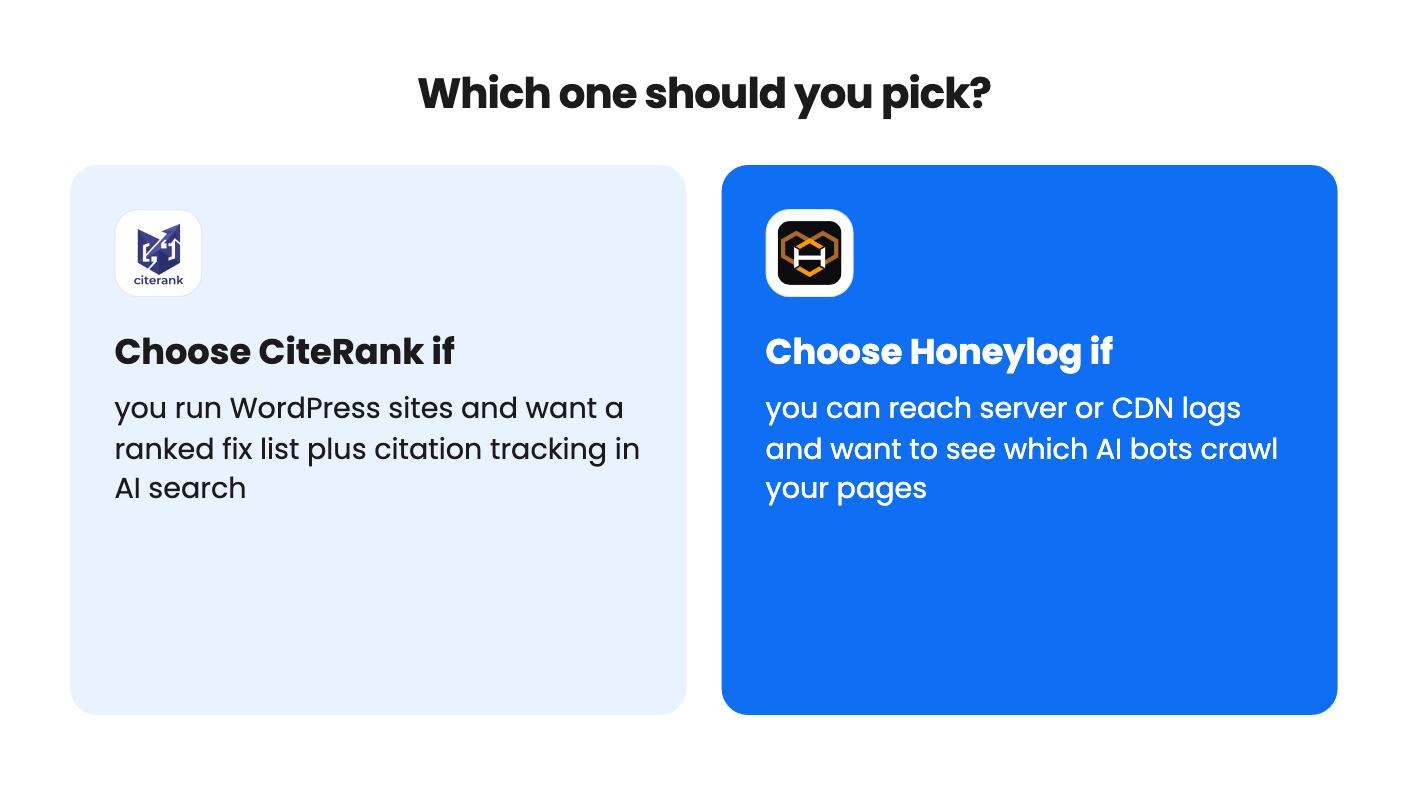
Pick CiteRank if you run one or two WordPress sites, don’t have an SEO person and want a ranked list of fixes with a way to apply them. Run its free checker tools on your own site first. Agencies should get the tier details in writing before paying, since white-labelling and client workspaces look limited to the top tier.
Pick Honeylog if you publish content or sell online, can get at your server or CDN logs, and want to know which AI crawlers visit and whether any send people back. The $59 tier works as a cheap experiment, though one site and six months of data won’t serve as a long-term archive. Skip it if you want a Google Analytics replacement, because nothing in the listing describes standard human-visitor reporting.
If you’re still stuck, pick the problem you can act on this month. A fix list you’ll never apply or a log feed you can’t access is wasted money at any price.
No. CiteRank audits your pages and tracks where you're cited in AI answers. Honeylog analyzes server logs to show which bots crawl your site and which AI platforms send visitors. Some buyers could reasonably use both.
CiteRank starts at $49 and Honeylog at $59. Both require activation within 60 days. CiteRank also lists a free plan and free checker tools, so you can test your own site before paying.
Honeylog lists Nginx, Apache, Caddy and several CDNs, so it depends on log access rather than your CMS. CiteRank's Deploy feature is WordPress only, which leaves other platforms with the audit and tracker.
How this comparison was made: researched from both tools' official listings and demo videos, and written with help from AI. We have not tested CiteRank or Honeylog hands-on yet. Prices and deal terms change, so check AppSumo before you buy. See our affiliate disclosure.
Five AppSumo lifetime deals named as Linktree alternatives, from $19 to $59 entry prices. See who each suits and what the listings leave out.
Six AppSumo lifetime deals pitched as Google Analytics alternatives, grouped by the job you need done, with tier limits and gaps spelled out.
Ten AppSumo lifetime deals named as Ahrefs alternatives, grouped by job: keywords, site fixes, AI search tracking and competitor research. Limits included.