Lead GenerationReview
KingSumo Review: Free Giveaway Tool With a $49 Pro Upgrade
KingSumo runs viral email giveaways. Free tier has unlimited contests, and a one-time $49 Pro adds branding removal, tracking and Mailchimp, Kit and Klaviyo.
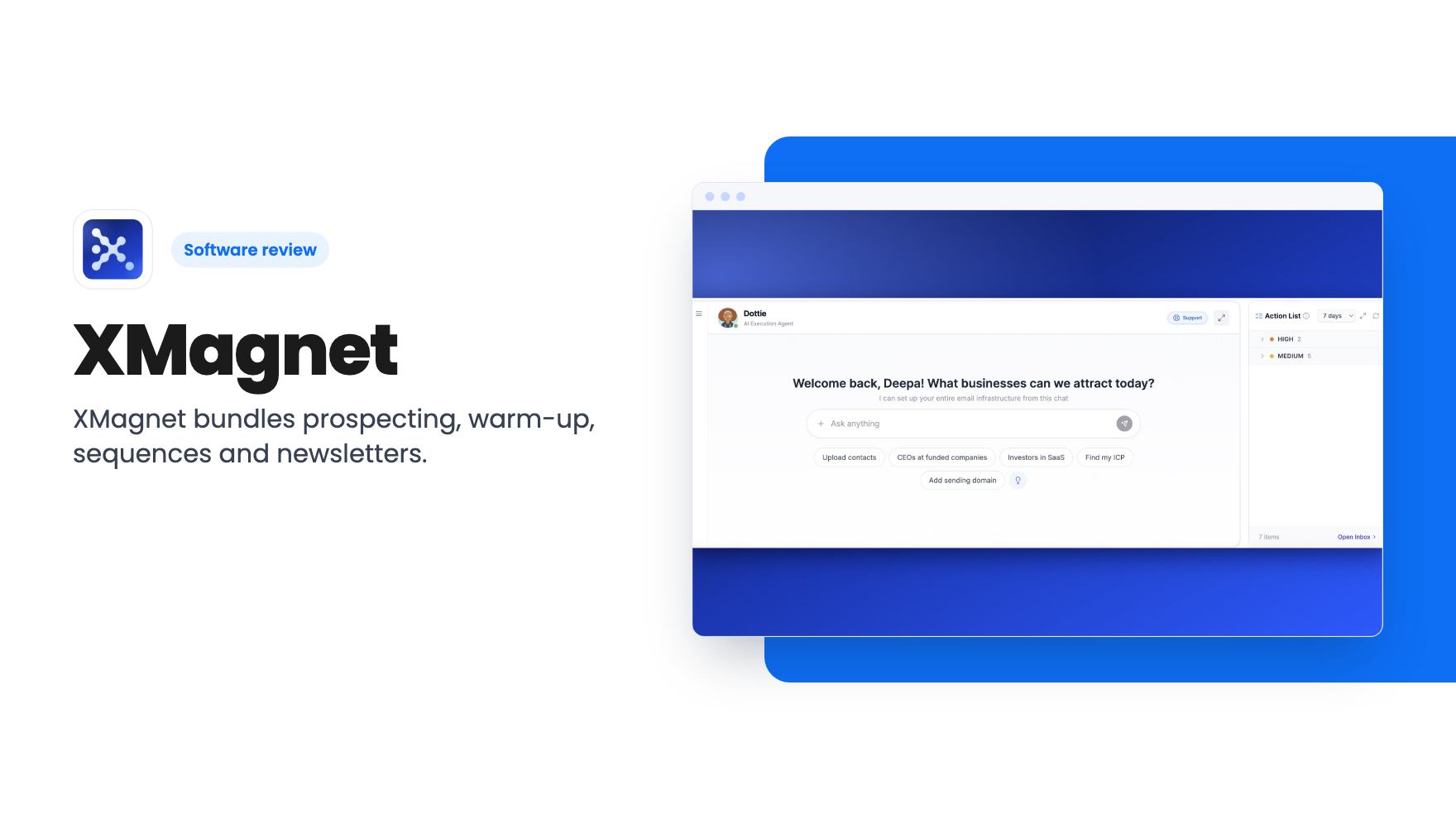
XMagnet bundles prospecting, warm-up, sequences and newsletters. The $59 to $539 AppSumo deal has one-time credits and mailbox caps worth checking first.
Lifetime deal price
$590
Lifetime Deal
Our take: Buy it if you do B2B outreach and want contact search, warm-up and sending in one place, and you can live with a young product and capped credits. Skip it if you need proven deliverability, clear per-credit costs, or a tool with a long public track record.
Picture the usual cold outreach stack. One tool to find people, another to verify their emails, a third to warm up inboxes, a fourth to send sequences, and a spreadsheet gluing it all together. By the time you’ve paid for four logins, the campaign hasn’t even started.
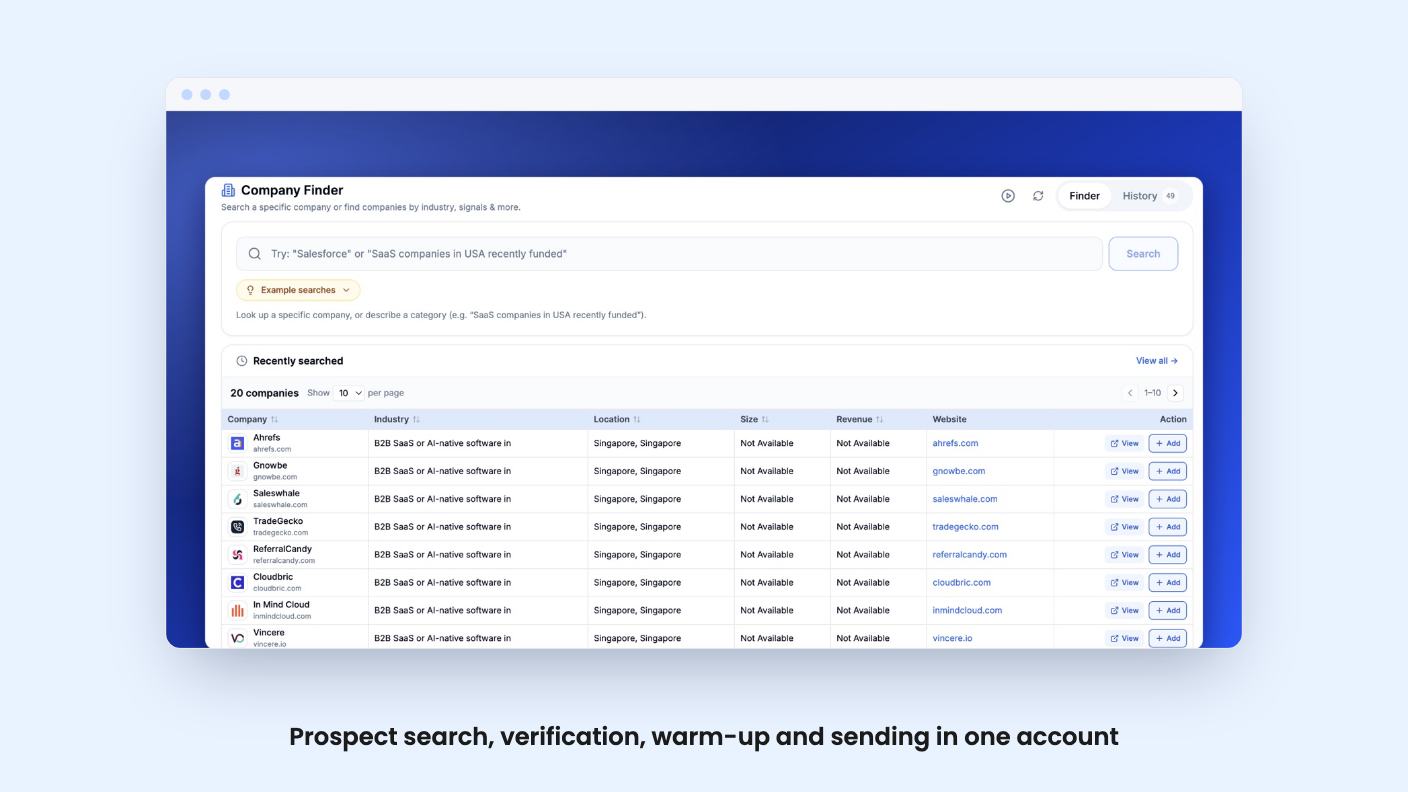
XMagnet is trying to collapse that stack into one account. It’s sold on AppSumo as a lifetime deal with four tiers, from $59 to $539, and the deal ends today, November 4, 2026. It’s a young-looking product with a long feature list, so the useful question is which parts of that list you’ll actually run into limits on.
The listing describes an AI-driven outreach platform for B2B teams. You find contacts, enrich and verify them, write campaigns, send them, watch deliverability, and see which campaigns led to revenue. AppSumo lists Lemlist, Lusha and Mailchimp as alternatives, which tells you the range it’s aiming at: prospecting data, cold sequencing and bulk newsletters in one place.
That’s a wide claim. Tools that try to do everything often do each piece at an average level. The listing gives no ratings, case studies or sample results, so we can’t say how good any single part is.
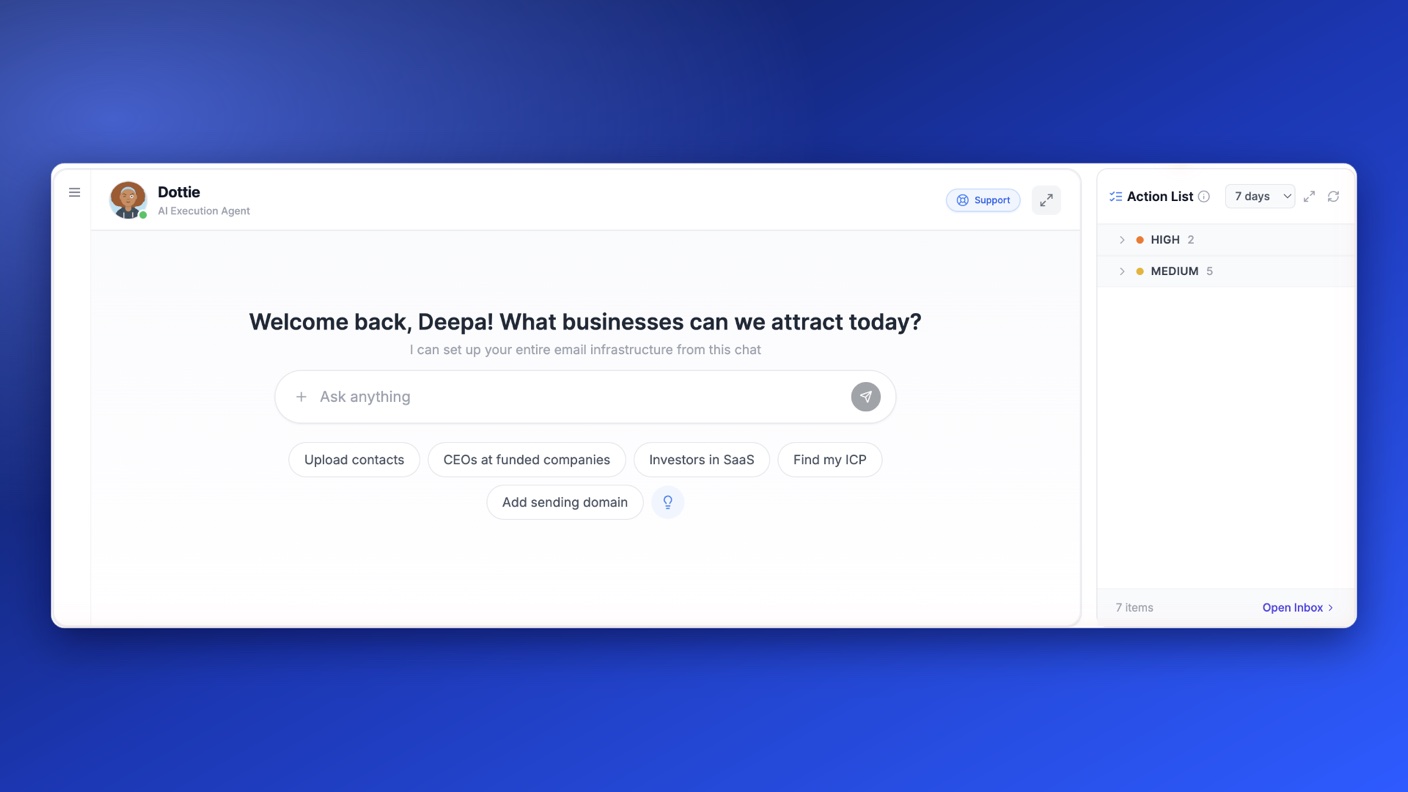
The headline feature is Dottie, an AI agent you talk to. According to the listing, you can ask it to set up domains, mailboxes and prospect lists, write subject lines and follow-ups for each recipient, and build forms and landing pages to capture leads.
The listing’s FAQ describes Dottie a bit differently, and more modestly. There it’s a guide that answers product questions, walks you through onboarding, helps troubleshoot and creates bug reports. Those are two different pictures of the same agent. One is a hands-on operator, the other is a built-in help desk. The truth may be both, but the listing doesn’t show where the line is.
Dottie also runs on tokens. Every plan includes a one-time Dottie Execution Token allowance, from 250,000 on the lowest tier to 5,000,000 on the highest. The listing doesn’t say how many tokens a campaign setup or an email draft uses. Without that, you can’t estimate how long 250,000 lasts.
The data side is where this tool looks most like a Lusha competitor. The listing says you can search 200M+ profiles by role, industry and location, find decision-makers at target companies, and get email addresses from LinkedIn profiles. You then verify and enrich the contacts before sending, and build segments by behavior, engagement history and custom attributes.
The API FAQ adds some useful detail. Validation returns one of four results: deliverable, undeliverable, risky (catch-all, disposable or role-based) and unknown. Results are cached for 30 days, and a cached lookup costs no credits. A forced refresh does cost credits.
That cache rule is sensible. It also confirms that lookups spend credits, and the listing never says how many credits a lookup uses. At 100 credits on the entry tier, that number matters a great deal.
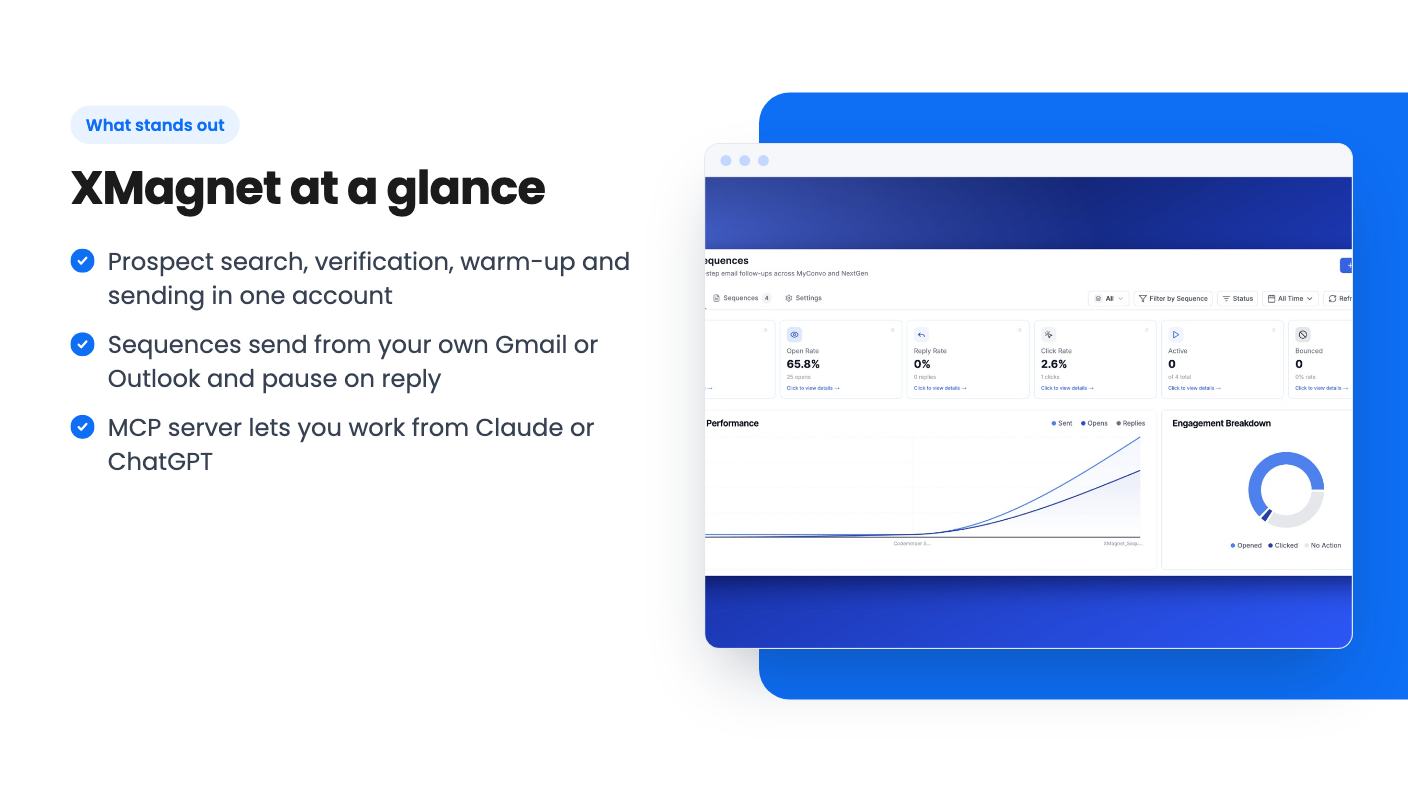
Sending comes in two flavors. MyConvo runs follow-up sequences from your own Gmail or Outlook inbox and pauses automatically when a prospect replies. NextGen handles newsletters, product updates and promotions at scale, with optimized send times. You can A/B test subject lines and copy, and track opens, clicks, replies, meetings booked and revenue by campaign.
The deliverability pieces are the part cold emailers will care about most:
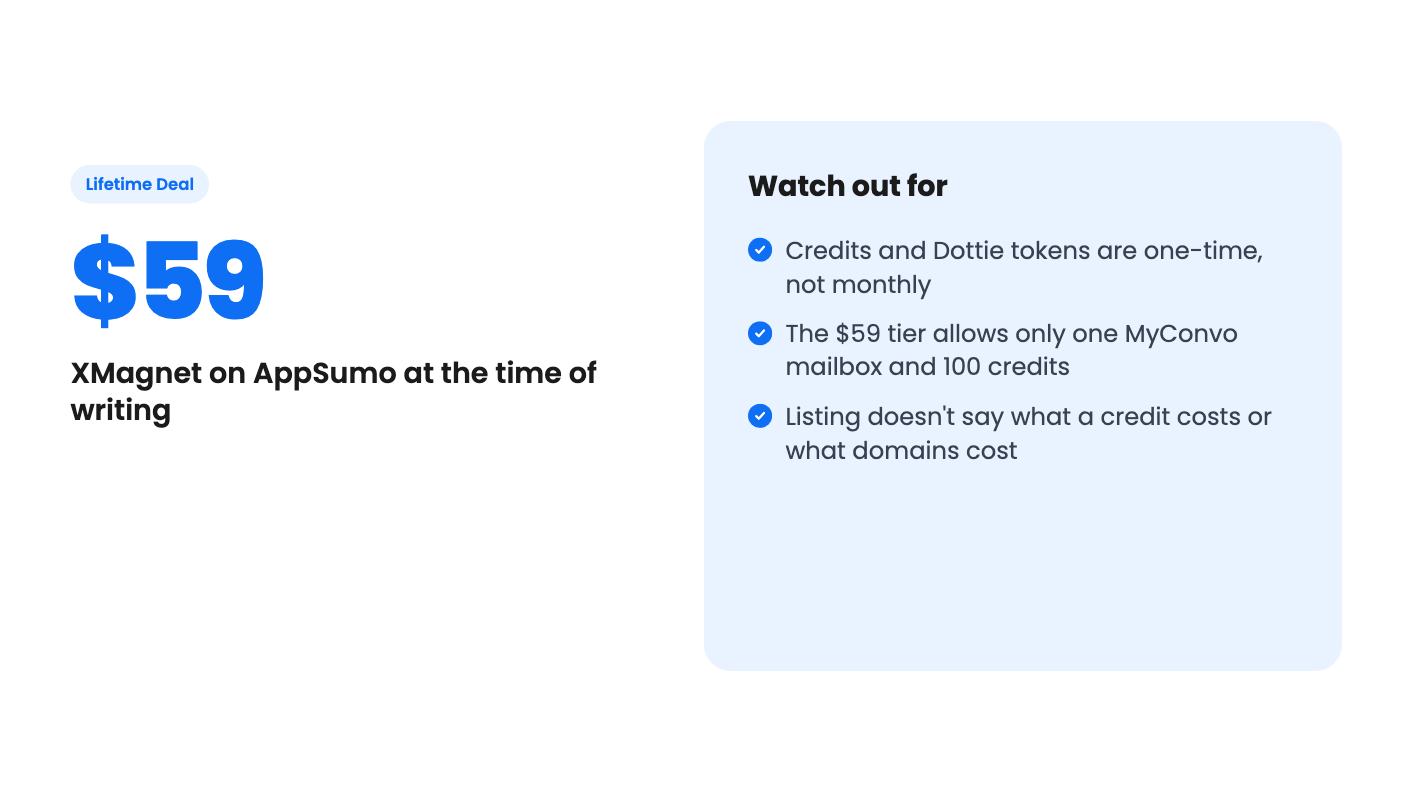
All of that is useful on paper. Notice what’s missing, though. The listing doesn’t say what domains and mailboxes cost, whether those purchases come out of your credits, or how many warm-up inboxes you can run. Those are the numbers that decide whether this replaces a separate sending setup or just sits next to one.
The MyConvo mailbox cap is the one that bites. The entry tier connects one mailbox. Cold outreach at any real volume usually spreads sending across several inboxes, so one mailbox is a hard ceiling for that style of work.
The plan features are listed from highest to lowest, without tier labels. Reading them against the ascending prices, here’s how it maps. That’s our reading, so check it on the deal page.
The listing doesn’t say whether sends are monthly or a lifetime total. That’s a big difference. Ten thousand sends a month is a working small-business newsletter. Ten thousand sends, period, is a few months of activity.
Credits and tokens are labeled one-time. If the listing means what it says, the data and AI parts of the product run on a pool that doesn’t refill. Plan on 100 credits as a trial, not a prospecting budget.
Other terms: all four tiers get future Growth plan updates, and you need to activate within 60 days. You can upgrade while the deal is live, but you can only downgrade within 60 days of purchase. Future AI models may come at a discount or need an add-on, so the lifetime promise doesn’t extend to every new model.
XMagnet includes an MCP server, which connects your workspace to Claude or ChatGPT. The listing says you can prospect, enrich, create and send campaigns, and pull analytics from plain-language prompts, subject to your account permissions and guardrails. There’s also a REST API for enrichment, email validation and credits, authenticated with an API key.
If you already work inside an AI assistant all day, that’s a practical hook. We haven’t seen it run, so how well it handles a multi-step campaign is unknown.
Skip it if you need to send high-volume cold email from many inboxes and the $59 tier is the only one you’d buy. One mailbox and 100 credits won’t carry a real outbound program. The higher tiers fit that job better, but you’d be paying $289 or $539 for a product whose limits are still unclear.
Skip it too if you want a tool with years of public reviews behind it. This is a new platform with a broad promise, and the listing has no video, no screenshots of results and no numbers on inbox placement.
It makes more sense for a small team that does light B2B outreach, wants contact search and sending under one login, and treats the lifetime price as a bet on a young product. Before you buy, ask the seller what a credit buys, whether sends reset monthly, and what domains cost. If the answers are clear, the middle tiers look like the sensible place to start.
Going by the listing's plan features, which list columns from highest to lowest, the $59 tier gets 10,000 NextGen sends, 5,000 contacts, 1 MyConvo mailbox, 100 one-time credits and 250,000 one-time Dottie tokens. The listing doesn't label the columns, so confirm on the AppSumo page before buying.
The listing calls both credits and Dottie Execution Tokens one-time. It doesn't say you can top them up, or what that would cost. Ask the seller before you plan around them.
Yes. According to the listing, you link a mailbox under Settings, Connect Account, and MyConvo sequences send from that inbox. Newsletter-style sends go through NextGen.
How this review was made: researched from XMagnet's official listing, and written with help from AI. We have not tested XMagnet hands-on yet. Prices and deal terms change, so check AppSumo before you buy. See our affiliate disclosure.
KingSumo runs viral email giveaways. Free tier has unlimited contests, and a one-time $49 Pro adds branding removal, tracking and Mailchimp, Kit and Klaviyo.
Five AppSumo lifetime deals that cover parts of what ZoomInfo does, from contact data to cold email and local prospecting, and who each suits.
Five AppSumo lifetime deals that cover parts of what Hunter.io does, from email finding to verification, with the limits and gaps each listing shows.