Website BuildersReview
Consently Review: Cheap Cookie Consent, Odd Tier Math
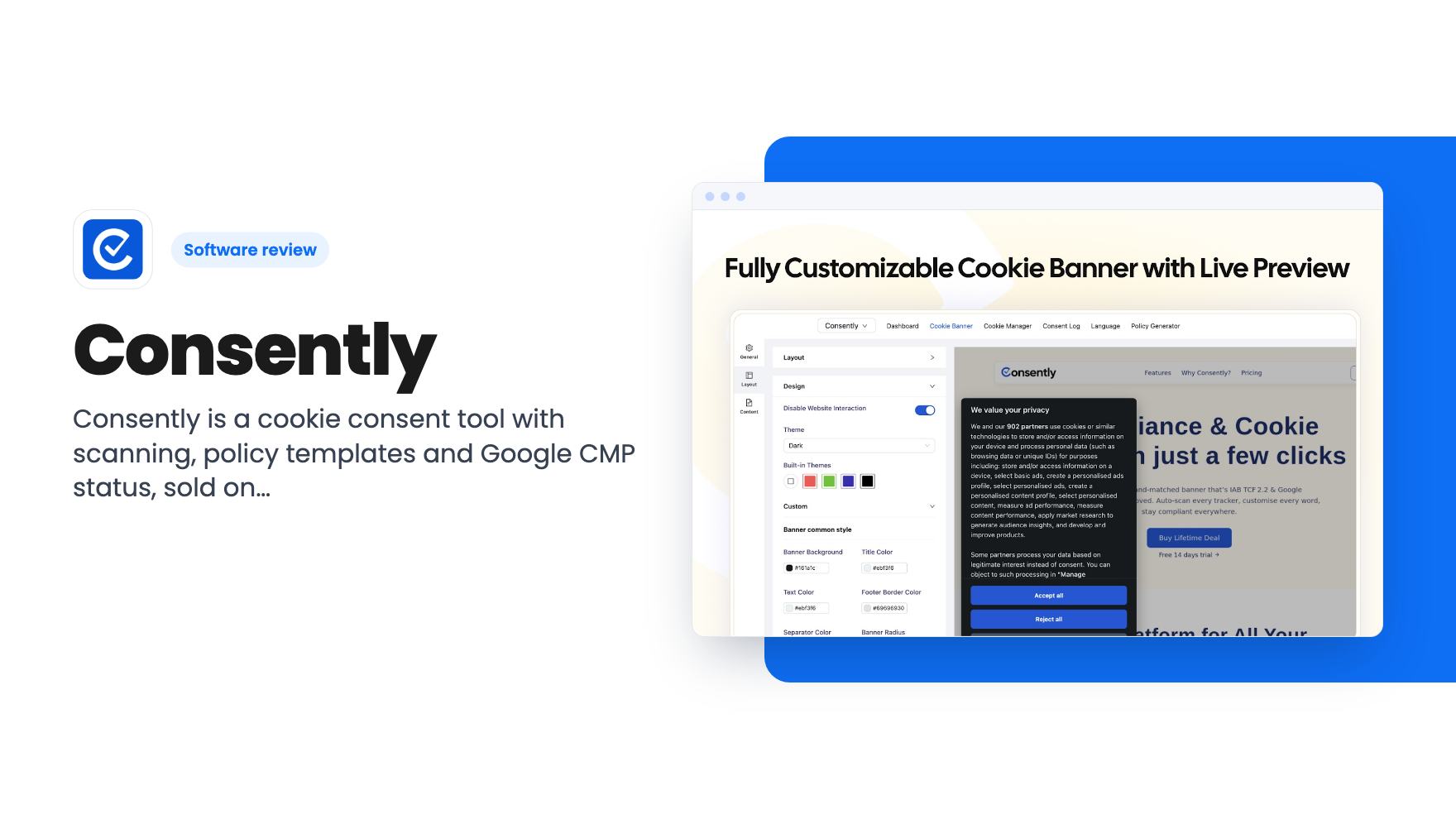
Consently is a cookie consent tool with scanning, policy templates and Google CMP status, sold on AppSumo from $39. Here's what the listing covers and where it's thin.
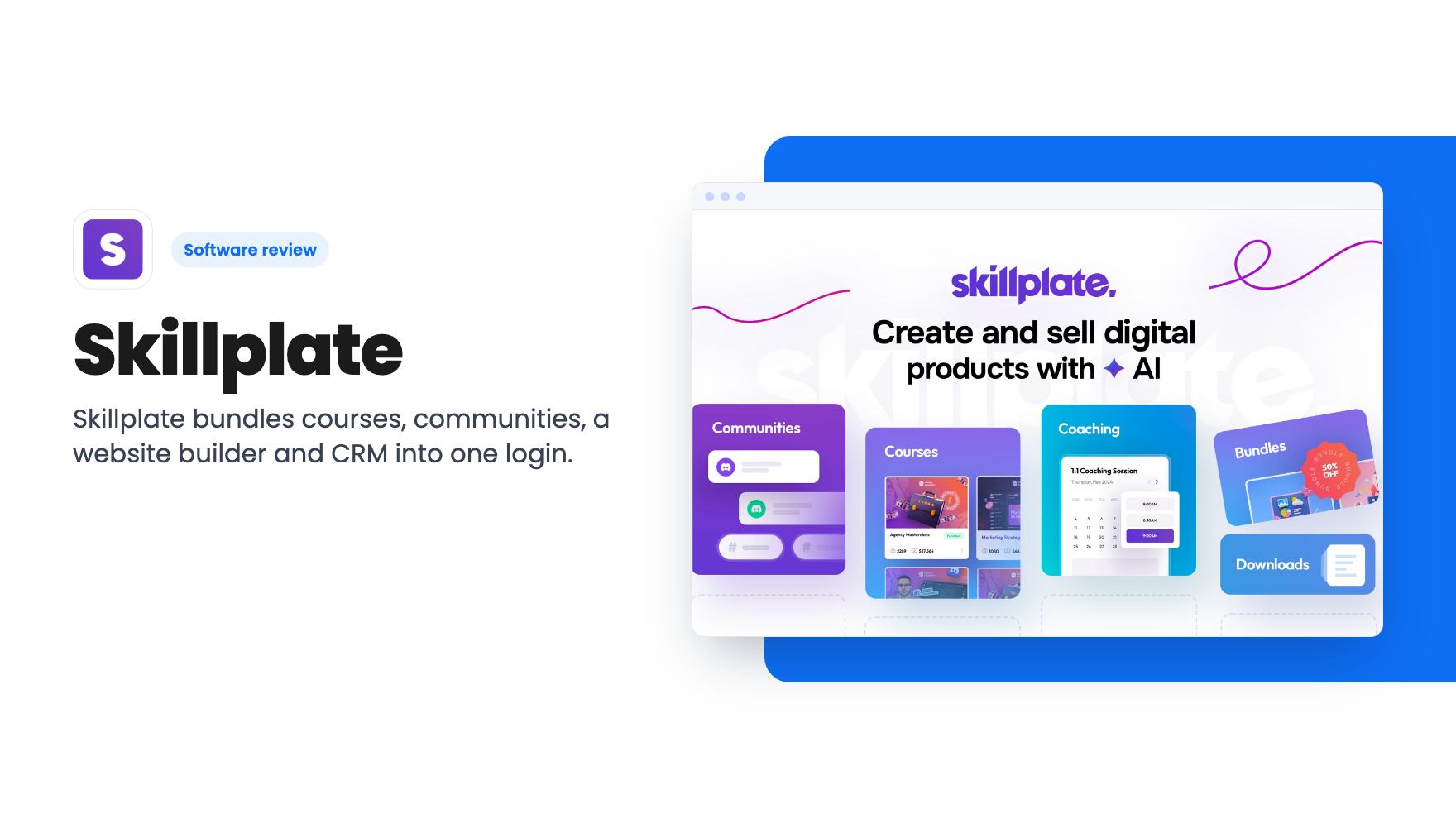
Skillplate bundles courses, communities, a website builder and CRM into one login. Lifetime deals start at $79, but the commission fees need a closer look.
Lifetime deal price
$79$94892% off
Lifetime Deal · ends Dec 4, 2026
Our take: Skillplate suits solo coaches and course creators who want courses, checkout, a site and a basic CRM in one place, and who can live with a platform commission on sales. Skip it if email marketing is central to your business, if you run more than one brand, or if the conflicting commission and contact figures in the listing aren't cleared up before you pay.
You’ve taught the workshop live a few times, people liked it, and now you want to sell it as a proper course. Then the shopping list starts: a course host, a website builder, an email tool, a CRM, a checkout page. Skillplate is trying to collapse that list into one login, and it’s selling lifetime access on AppSumo from $79.
That’s a tempting pitch. It also comes with a catch in the fine print, so let’s go through it properly.
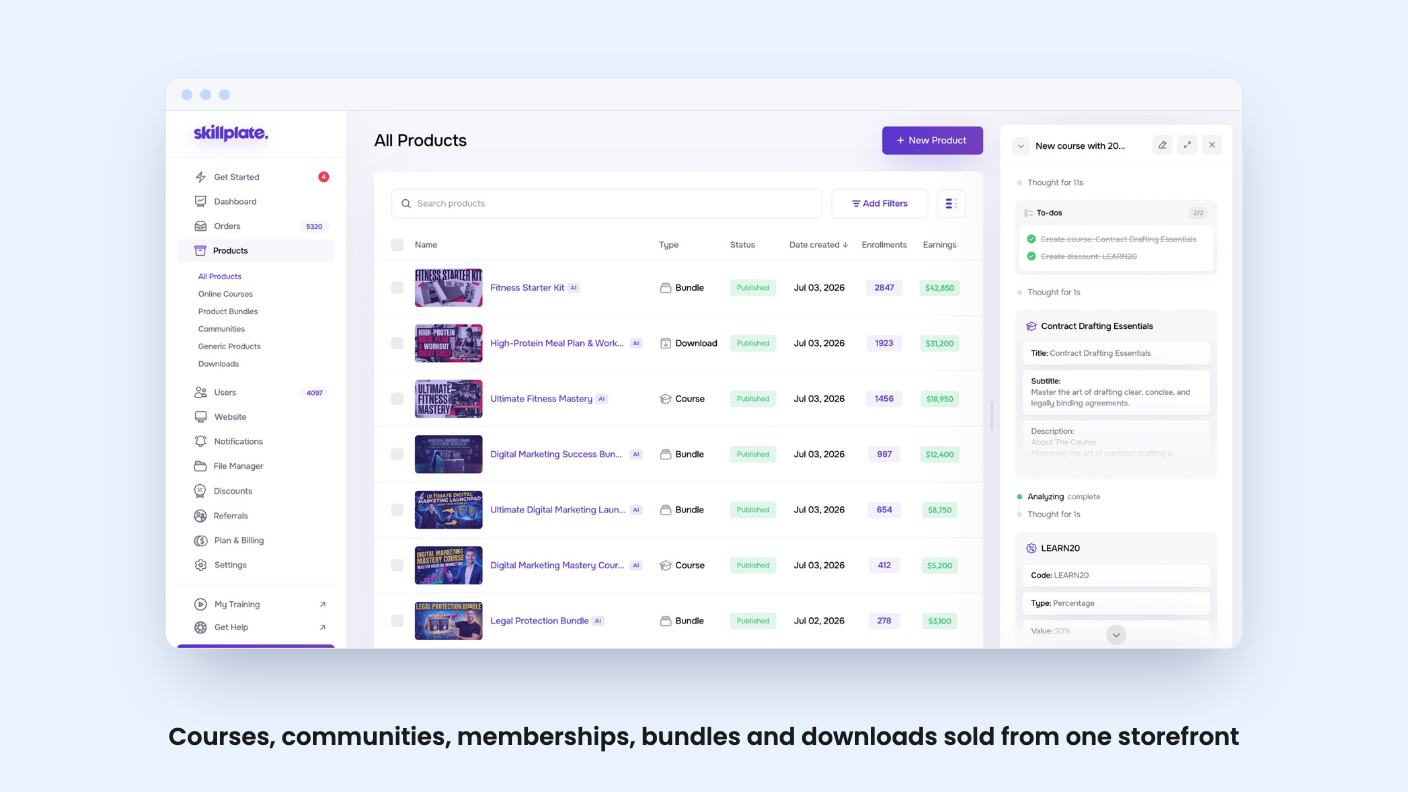
According to the listing, you can sell courses, communities, coaching programs, services, memberships and downloads from a single storefront. Payments cover subscriptions, one-time charges, coupons and upsells, and you can bundle products and services into higher-ticket packages. Checkout and the members area carry your branding, not Skillplate’s.
Around that sits a website and landing page builder, a CRM, analytics and one admin panel. Each product is said to get an auto-generated, mobile-first landing page, and global branding updates every page at once. You connect a custom domain and a Stripe account, and Stripe handles the payments.
The named integrations are Discord, Stripe, Zapier and n8n, plus webhooks and an API. The listing FAQ separately claims over 180 apps, which is a far bigger number than the short list suggests. We’d want to know which of those are native connections and which are just reachable through Zapier before counting on any of them.
The video is a creator walking through a course they built on the platform. It’s the most concrete material in the listing, though it’s also a friendly demo with a link to the presenter’s own course in the description.
The dashboard shows earnings, new accounts, enrollments and recent transactions over the last 30 days, with an adjustable date range. You can drill into orders and see which customer bought which course, and when.
There are five product types: online course, bundle, community, generic product and digital download. For courses you can build by hand or let the AI generate one from just a name. The presenter was clear that the AI only produces the outline of modules and lessons. You still supply the teaching. They also spotted a module built around GPT-3, which was out of date even when they recorded in October 2025.
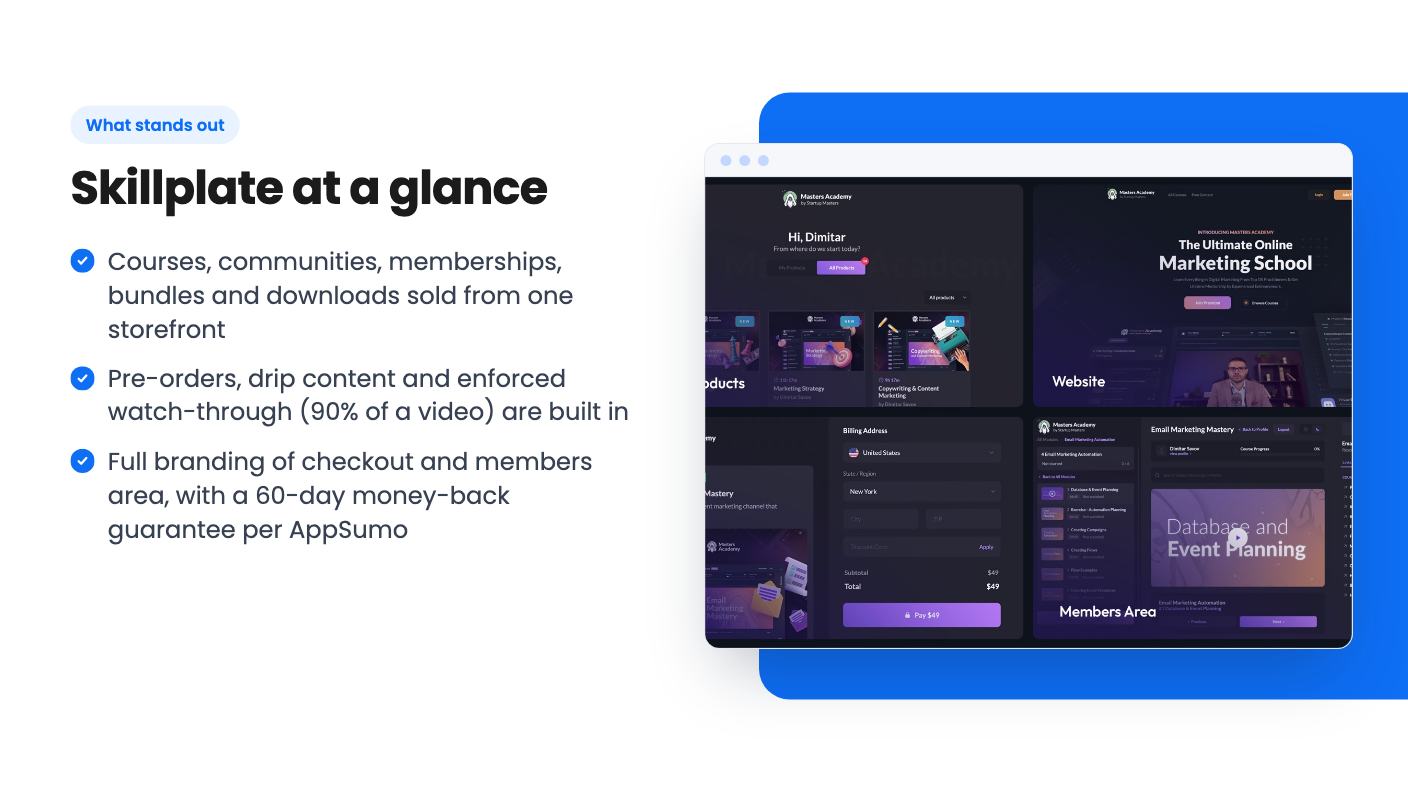
The manual course settings are where the platform looks strongest. You can run a pre-order sale to collect enrollments while you’re still recording, set a launch date, and force students through modules and lessons in order. You can even require them to watch 90% of a video before moving on. Lessons can be draft, published, coming soon, or dripped on a date or after a number of days.
Pricing options include free, one-time, installments and subscriptions, with an optional free trial. You get a direct payment link, or a landing page with your modules, lessons and bio. Students get a notes panel beside each lesson and a products page that resumes where they left off.
The presenter also showed editable email templates with variables, percentage or fixed discounts, a referral program, and branding controls. Those include two logos, a favicon, a font list, gradients, accent colors, and a portal theme that can be light, dark or the student’s choice. The transcript suggests you can’t upload your own fonts, though that part is garbled.
Their verdict was that the interface looks good but throws a lot at you, so expect time to learn where things live.
One detail matters more than the presenter’s tone suggests. They tried to connect a custom domain, the dashboard said connected, but it wasn’t actually working. Support told them the issue involved top-level root domains and that a fix was expected within a couple of days.
That was at recording time, and we don’t know if it’s resolved. Still, a branded domain is half the reason to leave a hosted course marketplace, so test it early.
The listing’s headline feature is the Overmind, an AI agent you describe your business to. It’s said to generate a product catalog with images, descriptions and landing page copy, build campaigns by conversation, suggest next steps from your orders and CRM data, and keep learning your business after launch.
The video doesn’t show any of that. What it shows is the course outline generator. So treat the Overmind as a promise until you’ve tried it.
There’s also a limit hiding in the plan table. AI usage is capped by Gemini credits, from $5 at one end to $50 at the other. The listing doesn’t say what a credit buys, how many courses or pages that covers, or what happens when you run out.
There are six tiers, from $79 to $549. Every tier gets the same features and one business. The differences are limits: contacts, active users, monthly streaming minutes (15,000 to 75,000), video storage hours (15 to 100), commission rate and AI credits.
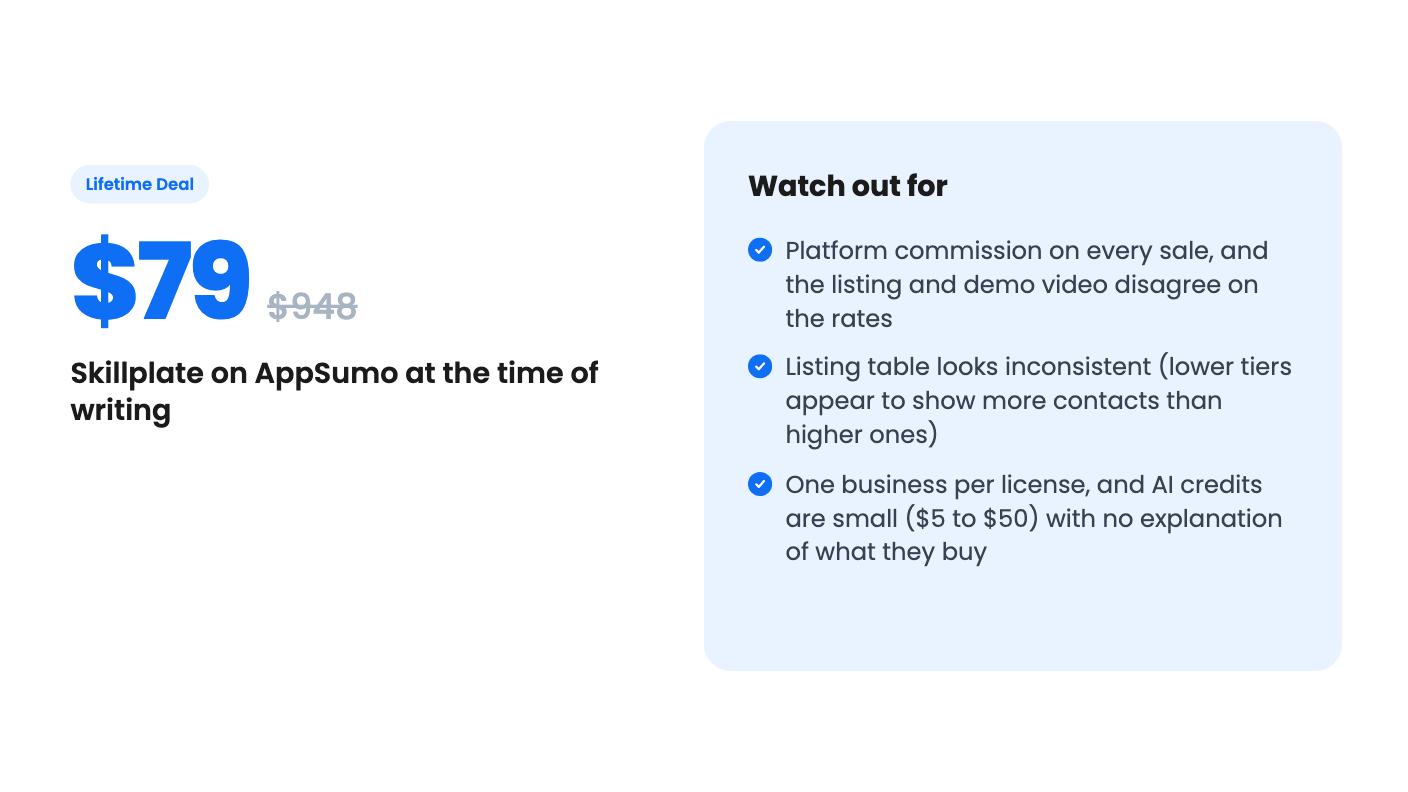
Here’s the problem. If the columns run from tier 1 to tier 6, the table gives tier 1 20,000 contacts but tiers 2 and 3 only 10,000 and 5,000. Commission reads 5% / 10% / 9% / 8% / 7% / 3%. The video says something different: the first tier starts at 10% commission and the top tier it showed pays 5%, and the rate you buy stays for life.
That looks like a listing error or a reshuffled tier structure. We can’t tell which. Don’t guess, because this is an ongoing cost. As an example, a 10% cut on $10,000 of course sales is $1,000 that goes to the platform every time you hit that number.
At 15 hours of video storage, the entry tier suits a modest course. A larger library will hit that ceiling, and the presenter mentioned a paid add-on for more storage hours.
The terms are standard AppSumo ones. The deal is for new Skillplate users only, you must activate within 60 days, and you can upgrade while the deal is live but only downgrade within 60 days of purchase. The deal ends December 4, 2026.
AppSumo shows 99 reviews averaging 4.85, with buyers praising the founder’s support. The one recurring complaint in AppSumo’s summary is that the email marketing is basic. If you plan to live off newsletters and sequences, pair this with a proper email tool or pass.
Skip it if you run more than one brand, since each license covers one business. Skip it if you already have a big video library or a large paying audience, because storage caps and a commission on every sale will bite sooner than a flat monthly fee would. And skip it if you need proof the product is mature. The listing says nothing about how long Skillplate has existed or what’s on its roadmap.
If you do buy, don’t wait. Upload a real lesson, connect your real domain and check your commission rate in writing during the first couple of weeks, while the 60-day money-back window is still working for you.
Yes. The plan table lists a commission fee on sales, and the demo video says the rate depends on your tier and stays with you for life. The listing table and the video give different percentages, so confirm your exact rate with the seller before buying.
AppSumo's summary mentions a 60-day money-back guarantee. The plan terms also say you must activate your license within 60 days, and you can only downgrade within 60 days of purchase. Use that window to test a real course and a real custom domain.
Not quite. In the demo video, the AI generated the module and lesson outline from a course name, and the presenter pointed out you still have to create the content yourself. The outline also contained an outdated reference to GPT-3, so review what it produces.
How this review was made: researched from Skillplate's official listing and a transcript of its demo video, and written with help from AI. We have not tested Skillplate hands-on yet. Prices and deal terms change, so check AppSumo before you buy. See our affiliate disclosure.
Consently is a cookie consent tool with scanning, policy templates and Google CMP status, sold on AppSumo from $39. Here's what the listing covers and where it's thin.
Five AppSumo lifetime deals listed as Webflow alternatives, from a $69 all-in-one site builder to AI app generators, with who each suits and what's missing.
Eight AppSumo lifetime deals named as Squarespace alternatives, grouped by need, with the limits and gaps each listing shows and who each one suits.