EcommerceTop deals
Ecommerce Lifetime Deals: 5 Picks for WooCommerce, Shopify and New Stores
Five ecommerce lifetime deals from $0 to $549, grouped by platform and goal, with what each listing shows, what it leaves out and who should pass.
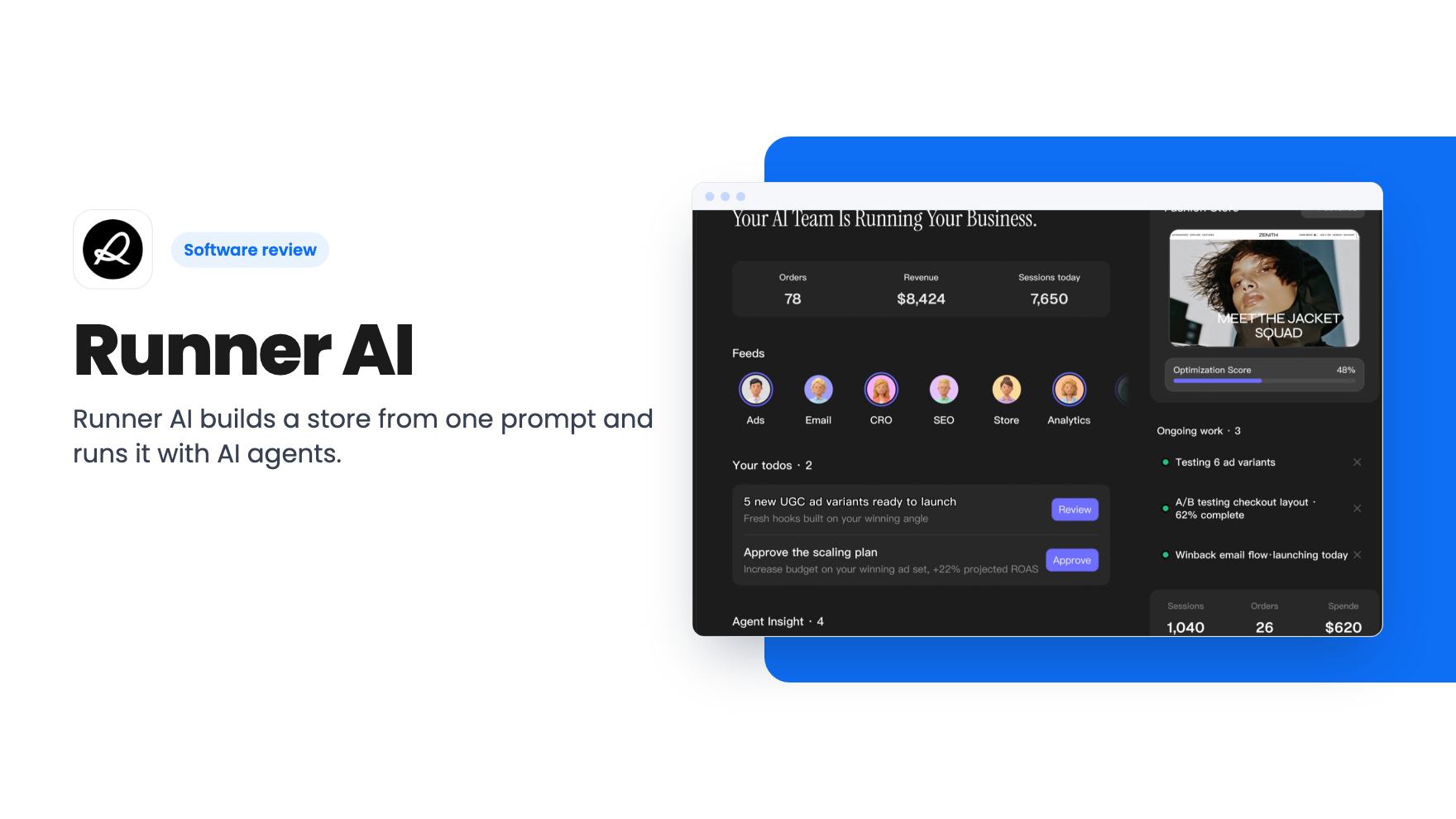
Runner AI builds a store from one prompt and runs it with AI agents. The AppSumo lifetime deal runs $79 to $549, but the tier table is confusing and fees remain.
Lifetime deal price
$790
Lifetime Deal
Our take: Worth a look if you want to test a dropshipping or print-on-demand idea cheaply and you're fine with a young product. Skip it if you need a proven store platform, predictable fees, or a clear answer on what each tier includes before you pay.
You have a product idea, maybe a niche you know well, and you don’t want to spend three weekends fighting a theme editor before you’ve sold a single thing. That’s the situation Runner AI is aimed at. You describe the store in a sentence or two, and it builds one.
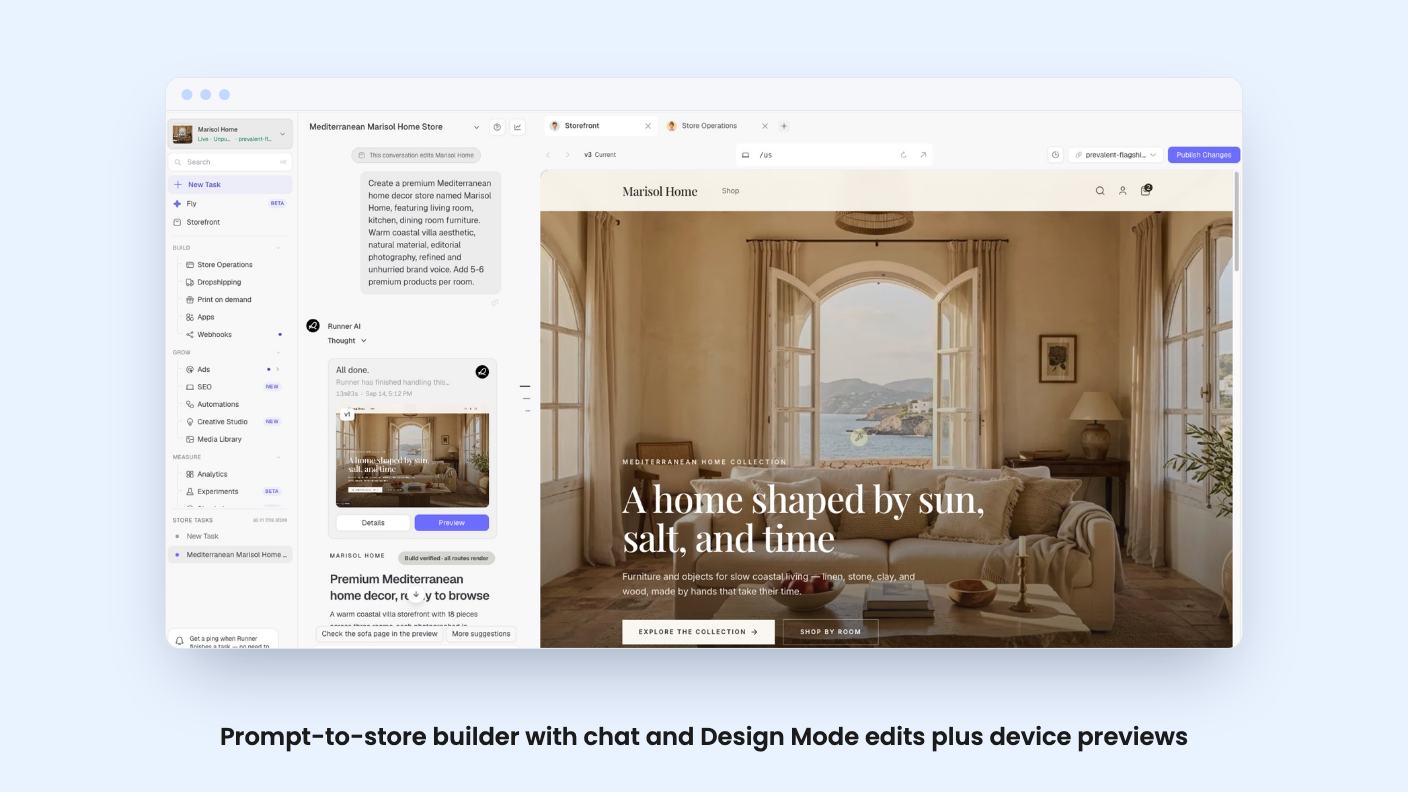
The pitch is bigger than a page builder. The listing describes a store you can talk to, with AI “specialists” that handle catalog work, customer support and ad creative. It’s an ambitious scope for a product that, as far as the listing shows, is still young. Let’s go through what’s actually claimed and where it gets fuzzy.
According to the listing, you type a written idea and Runner AI produces a working storefront. From there you keep chatting to add things like upsells and pop-ups. You can also clone an existing website as a starting point for your design, which is handy if you already know what look you want.
Edits happen in chat or in Design Mode, and you can preview on desktop, tablet and phone before publishing. Payments run through Stripe, so you can go live with working checkouts.
One detail in the listing’s FAQ is worth reading twice. A public storefront doesn’t mean checkout is ready. Publishing a page and configuring Stripe are separate jobs, so don’t assume that a live site can take an order.
The same FAQ says the tool doesn’t publish pages without review. That’s sensible. You’re expected to check pricing, variants, availability and promo wording yourself, which means the AI drafts and you stay responsible.
This is the part that makes Runner AI more than a store builder. Fly mode lets you direct 10+ AI specialists for catalog and customer support work. It also proposes next moves based on what’s working in your store. You approve each plan, and Fly carries it out.
The listing also mentions workflows, simulations and experiments for automating store operations, plus AI A/B testing and AI SEO and GEO. All of that is gated. Per the listing, it’s available in Tier 2 and above.
The listing’s own FAQ hedges on this, too. Promotions, analytics and experiments may depend on store state, plan, provider, role, traffic, data or staged availability. Translation: some features may not be there on day one, and an A/B test needs real traffic before it tells you anything.
There’s no product video and no detailed documentation in what we have, so we can’t say how good the agents’ proposals are. Treat “proposals based on what’s working” as a claim, not a result.
Runner AI is built around low-risk selling. You can source products from AliExpress and CJ Dropshipping with nothing to buy up front, and sell print-on-demand items through Printful. Describe a niche and it fills your catalog with matching products, AI-written listings and product images. The listing also mentions localized markets and inventory locations.
The FAQ says the suppliers handle shipping while Runner AI handles research, marketing and testing. That’s a fair split, but it also means your delivery times and product quality depend on third parties you don’t control.
If you have an existing catalog, CSV import is supported. The listing advises checking imported fields before featuring anything publicly, which is good advice for any import.
Product caps vary by tier. The listing shows dropshipping and print-on-demand limits of up to 50, up to 100, or unlimited, depending on the plan.
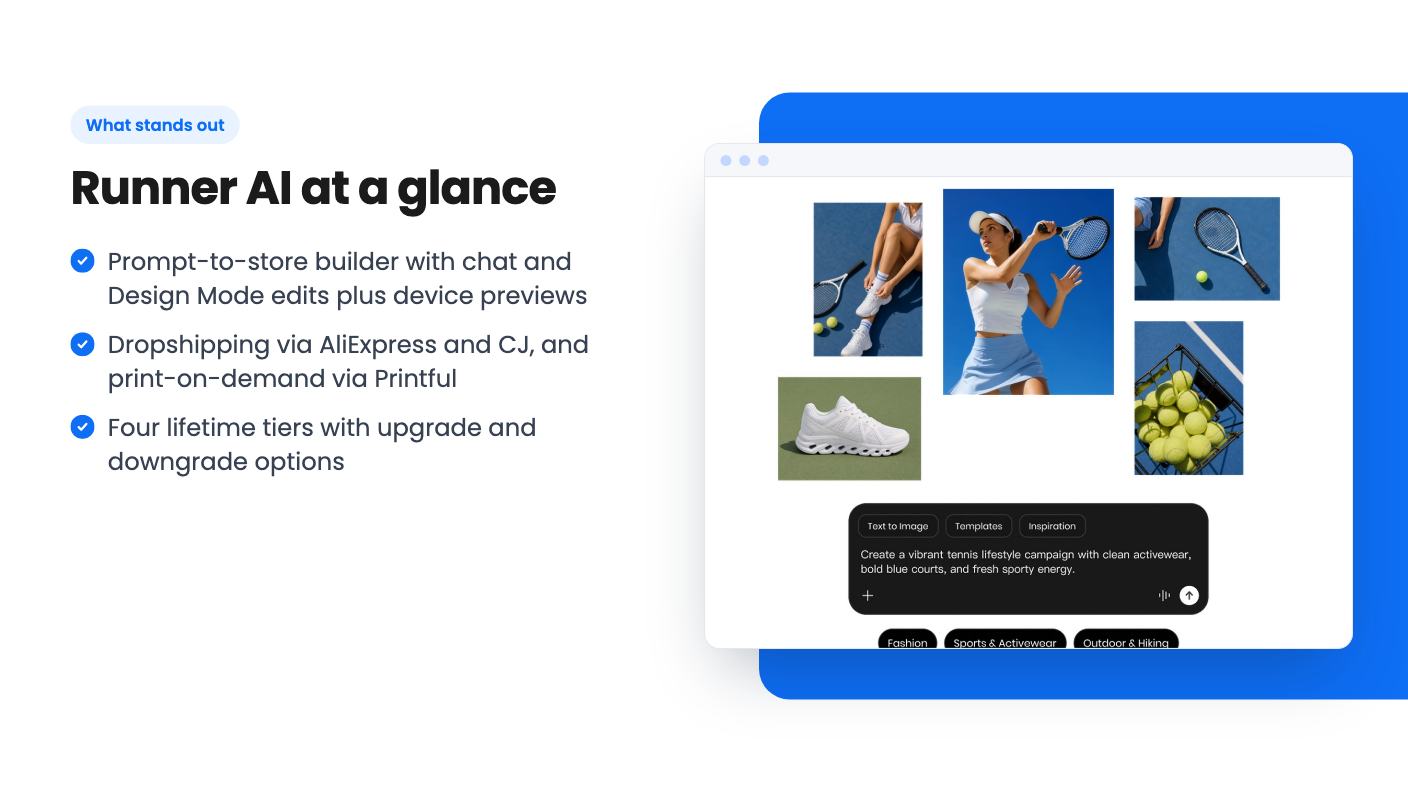
Tier 2 and above adds ad generation. You can make ad images and videos from a prompt, with Seedance, Kling, Nano Banana and ChatGPT built in. It also covers AI UGC-style videos and TikTok campaign creative, and Fly can run each variant to see what converts.
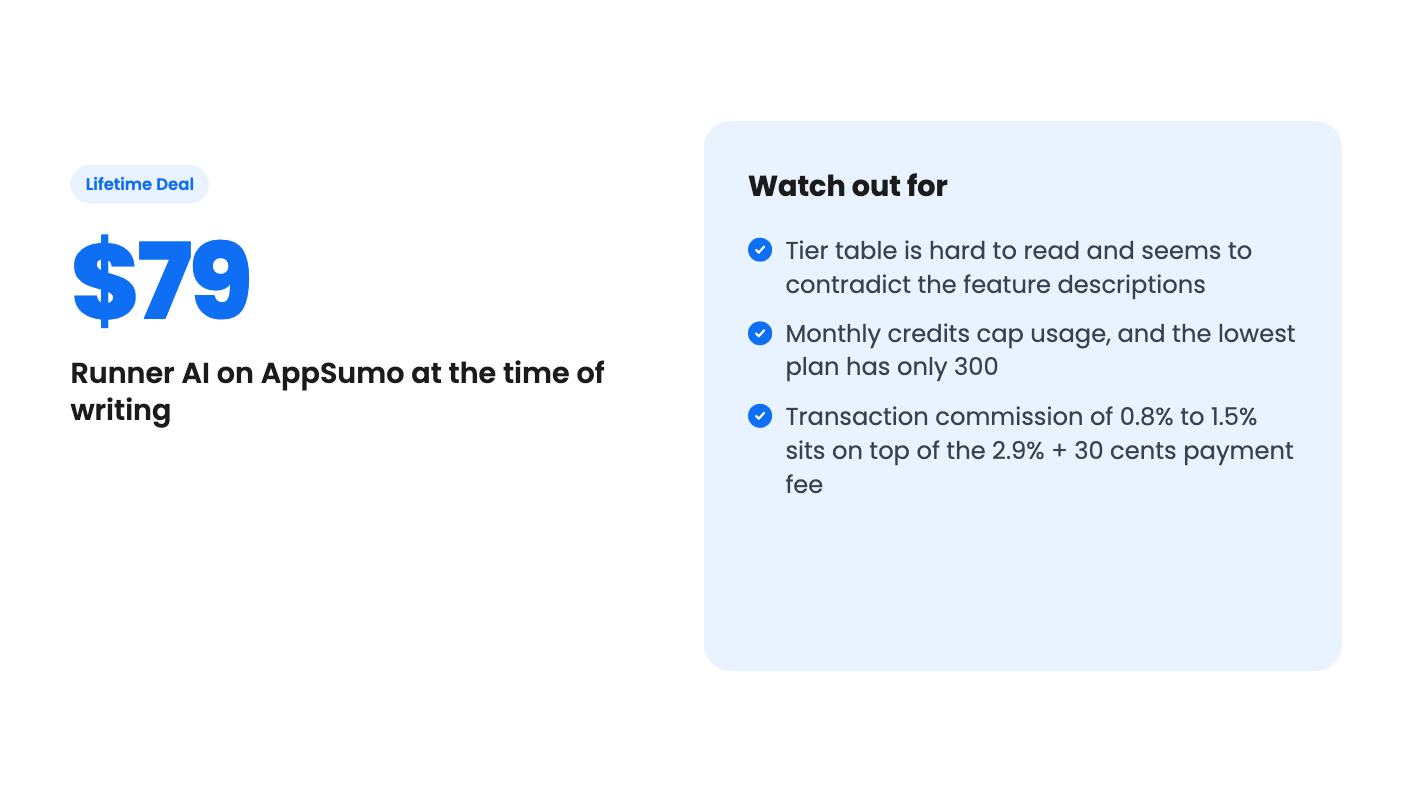
That’s a lot of promise in one bullet list. It also all draws on the same monthly credit pool, and the listing doesn’t say what a video or an image costs in credits. That’s a real gap. Video generation is usually the most expensive thing an AI tool does, so 300 credits could disappear quickly.
The lifetime tiers cost $79, $159, $289 and $549. Each includes all future plan updates, and you must activate your license within 60 days. You can upgrade or downgrade between the four tiers, and there’s no code stacking.
The plan features table lists these values, in this order:
Here’s the problem. The listing says Fly mode and the automation features start at Tier 2. But the table shows “false” in the same column as the biggest credit pool, the Max model and 50 seats. The columns may run from the top tier down, with the cheap tier in the last position, or the table may simply be mislabeled.
We can’t tell which. If the $79 tier really is the 300-credit, one-seat, Lite model plan, that’s a thin entry point. If the order is reversed, the biggest plan lacks the headline features, which makes little sense. Ask the seller, or check the live plan page, before you pick a tier.
A lifetime deal covers the software, not your selling costs. Every tier carries the payment provider fee of 2.9% + 30 cents, and Runner AI adds a transaction commission of 0.8% to 1.5% on top. Shopify and its rivals also charge payment fees, but a platform commission is one more line on every order.
Credits are the other recurring limit. They reset monthly, and heavy use of AI generation will run into them. The listing doesn’t say whether unused credits roll over or what happens when you run out.
The listing says Runner AI connects to ads, email, CRM and analytics tools, with 900+ apps. The named integrations are Google Ads, Shopify, Slack, Stripe and TikTok. We’d want to see how deep those connections go.
Skip it if you already run a store that makes real money on Shopify or BigCommerce. Moving a working business to a young AI-first platform is a lot of risk for a $79 saving. The same goes if you need a long app ecosystem, stable themes or a track record you can check.
Also skip it if you can’t live with the unclear tier table. Buying first and sorting it out later is a bad habit with any lifetime deal, and AppSumo’s refund window is the thing to read before you commit.
The better fit is a beginner or side-hustler who wants to try dropshipping or print-on-demand without paying monthly fees for an idea that may not work. Start at the lowest tier you can justify, confirm what it includes, and keep your expectations in line with a product that is still proving itself.
No. According to the listing, you review proposed work in chat or Design Mode, preview it on desktop, tablet and phone, and then decide whether to publish. Fly mode also asks you to approve each plan before it executes.
Yes. The listing shows a payment provider fee of 2.9% + 30 cents on every tier, plus a Runner AI transaction commission between 0.8% and 1.5% depending on the tier. The lifetime price doesn't remove either one.
The listing says Fly mode, workflows, simulations, experiments and ad creative are available in Tier 2 and above. Tier 1 at $79 appears to be the entry plan without them, but the plan table is unclear, so confirm with the seller before buying.
How this review was made: researched from Runner AI's official listing, and written with help from AI. We have not tested Runner AI hands-on yet. Prices and deal terms change, so check AppSumo before you buy. See our affiliate disclosure.
Five ecommerce lifetime deals from $0 to $549, grouped by platform and goal, with what each listing shows, what it leaves out and who should pass.
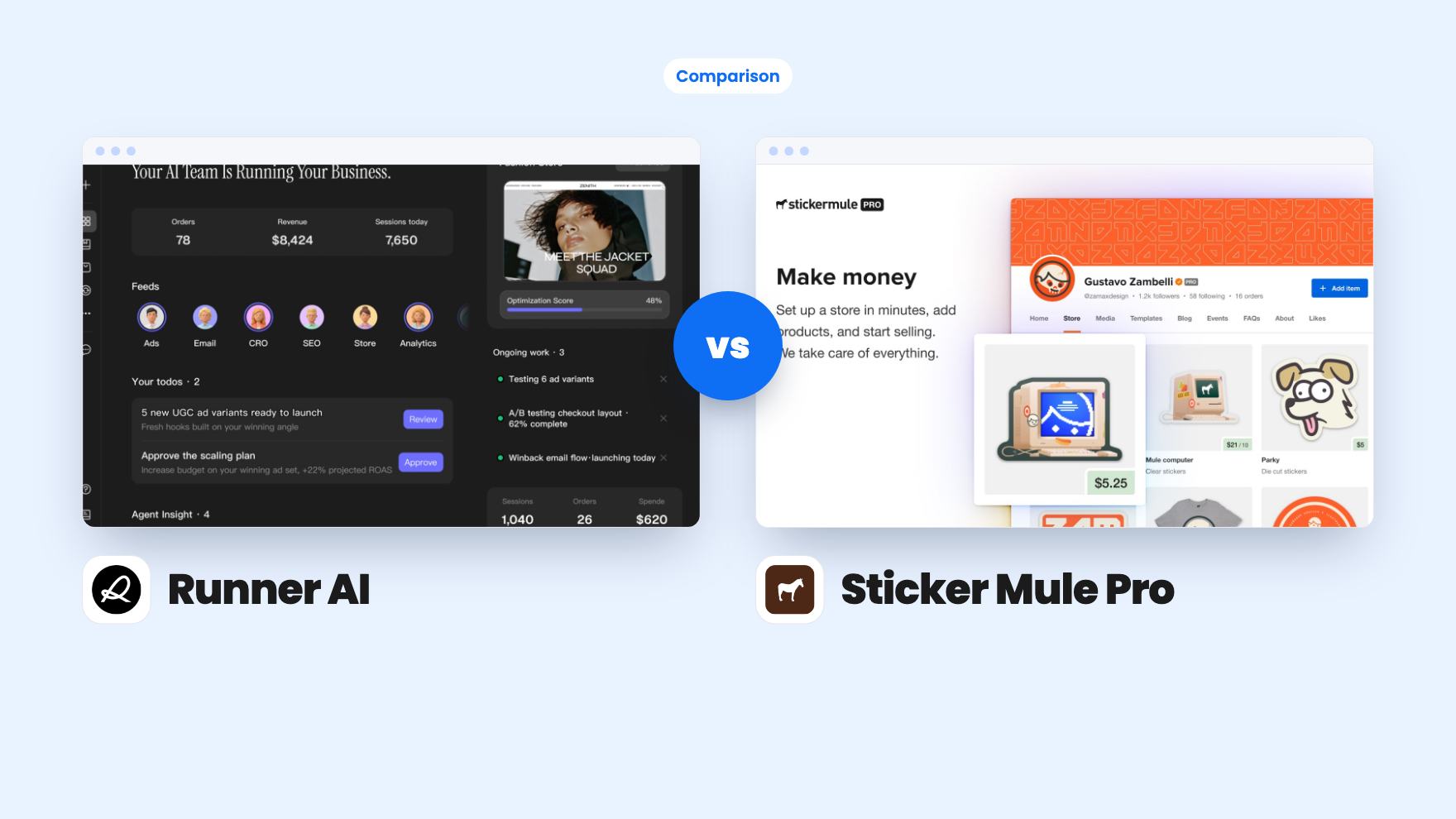
Runner AI builds dropshipping stores from a prompt for $79 and up. Sticker Mule Pro is a $0 bundle of store, email, shipping and blog. Here's who fits which.
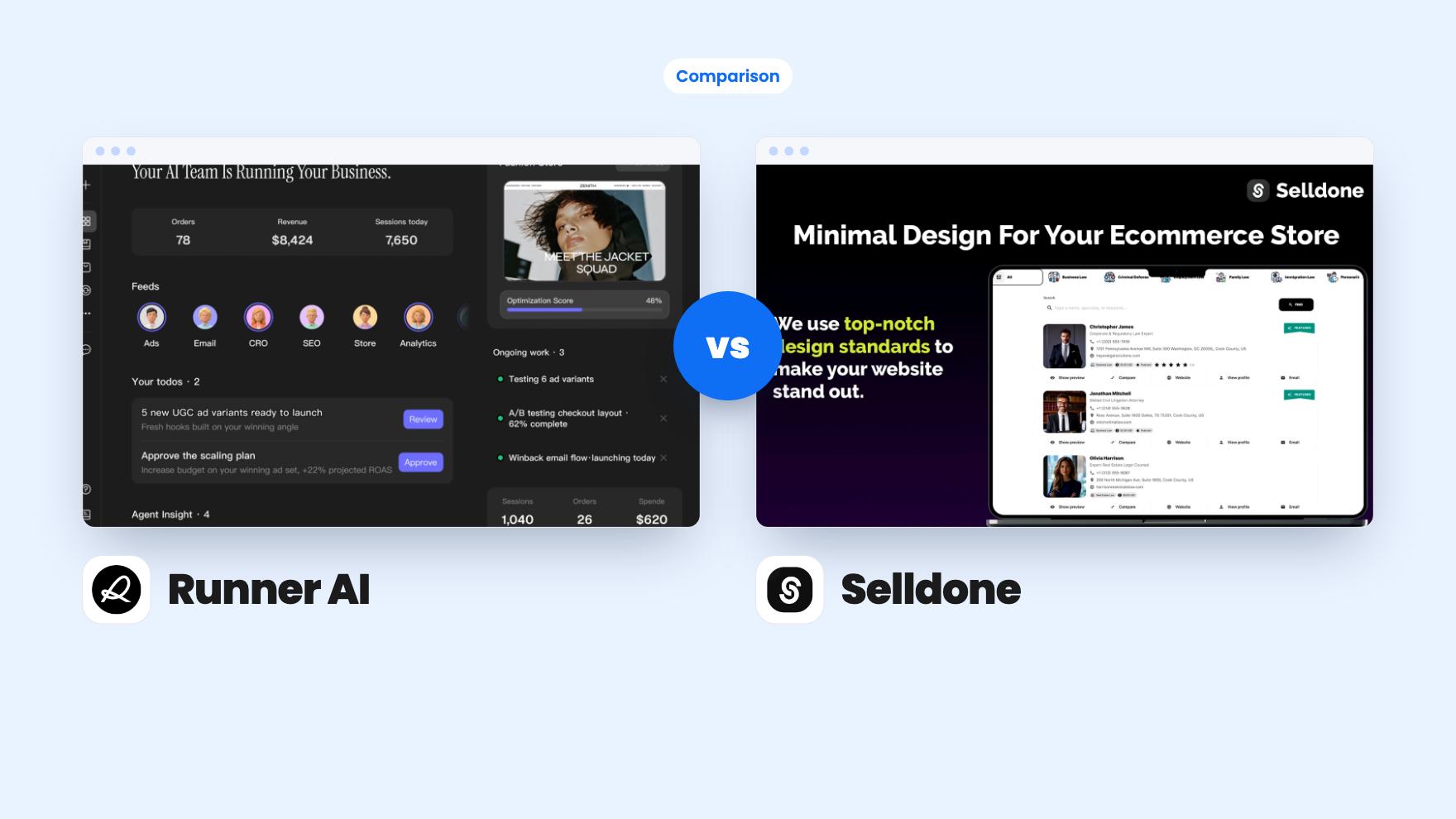
Runner AI builds a dropshipping store from a prompt. Selldone is a huge all-in-one platform with POS. Here's how the two lifetime deals compare.