SEO ToolsAlternatives
Linktree Alternatives on Lifetime Deal: 5 Tools Compared
Five AppSumo lifetime deals named as Linktree alternatives, from $19 to $59 entry prices. See who each suits and what the listings leave out.
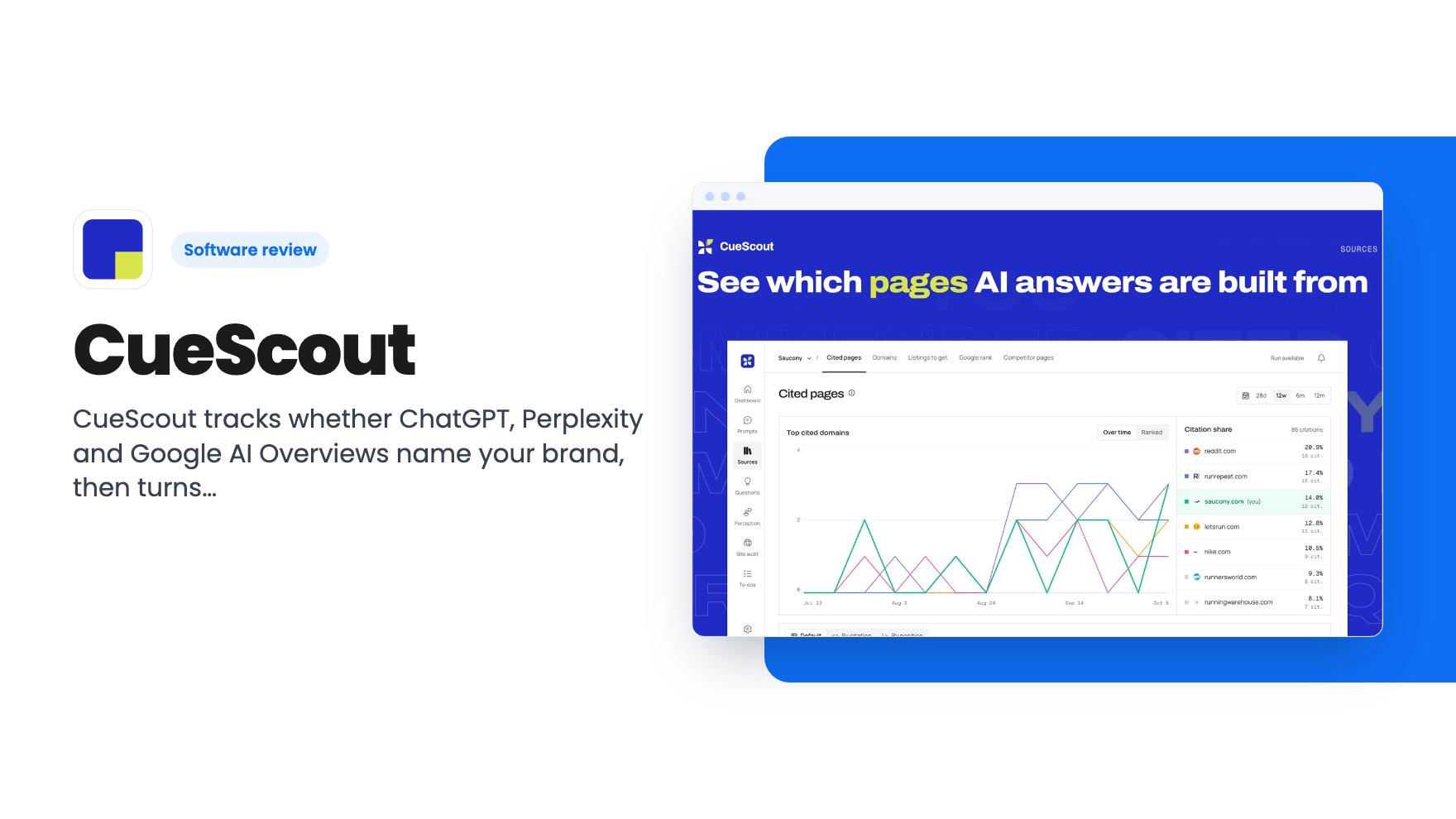
CueScout tracks whether ChatGPT, Perplexity and Google AI Overviews name your brand, then turns the gaps into a to-do list. Here's what the $59 deal covers.
Lifetime deal price
$59$58990% off
Lifetime Deal
Our take: Worth a look if you run a small site or SaaS and want a cheap way to see where AI answers skip you, with a to-do list attached. Skip it if you need daily tracking, more than three engines, or a tool with a long track record. The tiers are small, and the product looks young.
Someone asks ChatGPT for the best tool in your category. The answer names three of your competitors and doesn’t mention you. You’d never see that in Google Search Console, and a normal rank tracker wouldn’t flag it either.
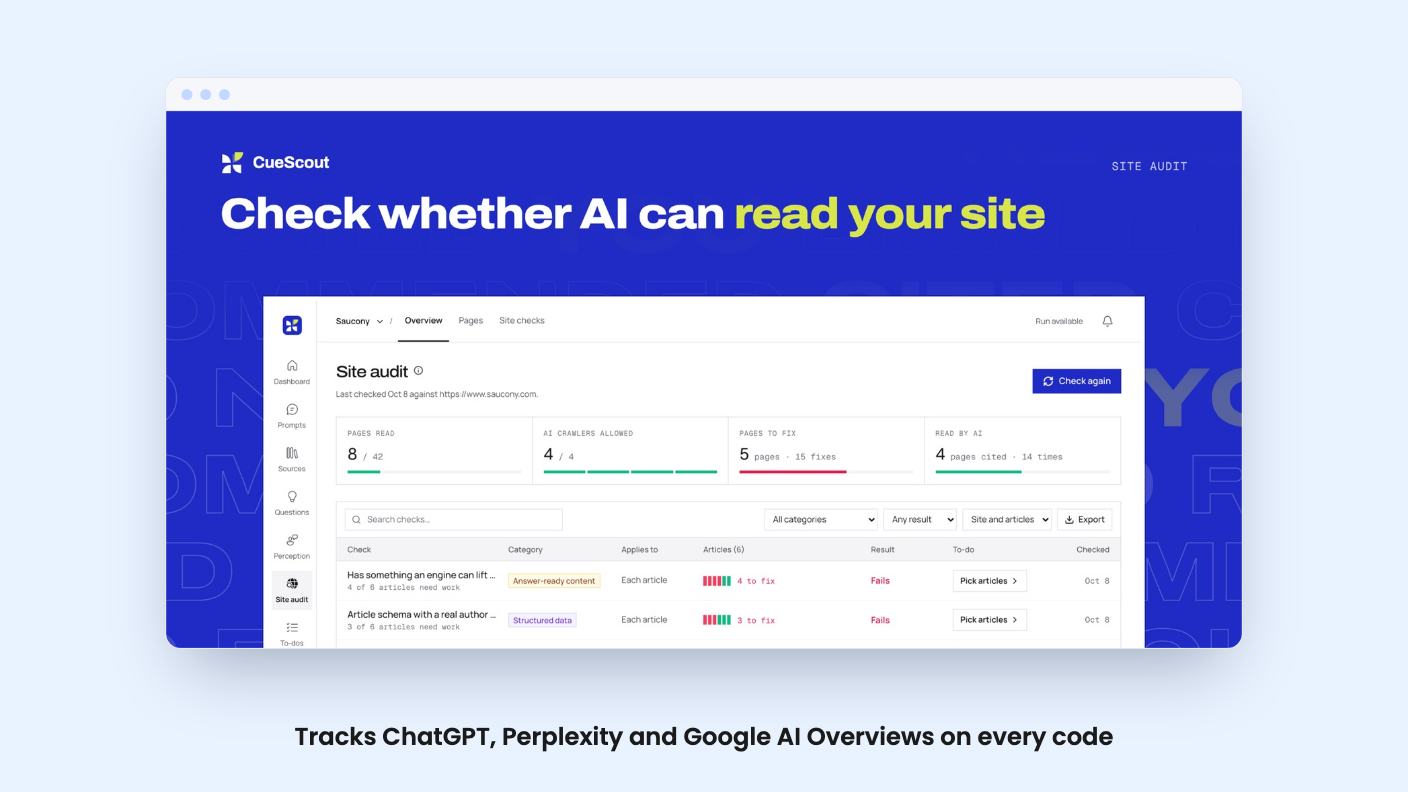
That’s the gap CueScout is built around. It’s a tracker for what AI answer engines say about your brand, plus a to-do list for fixing what they get wrong or leave out. AppSumo files it under website analytics and lists Ahrefs and SEMrush as alternatives. I think that’s a slightly odd comparison. The closer rivals are the AI visibility tools the listing itself names: Peec, Otterly and Profound.
We haven’t used it, so everything below comes from the listing. Treat it as a buyer’s read of the marketing, not a test report.
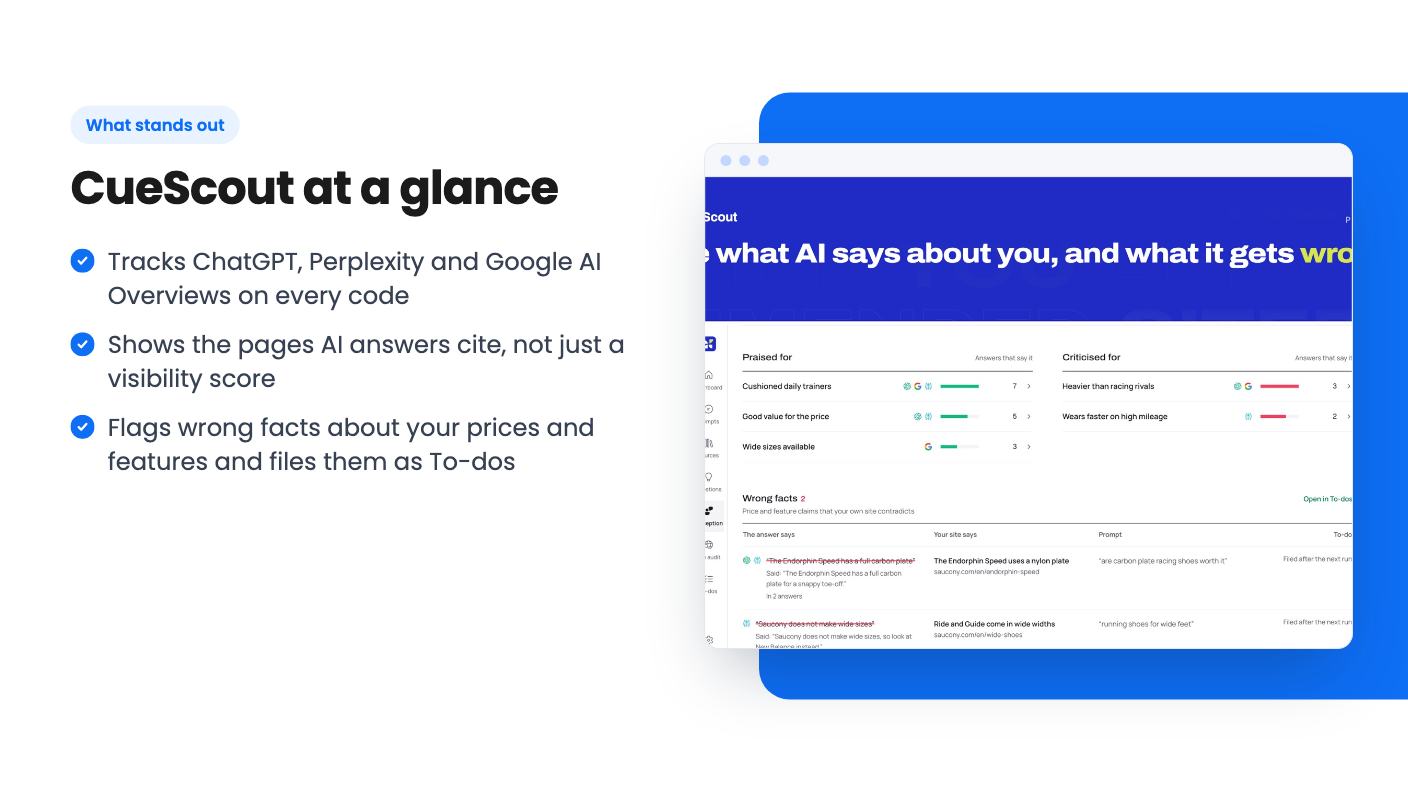
You add the questions your buyers would ask. CueScout asks them on ChatGPT, Perplexity and Google AI Overviews, and keeps every page those answers cite. Your first results come back within an hour of adding a question. After that, each question runs on all three engines once a week.
Once a week is slow. If you were hoping to watch your mentions move by the day, this isn’t that tool. The listing is fairly honest about it, saying that moving the numbers usually takes weeks rather than days, because the engines have to re-read the pages you change. That matches how this stuff behaves, and I’d rather see it stated than hidden.
The tool also tracks your share of AI voice against the competitors you add, per engine and per question. When you’re missing from an answer, it names the brand that got picked instead.
A visibility score tells you that you’re losing. A list of cited pages tells you where.
CueScout sorts each cited page into three buckets: pages you own, pages where you could earn a mention, and lists you could get onto. It also marks whether you appear on each page. A forum thread that names three competitors and not you stands out immediately.
It also shows the Google rank of each cited page, and this is a detail I like. According to the listing, some cited pages rank nowhere in Google and still get cited. If that holds up, it means your normal SEO instincts won’t fully predict what AI answers pull from.
For a small business, this is the practical core of the product. Most of us can’t write fifty new articles. We can email an editor or ask to be added to a roundup.
The feature called Perception reads the AI answers that name you and lists what they praise and criticise, with the quote and the engine that said it. That’s more specific than a sentiment score.
It also checks claims about your prices and features against your own site. When an answer gets something wrong, it files a To-do with the correct fact. Imagine an answer quoting an old pricing plan. You’d want to know, and you’d want the fix to point at a page.
The listing doesn’t say how reliable the claim checking is, or how it handles a site with unclear pricing pages. I’d expect it to work best when your own site states things plainly.
The audit checks whether AI bots can read your site at all. It looks at crawl access in robots.txt and llms.txt, and at pages that only render with JavaScript. It also reads structured data (Organization, Article and FAQ schema), canonicals and titles.
The audit covers up to 50 pages. That’s fine for a brochure site or a small SaaS marketing site. A larger store or a big blog will hit the ceiling. It reads any public site, including WordPress, Webflow and Shopify. Google Search Console is optional and adds search demand data to the ranking of fixes.
Each failed check becomes a To-do in one click. Each To-do explains the steps, the evidence and the date it was found. After you mark one done, CueScout re-checks it, so a fix that changed nothing doesn’t count as progress. That’s the feature that separates a to-do list from a nagging list.
The tool leaves the writing to you and never posts on your behalf. The founder says in the listing’s FAQ that an early version posted on Reddit and got their accounts banned five times. I find that oddly reassuring. It’s an unusually frank admission, and it explains the design choice.
There are three tiers: $59, $118 and $177, which are really one, two or three stacked codes. The listing’s own FAQ is clear on the limits:
The plan table in the listing shows 60, 40 and 20 against the tiers in that order, which looks backwards next to the FAQ. I’d trust the FAQ, but check the numbers on the checkout page before paying.
Two more rules matter. Each brand needs at least 10 questions, so one code realistically covers two brands with 10 questions each, or one brand with more. And you must redeem within 60 days. The monthly check numbers fit 20 questions on three engines once a week, which is my own arithmetic rather than a claim from the listing.
The lifetime wording has a catch. You keep your code’s limits for as long as CueScout runs, and checks pause after 30 days without a login. They restart when you sign in, and your history stays. If an engine shuts down or closes its access, the engine list can change. So you’re buying a tool that depends on three outside platforms staying reachable.
CSV export covers prompts, answers, sources and audits, which is handy if you report to a client or want a copy of your data.
Skip it if you want daily tracking, because the weekly cadence is fixed. Skip it if you manage many clients or brands, since even three codes top out at six brands and 60 questions. Agencies would feel that fast.
Be careful if you want a proven vendor. The listing has no customer names, no numbers and no video, and the founder writes in the first person, which suggests a small team. A lifetime deal on a young product is a bet that it survives. At $59 that bet is cheap. At $177 it’s a bigger one.
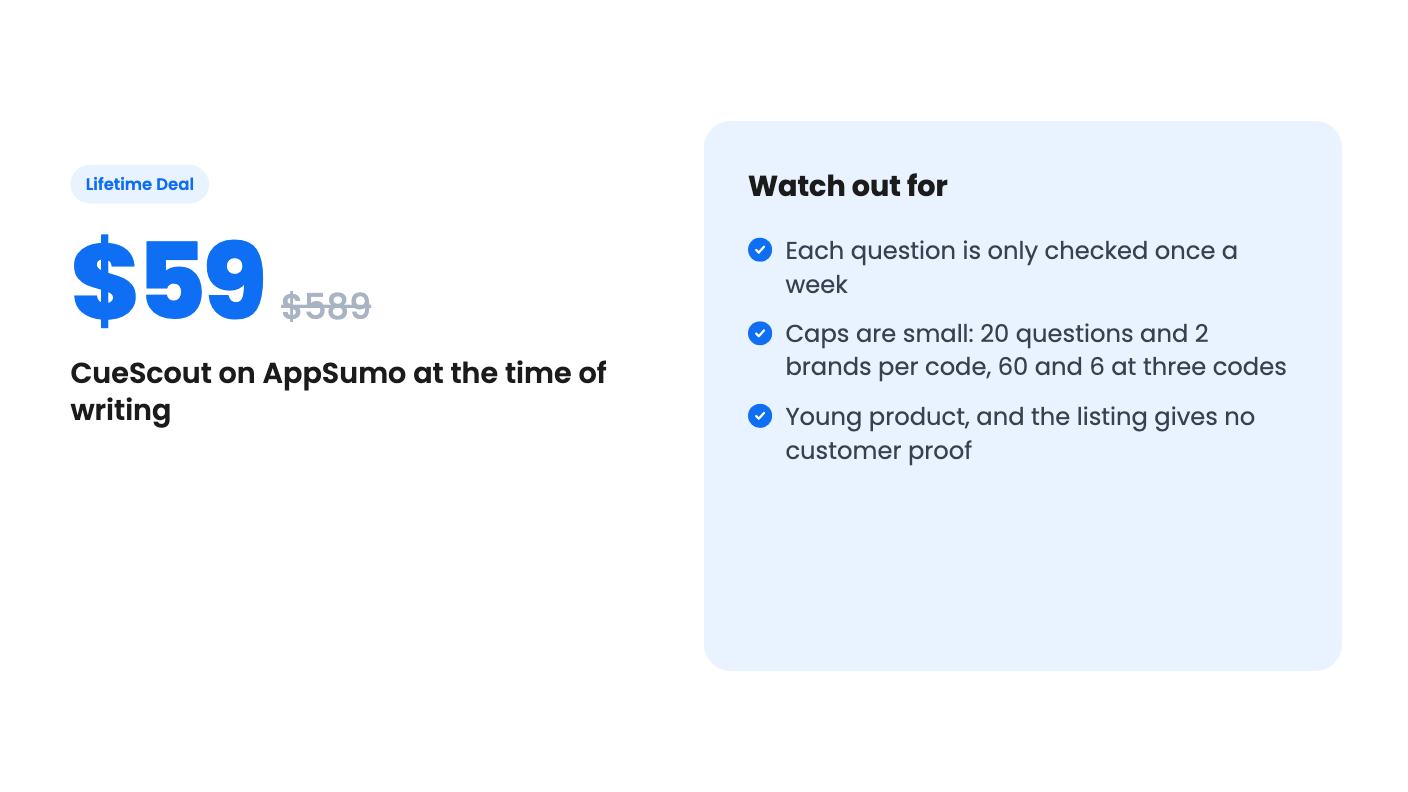
If you run a small site, you can tolerate slow data, and you’d actually work through a to-do list, one code is a reasonable low-risk way to see where AI answers skip you. Buy one code first. Stack more only after a few weeks of using it and seeing whether the fixes get re-checked and the answers move.
Every code checks ChatGPT, Perplexity and Google AI Overviews. The listing also says the engine list can change if an engine shuts down or closes its access.
One code tracks 20 questions and 2 brands, two codes track 40 and 4, and three codes track 60 and 6. Each brand needs at least 10 questions. The monthly check allowance is 240, 480 or 720.
No. It finds gaps, drafts listing requests and gives you a To-do for each one. You decide what gets published and where.
How this review was made: researched from CueScout's official listing, and written with help from AI. We have not tested CueScout hands-on yet. Prices and deal terms change, so check AppSumo before you buy. See our affiliate disclosure.
Five AppSumo lifetime deals named as Linktree alternatives, from $19 to $59 entry prices. See who each suits and what the listings leave out.
Six AppSumo lifetime deals pitched as Google Analytics alternatives, grouped by the job you need done, with tier limits and gaps spelled out.
Ten AppSumo lifetime deals named as Ahrefs alternatives, grouped by job: keywords, site fixes, AI search tracking and competitor research. Limits included.